How to Make Mumbai-Style Vada Pav at Home
Make Mumbai-style vada pav with spiced potato filling, gram-flour batter, dry garlic chutney and clear frying, assembly and serving steps.
Quick answer
Quick answer
To make Mumbai-style vada pav, prepare a mustard, curry leaf, chilli and garlic-tempered potato filling; shape it into balls; coat them in a smooth gram-flour batter; and fry until cooked and crisp. Split fresh pav, add dry garlic chutney and place one hot batata vada inside. Serve immediately, with fried green chilli only if everyone can handle the heat.
Key takeaways
- Cool the potato mixture enough to shape firm balls before dipping in batter.
- The gram-flour batter should coat the filling without being watery or heavy.
- Maintain steady frying heat so the coating cooks through without absorbing excessive oil.
- Assemble just before eating so the pav stays soft rather than soggy.
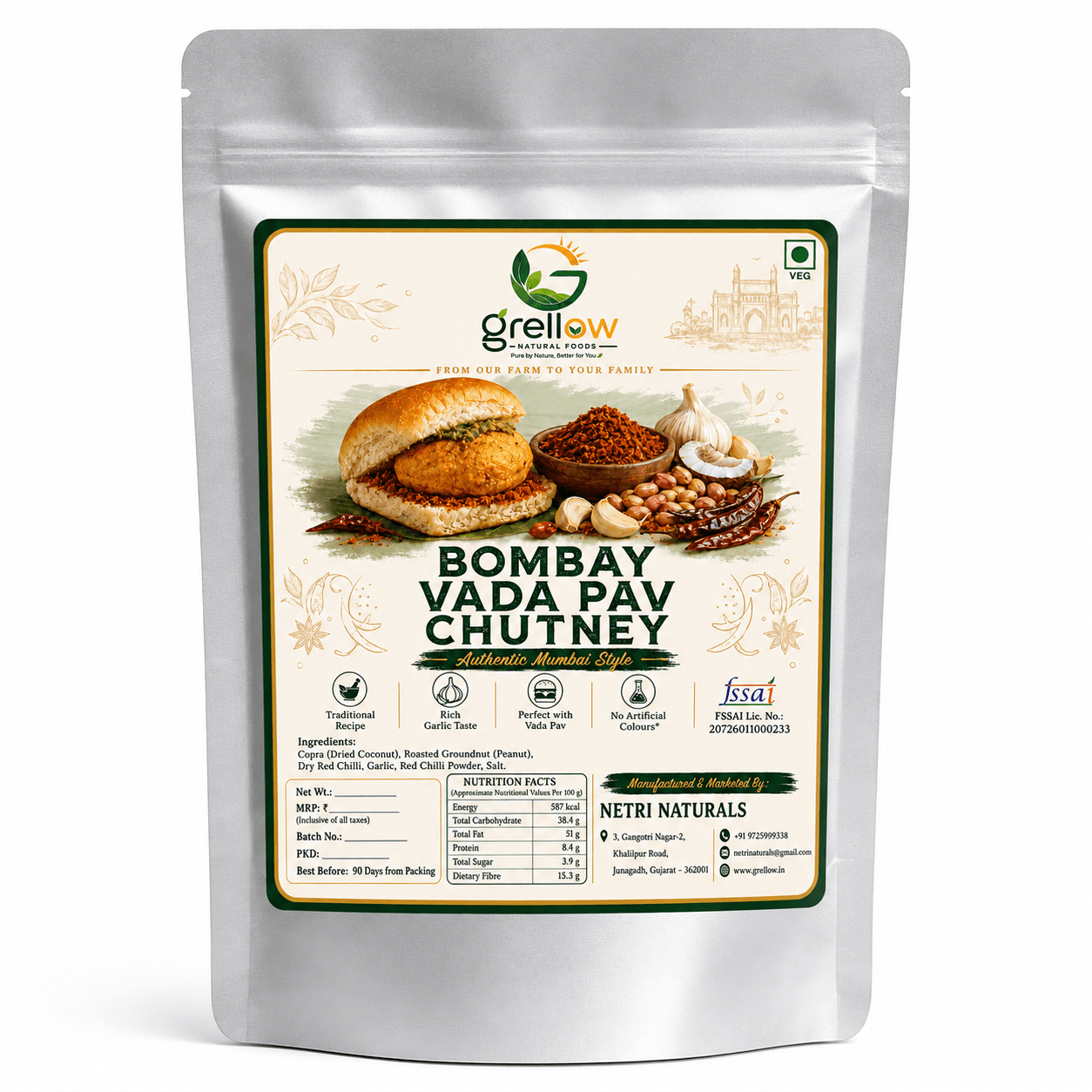
- No Grellow vada pav chutney product is currently in the live catalog, so the recipe uses a homemade option and creates no product link.
What Makes a Mumbai-Style Vada Pav?
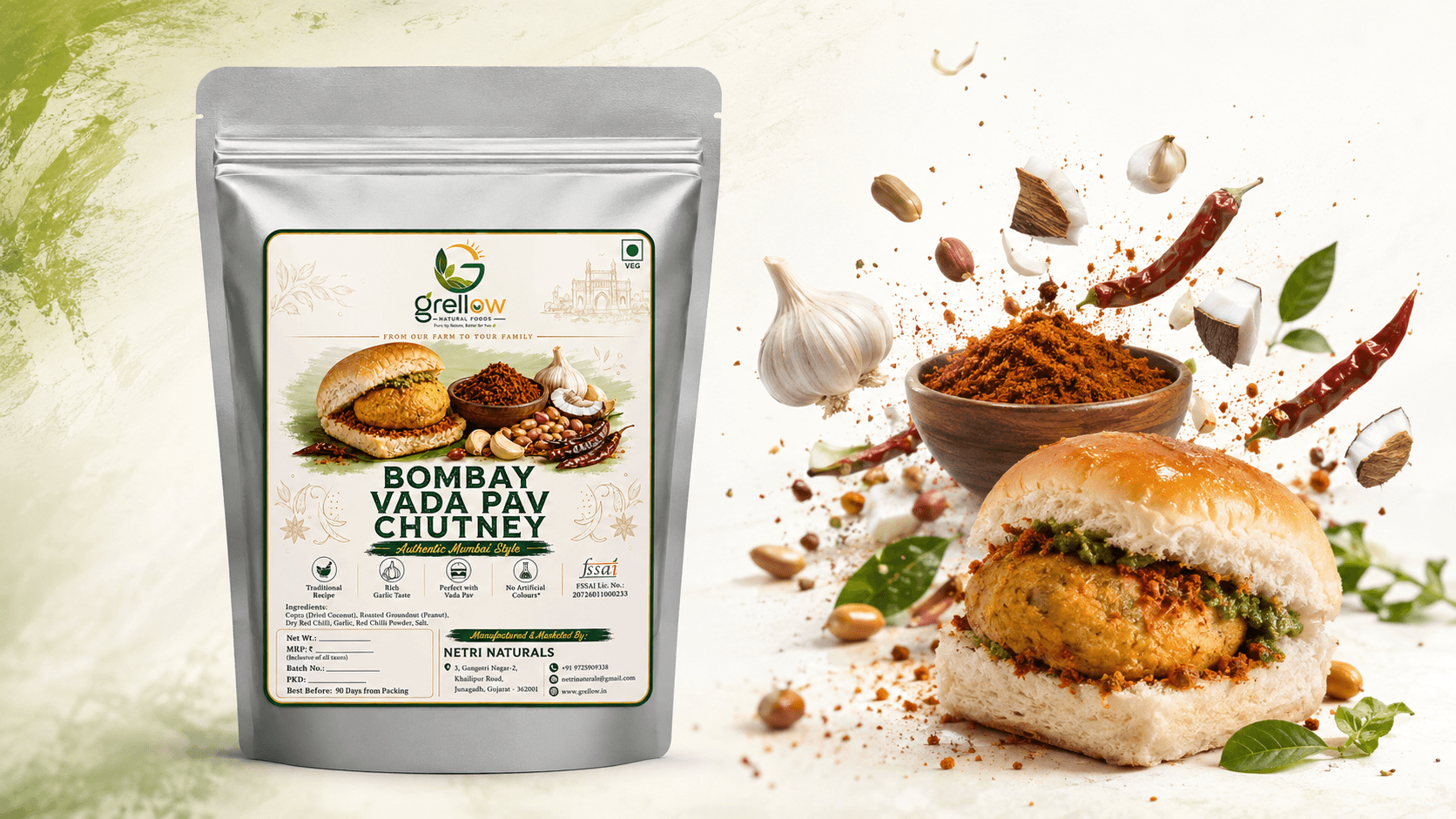
The basic structure is simple: a spiced potato fritter, a soft pav and chutney. The contrast makes it memorable—hot crisp besan coating, soft potato, fresh bread and a sharp layer of dry garlic chutney. Maharashtra Tourism describes vada pav as Mumbai's signature street food, and home cooking lets you control chilli, salt and frying batch size.
This recipe makes about 8 vada pav. Read the full method before heating oil, keep children away from the frying area and never add water to hot oil.
Ingredients
For the potato filling
- 500 g potatoes, boiled, peeled and roughly mashed
- 1 tablespoon neutral oil
- 1 teaspoon mustard seeds
- 8–10 curry leaves
- 1–2 green chillies, finely chopped, adjusted to taste
- 4 garlic cloves and a small piece of ginger, crushed
- ¼ teaspoon turmeric
- 2 tablespoons chopped coriander
- 1–2 teaspoons lemon juice
- Salt to taste
For the batter
- 1 cup besan (gram flour)
- ¼ teaspoon turmeric
- ¼ teaspoon red chilli powder, optional
- A pinch of ajwain, rubbed between the palms
- A small pinch of baking soda, optional
- Salt to taste
- About ¾ cup water, added gradually
For frying and assembly
- Neutral oil for deep-frying
- 8 fresh pav
- Dry garlic vada pav chutney
- Green coriander chutney or sweet tamarind chutney, optional
- Green chillies for frying, optional and handled carefully
Preparation Before You Fry
Boil potatoes until tender but not waterlogged. Drain fully and let surface steam escape before mashing. A wet filling can break or cause dangerous spluttering. Crush ginger and garlic just before tempering, line up the batter bowl and draining rack, and keep the pav and chutneys away from the raw-batter area.
Make the Batata Vada Filling
Heat one tablespoon oil. Let mustard seeds crackle, then add curry leaves carefully, followed by chilli, garlic and ginger. Cook until the raw garlic smell softens without browning it heavily. Add turmeric, then the mashed potatoes and salt. Mix until evenly yellow and relatively dry. Turn off the heat, add coriander and lemon, and cool before shaping.
Taste the cooked filling before shaping. It should be slightly lively on its own because the besan coating and pav soften the flavour. Do not taste raw batter later.
Mix a Batter That Coats Evenly
Whisk besan, spices and salt, then add water in stages. A good batter falls from the spoon in a thick ribbon and leaves an even coat. If it is watery, it exposes the filling and may spit in oil. If it is very thick, the coating stays doughy. Rest it for about 10 minutes, then recheck because besan absorbs water.
Fry the Vadas Safely
Use a stable deep kadai with enough empty space above the oil. Heat over medium, not maximum flame. A small batter drop should rise steadily with bubbles; immediate darkening means the oil is too hot, while sinking without activity means it is too cool.
Coat one potato ball, allow excess batter to fall back into the bowl and lower the ball close to the oil surface without dropping it from height. Fry a few at a time so the oil temperature remains steady. Turn with a slotted spoon and cook until the surface is evenly golden and the batter no longer looks wet. Drain well.
Assemble the Vada Pav
Keep one edge of the pav attached like a hinge. Sprinkle a light, even layer of dry garlic chutney on the cut faces. Add green or sweet chutney only if desired, then place one hot vada inside and press gently. Assemble to order; leaving a sauced vada inside the pav for a long time makes the bread soggy.
Read the separate Bombay vada pav chutney guide for ingredient variation, allergens and other serving ideas.
Serving Suggestions
- Serve immediately with unsweetened tea or chaas.
- Offer extra chutney at the table so each person controls heat.
- Serve fried chilli separately and label it clearly.
- Add sliced cucumber or a simple kachumber for freshness.
- For a gathering, keep vadas warm and pav dry, then assemble in small batches.
Tips and Troubleshooting
| Problem | Likely cause | Fix |
|---|---|---|
| Batter slips off | Filling is wet or batter too thin | Dry the potato mixture and whisk a little besan into the batter |
| Coating browns too fast | Oil too hot | Lower heat and allow temperature to settle |
| Vada feels oily | Oil too cool or pan overcrowded | Fry smaller batches at steady medium heat |
| Coating is thick inside | Batter too thick or heat too high | Thin slightly and fry long enough at moderate heat |
| Pav becomes soggy | Assembled too early or too much wet chutney | Assemble immediately before serving |
Chutney Recommendation
The brief for this recipe calls for a related Grellow Bombay Vada Pav Chutney, but no such product exists in the live production catalog. This article therefore recommends a known homemade dry garlic chutney or another packaged chutney whose ingredient, allergen and storage label you can verify. It does not invent a Grellow product, image, formula or purchase link.
Leftovers and Reheating
Fried food is best fresh. Cool leftover vadas promptly and refrigerate in a covered container; follow reliable local food-safety guidance and use them soon. Reheat until hot throughout in an oven or air fryer for a drier crust. Do not leave potato filling, chutneys or cooked vadas at room temperature for extended periods, and do not store assembled vada pav because the bread becomes soggy.
How to do it
- 1
Prepare the potato filling
Temper mustard seeds, curry leaves, green chilli, garlic, ginger and turmeric. Add the mashed potatoes, salt, coriander and lemon, mix well, then cool until comfortable to handle.
- 2
Shape the batata vada
Divide the cooled potato mixture into 8 compact balls. Keep them similar in size so they fry evenly.
- 3
Mix the gram-flour batter
Whisk besan, turmeric, chilli, ajwain, salt and baking soda if using. Add water gradually until the batter coats a spoon in an even layer without running off immediately.
- 4
Heat the frying oil
Heat enough neutral oil in a deep kadai over medium heat. Test with a small drop of batter: it should rise steadily and cook without darkening at once.
- 5
Coat and fry
Dip each potato ball in batter, let excess drip off and lower it carefully into the oil. Fry in small batches, turning as needed, until the coating is evenly cooked and golden.
- 6
Drain and rest briefly
Lift the vadas with a slotted spoon and drain on a rack or absorbent paper. Let the oil return to steady heat before the next batch.
- 7
Prepare the pav
Split each pav while keeping one side hinged. Add a light layer of dry garlic chutney and optional green or sweet chutney.
- 8
Assemble and serve
Place one hot batata vada in each pav, press gently and serve immediately. Offer fried green chilli separately rather than assuming every guest wants it.
Frequently asked questions
What is vada pav made of?+
Vada pav contains a spiced potato fritter coated in gram-flour batter, fried and served in a soft pav with dry garlic chutney and optional green or sweet chutney.
Why does the batter fall off batata vada?+
The potato ball may be wet or the batter too thin. Cool and dry the filling, then adjust the batter so it coats a spoon evenly.
How hot should the oil be for vada pav?+
Use steady medium heat. A small drop of batter should rise with bubbles and cook gradually; immediate darkening is too hot and slow sinking is too cool.
Can vada pav be assembled in advance?+
It is better assembled immediately before eating. Wet chutney and hot vada soften the pav when left together.
Does Grellow currently sell vada pav chutney?+
No matching product is currently present in the live Grellow production catalog, so this recipe does not create a product recommendation or purchase link.
Can batata vada be reheated?+
Yes. Refrigerate leftovers promptly and reheat until hot throughout. An oven or air fryer generally restores the crust better than a microwave.
Sources & references
- Mumbai City: Famous Street Food — Department of Tourism Maharashtra
- FoodKeeper App — FoodSafety.gov