Flax Seeds Benefits: Nutrition, Uses & Easy Ways to Eat Alsi
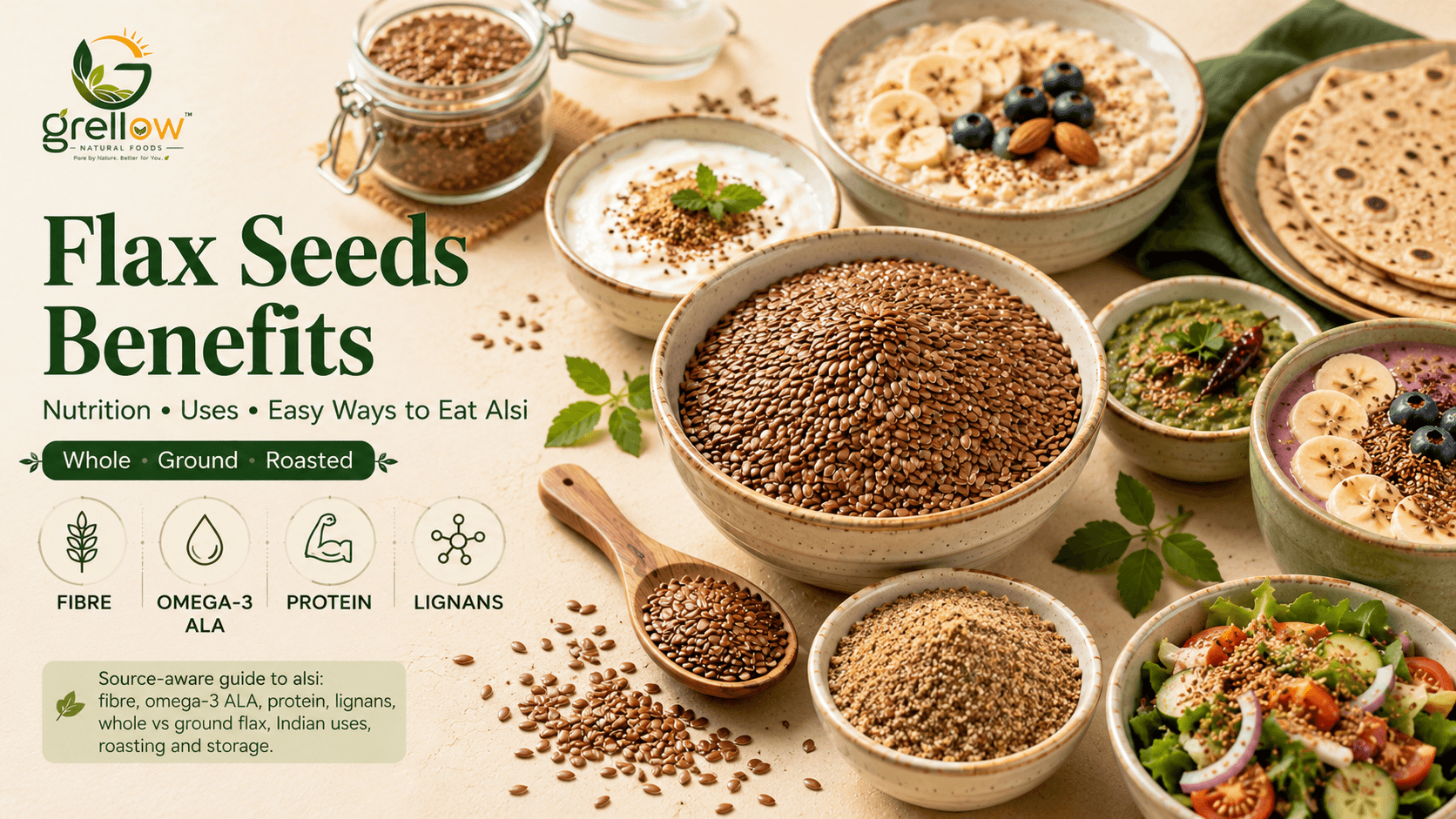
A source-aware guide to alsi, including fibre, omega-3 ALA, protein, lignans, whole vs ground flax, Indian uses, roasting and storage.
Quick answer
Quick answer
Flax seeds, or alsi, provide dietary fibre, plant protein, the omega-3 fat ALA and lignans. Ground flax is often easier to mix into food and makes more of the seed available during digestion than swallowing it whole. Use it in curd, oats, roti dough, chutney or smoothies, store it carefully, and treat it as food rather than a medical remedy.
Key takeaways
- Flax is a notable plant source of alpha-linolenic acid, or ALA, an essential omega-3 fatty acid.
- Grinding flax just before use can make it easier to incorporate and less likely to pass through intact.
- Fibre from alsi can support normal digestion, but sudden large increases may cause discomfort.
- Ground flax should be kept airtight, cool and away from light because its oils are exposed to air.
- Flax can complement a balanced diet but does not cure cholesterol, constipation or other conditions.
What Are Flax Seeds?
Flax seeds are the small, glossy seeds of Linum usitatissimum. In India they are widely known as alsi. Brown and golden flax are the common food varieties; their broad nutrition is similar, while taste and appearance vary slightly. Flax is also called linseed, although “flaxseed” is the more familiar food term.
The seed has a firm outer coat and a mild, nutty taste after roasting. It can be eaten whole, ground into meal or used as an ingredient in chutney, dough, porridge and drinks. Flaxseed oil is a different product: it supplies oil but not the seed's full fibre.
Flax Seeds Nutrition
Flax combines fat, fibre and plant protein in one seed. The Indian Food Composition Tables are useful for general composition, while the NIH Office of Dietary Supplements identifies whole flaxseed as a food source of alpha-linolenic acid. The exact numbers on a Grellow pack should be taken from that pack's verified label, not copied from a generic reference database.
Dietary fibre
Flax contains soluble and insoluble fibre. Fibre adds bulk, supports normal bowel function and can increase fullness after a meal. It also absorbs water. Introduce ground flax gradually, drink adequate fluids unless medically restricted, and avoid taking a dry mouthful that is difficult to swallow.
Omega-3 ALA
ALA is an essential omega-3 fatty acid because the body cannot make it. Flax is a useful plant source. The body converts only a limited amount of ALA to the long-chain omega-3s EPA and DHA, so flax should not be described as nutritionally identical to fish or algae sources of those fats.
Plant protein
Alsi contributes protein, but the spoonful used in a meal is smaller than a normal serving of dal, beans, soy, dairy, eggs, fish or meat. Think of flax as a supporting ingredient within a broader protein pattern.
Lignans and minerals
Flax contains lignans and minerals including magnesium and phosphorus. Lignans are plant compounds studied in nutrition research, but their presence is not proof that flax prevents or treats a disease.
What Are the Potential Benefits of Flax Seeds?
Fibre for digestive health
The fibre in ground flax can help increase dietary bulk and support regular bowel habits. Results vary with the rest of the diet, fluid intake and individual health. People with bowel narrowing, swallowing problems or a medically managed digestive condition should seek personal advice before adding a concentrated fibre source.
A heart-friendly eating pattern
Flax provides unsaturated fat, including ALA, and fibre. Those attributes can fit a heart-conscious diet built around vegetables, fruit, pulses, whole grains and suitable protein foods. Flax does not “clean arteries,” and it should not replace prescribed cholesterol or blood-pressure treatment.
Everyday plant nutrition
A tablespoon mixed into familiar food can add fibre, fats and plant protein without demanding a special recipe. That convenience may be the most useful benefit: better food habits are easier to sustain when the ingredient fits meals people already enjoy.
Whole vs Ground Flax Seeds
| Form | Best for | What to know |
|---|---|---|
| Whole flax | Roasted seed mixes, some chutneys and toppings | The hard seed may pass through digestion intact if not chewed well. |
| Ground flax | Curd, oats, smoothies, dough and batters | Easier to disperse; exposed oils require careful storage. |
| Flaxseed oil | Unheated dressings when the product directions allow | Contains oil but not the whole seed's fibre; it is not a frying oil by default. |
For most everyday dishes, freshly ground flax is practical. Pulse a small dry batch in a grinder until coarse or fine, depending on the recipe. Avoid turning it into an oily paste unless that is intended.
Should Flax Seeds Be Roasted?
Roasting is optional. A brief roast improves aroma and reduces the raw seed's firm feel. Use low heat, stir continuously and stop when the seeds smell nutty and begin to move or pop. Transfer them to a plate to cool. High heat can make the seed bitter and damage flavour.
If you plan to grind roasted flax, cool it fully first. Steam trapped in a grinder or jar shortens quality.
How to Eat Flax Seeds
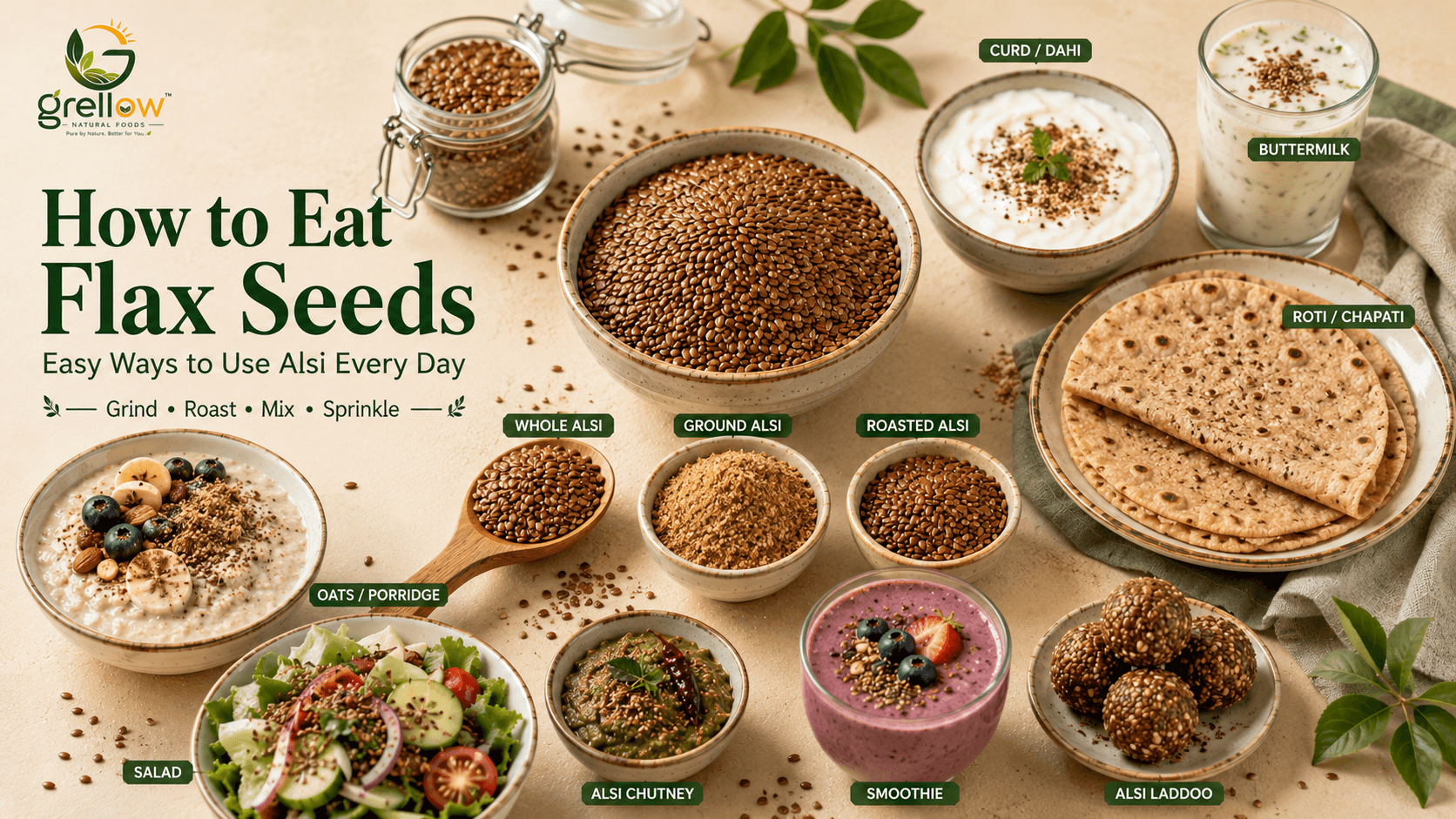
- Stir ground alsi into plain curd or raita just before eating.
- Add it to oats, porridge or a smoothie bowl.
- Knead a measured amount into atta for roti or paratha.
- Use roasted flax in dry chutney with chilli, garlic or roasted gram.
- Sprinkle it over salad, cooked vegetables, poha or upma.
- Mix it into a laddoo recipe while remembering the finished food may contain added sugar and fat.
See the step-by-step companion guide on how to eat flax seeds in everyday Indian food.
Indian Uses for Alsi
Roasted alsi chutney is one of the most practical regional uses because a small, flavourful spoonful can accompany dal-rice, bhakri or roti. Ground flax can also join multigrain atta, savoury porridge, raita and vegetable fillings. When a recipe uses flax as an egg substitute, ground seed is mixed with water to form a gel; this can bind some baking recipes but will not reproduce every function or flavour of egg.
How to Store Flax Seeds
- Keep whole flax airtight in a cool, dry, dark place and follow the product label.
- Grind smaller batches. The USDA Agricultural Research Service recommends cold storage for ground flax to reduce oxidation.
- Use a dry spoon and close the pack promptly.
- Discard flax that smells paint-like, sharply bitter, stale or otherwise unusual.
- Do not rely only on a date if the product shows moisture, mould or insect activity.
Who Should Be Careful?
Flax absorbs water and adds concentrated fibre. People with swallowing difficulty, bowel obstruction or narrowing, severe digestive symptoms, or fluid restrictions need individual guidance. Flax and supplements can also affect the timing or absorption of some medicines. Pregnancy, breastfeeding and hormone-sensitive conditions are reasons to discuss concentrated or supplemental use with a qualified clinician rather than relying on internet dosage advice.
Start with amounts used in food and observe tolerance. There is no need to chase a large dose.
Choosing a Real Flax Product
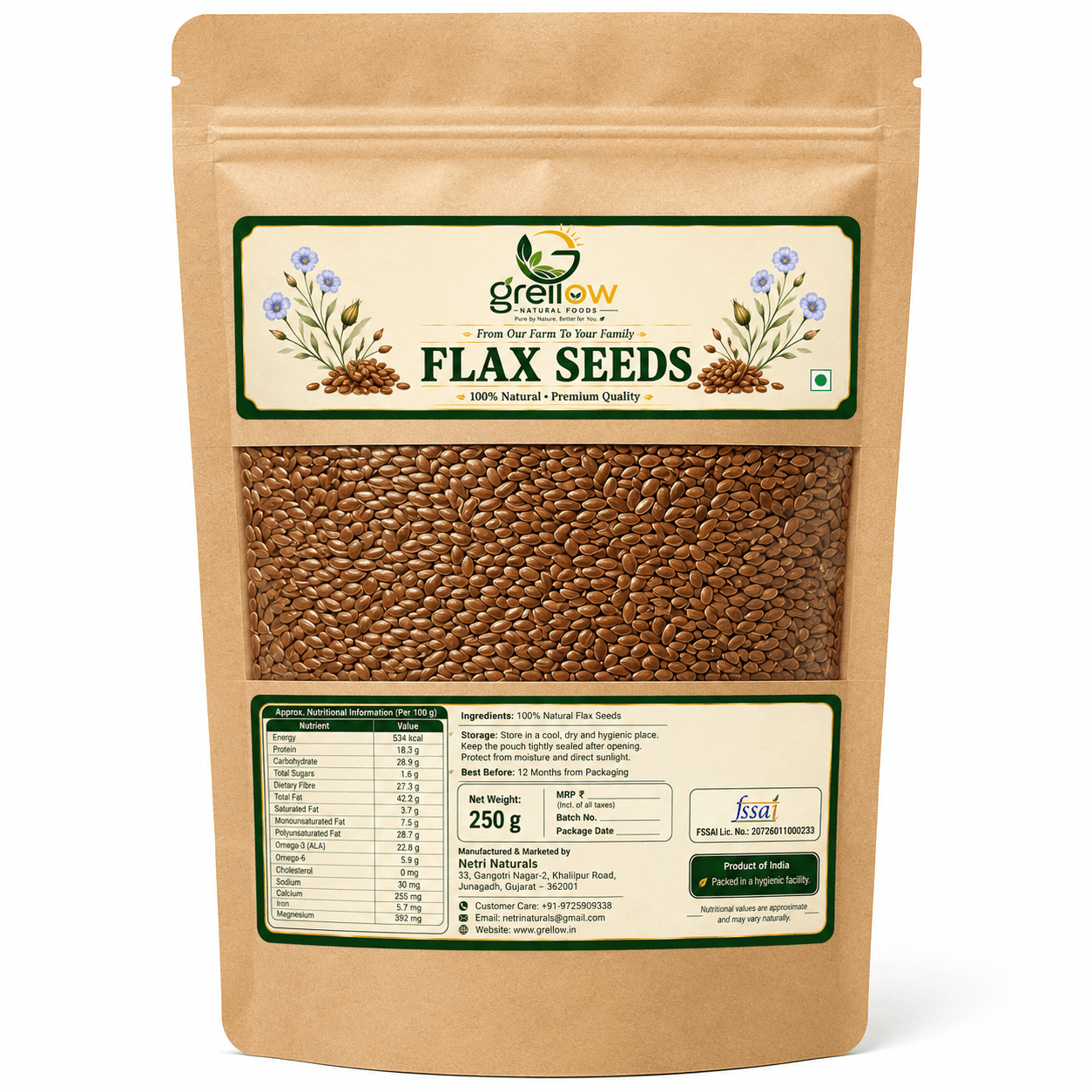
Look for whole, clean seeds in an intact pack with clear dates and storage instructions. Grellow currently lists Grellow Premium Flax Seeds (Alsi); the product relationship on this article uses the live catalog record, including its actual slug and image. Check the product page for current pack, price and availability information.
Useful definitions
- Alsi
- A common Hindi name for flax seeds or linseed.
- ALA
- Alpha-linolenic acid, an essential plant omega-3 fatty acid that the body must obtain from food.
- Lignans
- Naturally occurring plant compounds found in flax and several other plant foods.
Frequently asked questions
What are the main nutritional benefits of flax seeds?+
Flax provides fibre, plant protein, unsaturated fat including omega-3 ALA, lignans and minerals. Its value is as part of a varied diet, not as a medical treatment.
Is ground flax better than whole flax?+
Ground flax is often easier to mix into food and less likely to pass through intact. Whole flax stores well, but it should be chewed thoroughly or ground before use when that suits the recipe.
Do flax seeds need to be roasted?+
No. Roasting is optional and mainly improves flavour. If roasting, use low heat, stir continuously, avoid burning and cool the seeds fully before grinding or storing.
Can flax seeds be eaten every day?+
Flax can fit into regular meals for many people, but no universal daily dose is required. Start with culinary amounts, drink adequate fluid and follow individual medical advice where relevant.
How should ground flax be stored?+
Keep ground flax airtight, cool and away from light; cold storage can help protect freshness. Grind small batches and discard it if the smell becomes stale, bitter or paint-like.
Are flax seeds a source of EPA and DHA?+
Flax is a source of ALA. The body can convert a limited amount of ALA to EPA and DHA, but flax is not the same as a direct source of those long-chain omega-3 fats.
Sources & references
- Indian Food Composition Tables 2017 — ICMR–National Institute of Nutrition (2017)
- Omega-3 Fatty Acids: Fact Sheet for Consumers — NIH Office of Dietary Supplements
- Dietary Fiber — MedlinePlus, U.S. National Library of Medicine
- The Benefits of Flaxseed — USDA Agricultural Research Service