How Moong Is Grown: Green Gram Farming From Seed to Harvest
Follow green gram through germination, leaves and nodules, flowering, pod formation, maturity, harvest, drying, threshing, cleaning and storage.
Quick answer
Quick answer
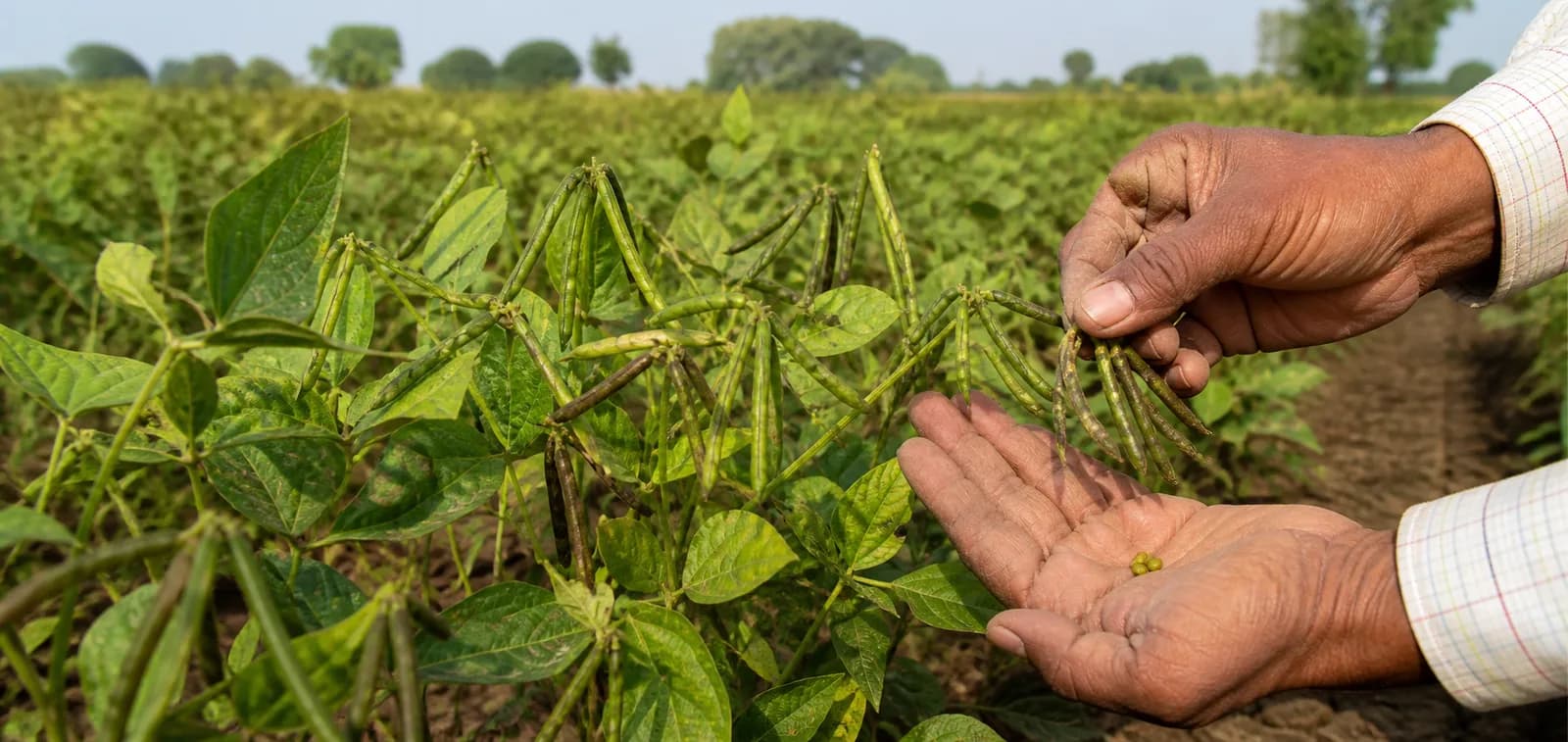
Moong begins as seed of Vigna radiata, germinates into a plant with trifoliate leaves and root nodules, produces flowers and slender pods, and fills those pods with green gram seed. Farmers harvest mature pods or plants, dry and thresh them, remove damaged seed and foreign matter, then store the clean lot under dry, inspected conditions.
Key takeaways
- Moong is a short-duration pulse with roots, nodules, flowers and seed-bearing pods.
- Good establishment and early weed control protect the crop's limited growing period.
- Flowering and pod formation are sensitive moisture stages.
- Uneven pod maturity requires representative sampling and a weather-aware harvest plan.
- Drying and storage hygiene reduce split seed, moisture and pulse-beetle loss.
How is moong grown?
Direct answer: moong moves through seed selection, sowing, emergence, vegetative growth, flowering, pod formation, maturity, harvest, drying, threshing, cleaning and storage. Each step protects the next one; a clean retail seed begins with an adapted variety and ends with careful moisture and contamination control.
Crop practice changes with state, district, variety, season, soil test, rainfall and irrigation. Use the figures in this article as examples from named institutions, not as a universal prescription. Confirm seed, nutrient and crop-protection decisions with the current package of practices from your State Agricultural University, Krishi Vigyan Kendra (KVK) or agriculture department.
The farm-to-seed journey at a glance
Every stage protects the quality of the next stage
| Stage | What happens | What the farmer watches |
|---|---|---|
| Seed | A locally recommended mungbean variety is selected. | Germination, treatment, season and maturity habit |
| Germination | The seed absorbs water and emerges. | Depth, moisture, crusting and drainage |
| Vegetative growth | Trifoliate leaves, roots and nodules develop. | Stand, weeds, root health and nodulation |
| Flowering | Flowers form on the short-duration crop. | Moisture, sucking insects and virus symptoms |
| Pod formation | Pods set and seeds begin to fill. | Water stress, pod insects and disease |
| Maturity | Pods change colour and seeds harden. | Uneven maturity, rain and shattering |
| Harvest to storage | Pods or plants are harvested, dried, threshed and cleaned. | Split seed, moisture and pulse-beetle prevention |
Step 1: Select the field and seed
The field must suit the season and drain well. The seed should be a labelled, locally recommended variety with known germination and treatment status. For a food buyer, seed colour is visible; for a farmer, adaptation, maturity and crop-health characteristics are equally important.
Step 2: Prepare and sow uniformly
A friable, level seed zone lets the drill or sowing method place seed at a consistent depth. Placement should reach moist soil without burying seedlings too deeply. For example, Punjab Agricultural University describes 4-6 cm placement for its summer-moong system; other soils and seasons need their local recommendation. Calibrate before the full field, then inspect emergence in several areas rather than only near the entrance.
Step 3: Establish roots and leaves
Young plants build the canopy and root system that will support flowering. Early water stress, crusting, standing water and weed competition can permanently reduce stand uniformity. Check roots and the pattern of symptoms before assuming that pale plants need fertiliser.
Step 4: Flower and set pods
Flowering connects crop growth to harvestable seed. Moisture stress, waterlogging, severe pest pressure and nutrient imbalance can reduce reproductive growth. Moong needs enough moisture for emergence, flowering and pod development but does not tolerate standing water well. Irrigation interval is a field decision based on soil, weather, rooting and crop stage rather than a calendar alone.
Step 5: Fill and mature the seed
As seed fills, the crop begins shifting from green growth toward maturity. Avoid unnecessary late irrigation or practices that delay drying. Inspect the whole field because soil variation and uneven moisture can create mixed maturity.
Step 6: Harvest at the correct stage
Pods do not always mature together. TNAU rice-fallow guidance uses about 80% mature pods as a harvest indicator. Check pod colour, seed hardness, weather risk and the shattering habit of the chosen variety before deciding whether to pick pods or cut whole plants. The goal is to capture mature seed before avoidable shattering, pod opening, rain damage or contamination. Weather forecast, variety habit and labour or machinery availability affect the final decision.
Step 7: Dry and thresh cleanly
Keep harvested material on a clean sheet or floor. Dry it promptly and turn or rearrange it for even airflow. Thresh without mixing in soil, stones, old grain or other varieties. Separate broken, immature and visibly damaged seed during cleaning.
Step 8: Store and move the lot
Measure moisture where possible and meet the standard for the intended market and container. Cool seed before bagging. Label the lot and protect it from roof leaks, damp floors, insects, rodents and odours. Food grain and planting seed may have different quality, traceability and certification requirements.
Why does traceability matter after harvest?
A clean seed lot should be traceable to crop, variety or market class, field, harvest date and storage location. Traceability helps investigate a moisture, admixture or crop-health problem without rejecting unrelated stock. It also prevents planting seed, treated seed and food grain from being confused.
Keep field and store records together: seed-lot label, major operations, harvest observations, drying checks, cleaning date and bag count. A buyer may ask for different quality evidence from a seed-certification agency, so confirm the intended market before claiming a grade.
What does a consumer receive?
A retail pack represents many control points: varietal identity, field cleanliness, harvest timing, drying, cleaning, grading, storage and packing. The whole green seed becomes sabut moong for food after cleaning and packing. Read the complete cultivation guide and post-harvest guide for more detail.
After learning how the crop is grown, cleaned and handled, you can explore Grellow Whole Green Moong (Sabut Moong). The product link is for food buyers; seed for cultivation should come from an authorised source and match the locally recommended variety.
How to do it
- 1
Select seed and field
Use an adapted mungbean variety and a well-drained field for the intended season.
- 2
Sow into moisture
Calibrate rate and depth, then place seed uniformly in a workable seedbed.
- 3
Establish roots and leaves
Protect emergence and manage early weeds, drainage and nodulation.
- 4
Support flowering
Monitor crop health and avoid severe moisture stress without waterlogging.
- 5
Fill the pods
Continue scouting and protect reproductive growth through pod development.
- 6
Check pod maturity
Sample pod colour and seed hardness across the field and watch the forecast.
- 7
Harvest and thresh
Pick mature pods or cut plants according to the local system, then dry and thresh cleanly.
- 8
Clean and store
Grade the lot, meet the applicable moisture target, cool and inspect storage.
Frequently asked questions
What plant does moong come from?+
Moong comes from Vigna radiata, a legume with trifoliate leaves, flowers and slender seed-bearing pods.
How does a moong seed become a plant?+
The seed absorbs water, produces a root and shoot, emerges, develops leaves and roots, flowers, forms pods and fills those pods with new seed.
What are nodules on moong roots?+
Nodules are structures associated with compatible nitrogen-fixing bacteria. Their presence and activity depend on seed, soil, biological compatibility and root health.
Do all moong pods mature together?+
Not always. Variety and conditions affect maturity uniformity, so farmers sample the field and may pick pods in stages or harvest whole plants according to the local system.
How is moong cleaned after harvest?+
Dried pods or plants are threshed, then the seed is winnowed or screened to remove chaff, soil, stones, weed seed and visibly damaged grain.
Sources & references
- Crop Production Guide: Greengram — Tamil Nadu Agricultural University Agritech Portal
- Rice-Fallow Greengram Production — Tamil Nadu Agricultural University Agritech Portal
- Pulse Beetle Identification in Stored Pulses — Tamil Nadu Agricultural University Agritech Portal
- ICAR-CIPHET and Department of Consumer Affairs Collaborate on Pulse Storage Protocols — Indian Council of Agricultural Research (2023)