Black Sesame Harvesting and Post-Harvest Handling
Identify kala til maturity, limit capsule shattering, and handle curing, threshing, drying, cleaning, moisture and storage for better seed quality.
Quick answer
Quick answer
Harvest black sesame when representative plants show lower-leaf shedding, yellowing stems and upper leaves, changing capsule colour and full dark varietal seed colour. Do not wait for widespread capsule opening. Keep plants on a clean surface, cure and thresh carefully, dry evenly to the required measured moisture, and store labelled lots away from dampness and pests.
Key takeaways
- Use several maturity signs and samples from across the field.
- Delayed harvest can increase shattering and weather loss.
- Clean surfaces and equipment protect black-seed identity and purity.
- Measured moisture, cooling and regular store inspection protect quality.
When should black sesame be harvested?
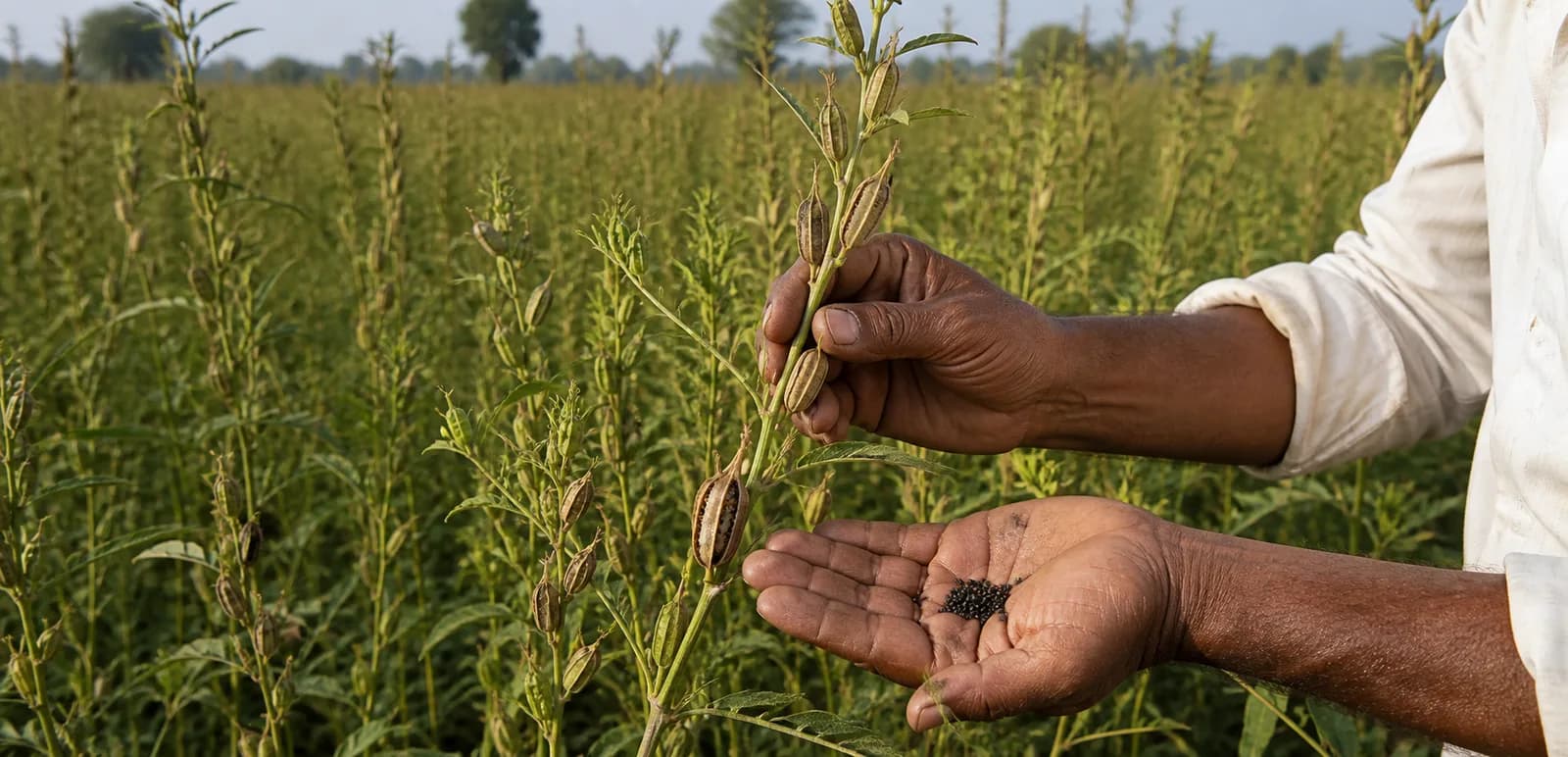
Direct answer: harvest when a representative majority of the crop shows the maturity signs defined for the chosen variety, before avoidable shattering, pod opening or weather damage. Do not judge from one border plant. TNAU advises using several maturity signs together: lower-leaf shedding, yellowing of upper leaves and stems, capsule colour change and full varietal seed colour. Harvest before widespread capsule opening causes shattering loss.
Crop practice changes with state, district, variety, season, soil test, rainfall and irrigation. Use the figures in this article as examples from named institutions, not as a universal prescription. Confirm seed, nutrient and crop-protection decisions with the current package of practices from your State Agricultural University, Krishi Vigyan Kendra (KVK) or agriculture department.
What signs show maturity?
Sample the crop instead of relying on one border plant
- Lower leaves begin to shed.
- Upper leaves and stems lose green colour and turn yellow.
- Capsules change colour progressively.
- Seeds sampled from representative capsules show the full dark colour of the variety.
- The crop is mature enough to cure after cutting but has not begun widespread shattering.
Open and inspect samples from several positions. Compare seed colour and hardness with the varietal description. Record the observation and expected weather before deciding whether to pick mature units, cut plants or wait.
Why can harvest timing reduce losses?
Sesame capsules can open naturally as they mature. Wind, handling and waiting too long can spill seed before it reaches the threshing sheet. Dark seed also shows admixture with pale sesame clearly, so cleaning equipment and keeping lots separate is especially important.
Harvesting very early leaves more immature, high-moisture seed. Harvesting too late can increase field loss, weathering, insects or quality variation. The best point balances maturity with the crop's shattering habit and the farm's ability to dry promptly.
How should harvested material be handled?
- Use clean cutting, picking and collection equipment.
- Keep plants and pods off damp or bare soil.
- Separate visibly diseased or heavily infested material.
- Move harvested material to the drying area without compacting a wet mass.
- Maintain lot identity by variety, field and harvest date.
How should the crop be dried?
Dry promptly in thin layers, manageable bundles or another locally recommended system with good air movement. Protect the crop from unexpected rain and night moisture. Turn or rearrange it so the centre and edges dry evenly. Avoid using appearance alone to decide that the seed is safe for storage.
Measure seed moisture where possible. The correct target depends on whether the lot is food grain or planting seed, the storage duration, the container and the applicable buyer or certification standard. Do not seal warm seed; temperature differences can create condensation inside a bag or bin.
How are threshing and cleaning done?
Thresh on a clean sheet or floor and adjust machinery to reduce cracked or split seed. Winnow or screen out stems, chaff, soil, stones, weed seeds and light damaged grain. Clean equipment between lots, especially where black and white sesame or different seed classes must remain separate.
How should the clean lot be stored?
- Use clean, dry, food-suitable or seed-suitable containers as applicable.
- Label crop, variety or market class, lot, field, harvest date and measured moisture.
- Keep bags on pallets and away from walls, leaks and direct sun.
- Inspect for insects, heating, odour, condensation, caking or moisture migration.
- Use first-in, first-out stock control where quality requirements permit.
- Never apply an unapproved chemical directly to food grain.
What should a storage inspection record?
Use a simple log with lot identity, bag count or bin, inspection date, measured moisture where available, temperature or heating observations, insects, odour, roof or wall dampness and action taken. Inspect more closely after humid weather, building leaks or movement of old stock.
Sample from more than the top bag. Warm pockets and moisture migration can occur inside a stack. If a lot changes, isolate it and obtain appropriate food, seed or storage advice before blending, treating or selling it.
What quality defects should buyers and farmers watch?
| Signal | Possible concern | Response |
|---|---|---|
| Musty or sour odour | Moisture, heating or microbial deterioration | Isolate and assess the lot; do not mix it with sound grain. |
| Condensation or warm pockets | Seed stored too warm or wet, or moisture migration | Measure condition and obtain storage advice promptly. |
| Exit holes, webbing or live insects | Storage-pest activity | Segregate, identify and use an approved management protocol. |
| Many immature or discoloured seeds | Early harvest, uneven maturity or field/weather damage | Grade separately and confirm buyer specifications. |
| Stones, soil or other crop seed | Poor harvest-floor hygiene or cleaning | Reclean and trace the contamination point. |
After learning how the crop is grown, cleaned and handled, you can explore Grellow Black Sesame Seeds (Kala Til). The product link is for food buyers; seed for cultivation should come from an authorised source and match the locally recommended variety.
Frequently asked questions
What are the maturity signs of black sesame?+
Look for lower-leaf shedding, yellowing stems and upper leaves, capsule colour change and fully developed dark seed in representative sampled capsules.
Why should black sesame be harvested before all capsules turn brown?+
Waiting for every capsule can allow mature lower capsules to open and shed seed. Local guidance balances maturity with shattering risk.
How is black sesame dried after harvest?+
Keep harvested plants or seed on a clean surface, use managed layers or bundles with airflow, protect from rain, turn for uniform drying and verify moisture before storage.
What moisture should kala til have for storage?+
Use the measured target required by the intended food, buyer or seed standard and the container. TNAU publishes seed standards, but one figure should not be applied to every market lot.
How can black sesame be protected in storage?+
Store only clean, cool, adequately dry seed in labelled containers off the floor, away from leaks and walls, and inspect regularly for heating, condensation, odour and insects.
Sources & references
- All India Coordinated Research Project on Sesame and Niger: Sesame Production Package — ICAR-Indian Institute of Oilseeds Research
- Sesame Harvesting and Maturity Symptoms — Tamil Nadu Agricultural University Agritech Portal
- Seed Testing and Moisture Standards — Tamil Nadu Agricultural University Agritech Portal