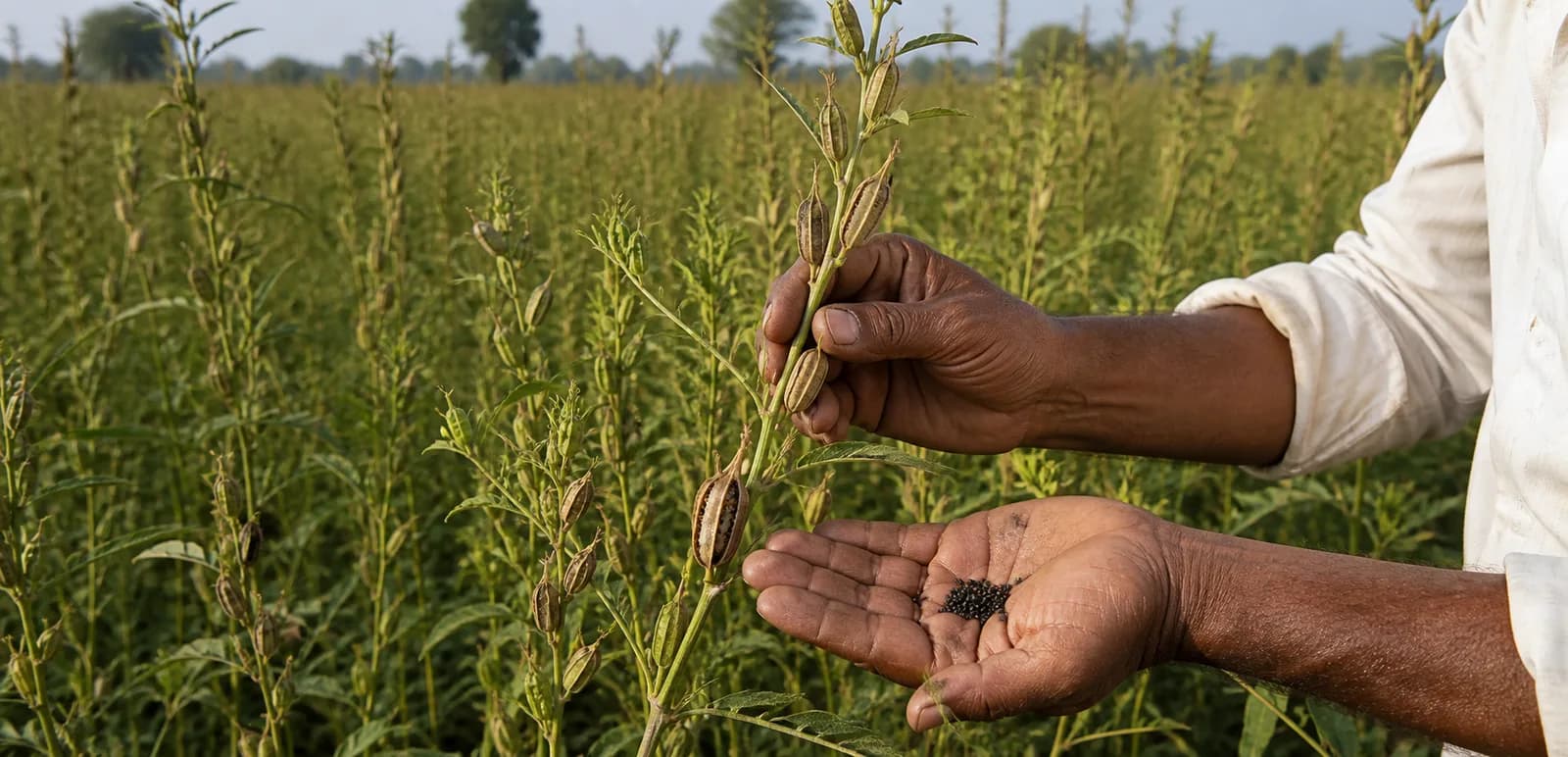
Black Sesame Sowing Season in India: When to Plant Kala Til
Understand kharif, post-monsoon and irrigated summer kala til sowing decisions through rainfall, soil moisture, temperature and local variety guidance.
5 min readRead guide
Topic guide
Source-aware cultivation, irrigation, crop protection, harvesting and post-harvest guides for sesame, kala til and safed til.
13 articles
Understand kharif, post-monsoon and irrigated summer kala til sowing decisions through rainfall, soil moisture, temperature and local variety guidance.
A practical guide to drainage, seedbed condition, soil testing, pH interpretation, rainfall and temperature planning for black sesame farming.
Follow kala til from certified planting seed through flowering and capsules to harvest, drying, threshing, cleaning and a food-ready black sesame lot.
Identify kala til maturity, limit capsule shattering, and handle curing, threshing, drying, cleaning, moisture and storage for better seed quality.
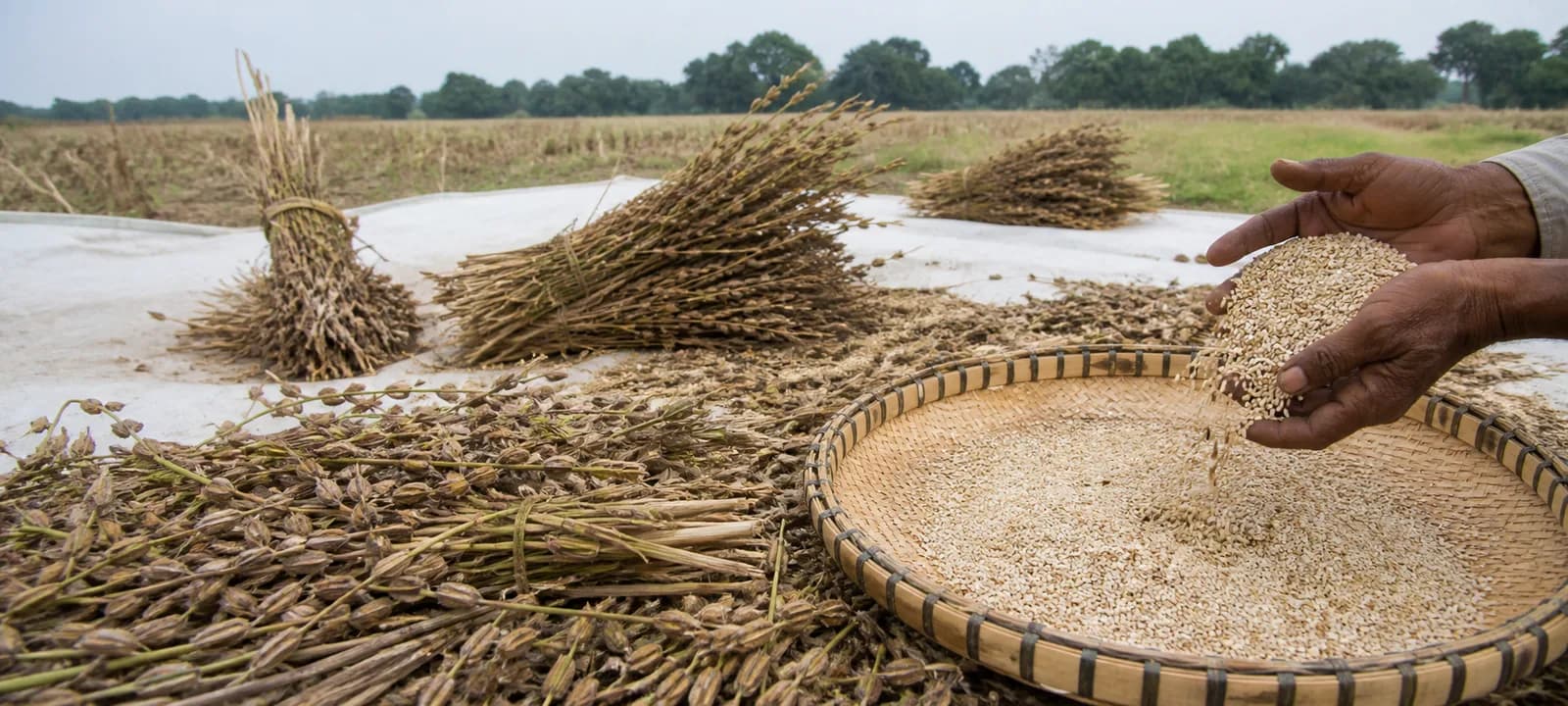
Plan safed til sowing through local monsoon, residual-moisture and irrigated windows without treating one state or date as universal across India.
A complete safed til farming guide for India covering variety, season, seedbed, sowing, water, nutrients, crop health, harvest, cleaning and storage.
Follow safed til from locally adapted planting seed through flowering and capsules to clean harvest, drying, threshing, grading and storage.
Compare kala til and safed til by variety, field management, harvest, segregation, buyer requirements and realistic profitability without broad claims.
The main Grellow sesame farming pillar for India, connecting til season, soil, seed, irrigation, IPM, harvest, black sesame and white sesame clusters.
Understand sesame germination, emergence, vegetative growth, flowering, capsules, seed filling, maturity, harvest and the management focus at each stage.
Identify important sesame insect, disease and storage-problem groups, scout fields consistently and use integrated, label-safe management principles.
Manage sesame water from emergence through flowering and capsule formation while avoiding fixed schedules, waterlogging and unnecessary late irrigation.