Common Pests and Diseases in Moong Farming
Recognise important moong insect, virus, leaf, root and storage-problem groups, scout fields and use integrated, locally validated management.
Quick answer
Quick answer
Important moong concerns include aphids, whiteflies, thrips, pod borers, mungbean yellow mosaic virus, powdery mildew, leaf spots, root rots and pulse beetles after harvest. Their importance changes by region and season. Use resistant varieties where recommended, maintain drainage and field hygiene, scout regularly, diagnose correctly and follow current local thresholds and labels.
Key takeaways
- Yellow mosaic symptoms and whitefly presence require early, accurate field attention.
- Sucking insects, pod feeders and natural enemies should be counted together.
- Drainage, rotation, seed health and resistant varieties reduce disease risk.
- Pulse-beetle prevention begins with harvest hygiene and dry, clean storage.
What are the common crop-health problems in moong?
Direct answer: monitor sucking insects, leaf- and pod-feeding insects, root and stem rots, leaf spots or mildews, and important virus or phytoplasma-like symptoms described in local advisories. The exact complex changes by region and season, so identification must come before treatment.
Crop practice changes with state, district, variety, season, soil test, rainfall and irrigation. Use the figures in this article as examples from named institutions, not as a universal prescription. Confirm seed, nutrient and crop-protection decisions with the current package of practices from your State Agricultural University, Krishi Vigyan Kendra (KVK) or agriculture department.
Common insect and mite problems
Begin with the affected plant part and field pattern
| Problem group | What to look for | First IPM questions |
|---|---|---|
| Aphids, whiteflies and other sucking insects | Colonies, sticky honeydew, curling, yellowing or insects under leaves | Natural enemies, virus risk, weed hosts and current threshold |
| Thrips | Scarring, distorted young growth or flower injury, especially in hot dry periods | Crop stage, field distribution and locally validated threshold |
| Pod borers | Feeding holes, damaged flowers or pods, larvae and frass | Larval stage, beneficial insects and pod-development stage |
| Pulse beetles after harvest | Eggs on seed, round exit holes and hollowed grain | Prompt drying, clean stores, lot inspection and approved storage protocol |
Common diseases and disorders
| Problem group | Field clues | Prevention or diagnosis focus |
|---|---|---|
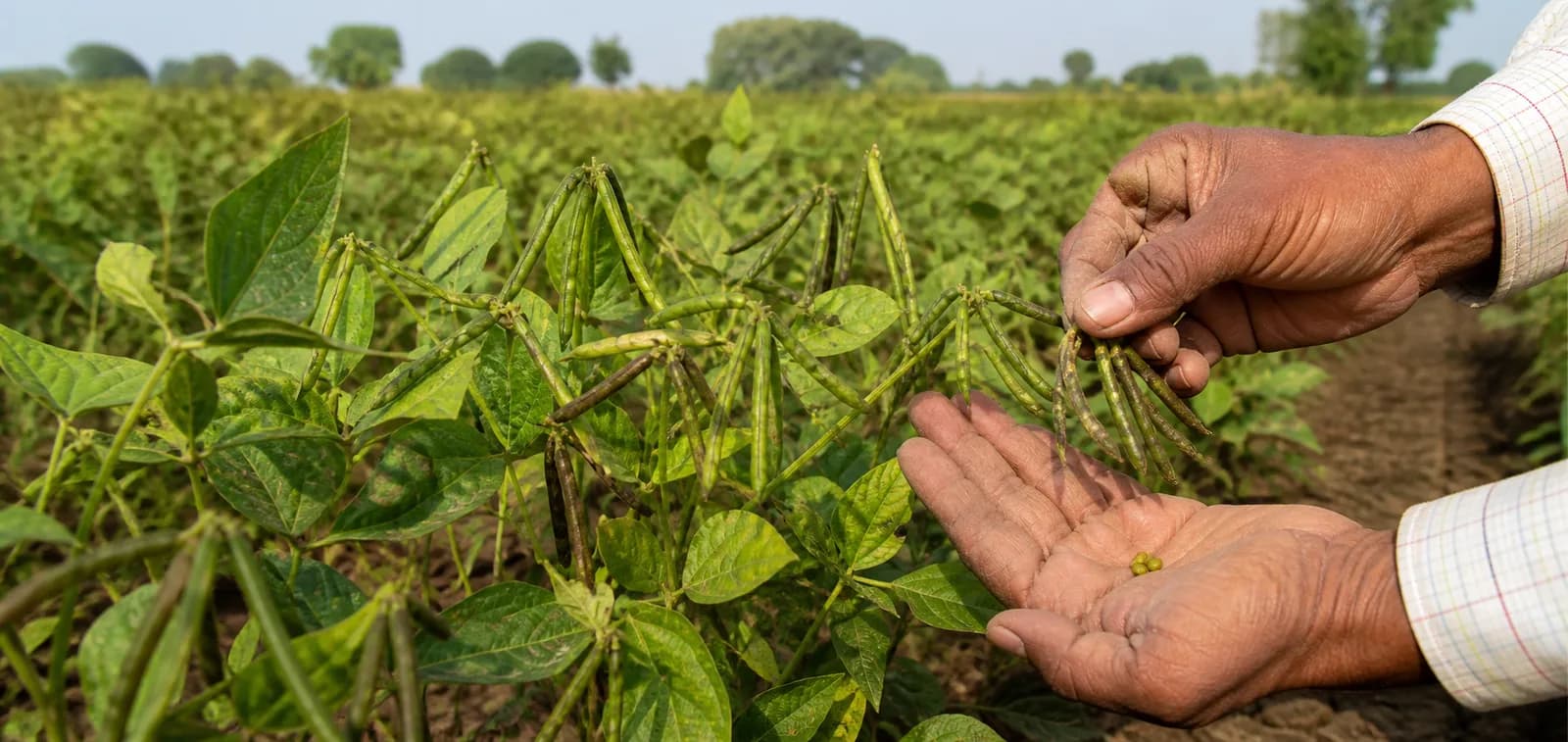
| Mungbean yellow mosaic virus | Irregular yellow and green patches, stunting and reduced pod set | Resistant variety, timely sowing, weed hosts, whitefly monitoring and early diagnosis |
| Powdery mildew | White powdery growth and loss of green leaf area | Variety, season, canopy condition and local diagnosis |
| Cercospora and other leaf spots | Distinct lesions that may merge and cause defoliation | Seed and residue history, humidity and laboratory or extension confirmation |
| Root or collar rots | Poor emergence, collar discoloration, wilt or rotted roots | Drainage, rotation, seed health and accurate pathogen diagnosis |
How should a field be scouted?
- Walk a W-shaped or similarly representative route rather than inspecting only the border.
- Check a consistent number of plants at several stops.
- Look above and below leaves, at growing points, flowers, stems and developing pods.
- Record pest, natural enemies, symptom pattern, crop stage and weather.
- Mark hotspots so they can be revisited.
- Photograph symptoms and, when needed, take a properly labelled sample to a KVK or diagnostic laboratory.
What preventive practices reduce risk?
- Use genuine, locally recommended seed and resistant or tolerant varieties where available.
- Follow timely sowing and crop rotation advice for the region.
- Maintain drainage and avoid plant stress from nutrient imbalance.
- Control volunteer plants and relevant weed hosts.
- Clean tools, storage areas and machinery between lots and fields.
- Conserve predators and parasitoids by avoiding unnecessary broad-spectrum sprays.
- Remove or isolate diseased material only as advised; do not move infected plants through clean areas.
Scout first, identify the problem correctly and combine resistant varieties, field sanitation, balanced nutrition, drainage, crop rotation, conservation of beneficial organisms and need-based action. Pesticide registrations and labels change. This guide does not give pesticide doses; use only products currently registered for the crop and follow the label plus local agricultural advice.
When should a pesticide decision be made?
Only after the problem is identified, the crop stage and infestation are assessed, and a current local threshold or advisory supports action. Confirm that the product is registered for the crop and target, check pre-harvest interval, protective equipment, pollinator precautions and label compatibility. Never copy a dose from an old article or from a different crop.
If a treatment is justified, calibrate equipment, protect the operator and bystanders, avoid drift into water or neighbouring crops, and follow re-entry and disposal directions. Keep the product label and application record with the field notes.
What should happen after an intervention?
Return to the marked areas and compare pest activity, fresh symptoms and natural enemies with untreated or less affected parts of the field. Record the product or practice, date, weather and result. If damage continues, recheck the diagnosis instead of automatically repeating the same treatment.
What can be mistaken for a pest or disease?
Nutrient imbalance, herbicide injury, salinity, waterlogging, drought, heat, wind, compacted soil and mechanical damage can resemble biological problems. Their field pattern often provides a clue: straight machinery lines, low patches, field edges or uniform whole-field symptoms may point away from an infectious cause.
Examine healthy and affected plants together, including roots and the soil around them. Ask what changed recently - irrigation, spray, fertiliser, weather or tillage. Accurate diagnosis protects beneficial organisms, avoids unnecessary cost and makes any later treatment more likely to work.
Continue with prevention through the whole season
Use the complete moong guide, irrigation guide and post-harvest guide to manage crop health across the season.
After learning how the crop is grown, cleaned and handled, you can explore Grellow Whole Green Moong (Sabut Moong). The product link is for food buyers; seed for cultivation should come from an authorised source and match the locally recommended variety.
Frequently asked questions
What are common pests of moong?+
Aphids, whiteflies, thrips, pod borers and storage pulse beetles are important groups in different systems. Identify the pest and crop stage before acting.
What does mungbean yellow mosaic virus look like?+
TNAU describes irregular yellow and green patches on leaves, stunting and reduced pod development. Similar symptoms still require confirmation.
How is yellow mosaic prevented?+
Use a locally recommended resistant variety, timely sowing, weed-host management, regular whitefly and symptom scouting, and current integrated guidance.
Should moong be sprayed preventively on a calendar?+
Routine calendar spraying can waste inputs and harm beneficial organisms. Scout, identify, check thresholds and use only current registered label directions.
How can pulse beetles in stored moong be reduced?+
Dry and clean the grain promptly, clean the store and containers, keep lots inspected and use only an approved storage protocol for the intended food or seed lot.
Sources & references
- Mungbean Yellow Mosaic Virus in Greengram — Tamil Nadu Agricultural University Agritech Portal
- Crop Production Guide: Greengram — Tamil Nadu Agricultural University Agritech Portal
- Pulse Beetle Identification in Stored Pulses — Tamil Nadu Agricultural University Agritech Portal
- ICAR-CIPHET and Department of Consumer Affairs Collaborate on Pulse Storage Protocols — Indian Council of Agricultural Research (2023)