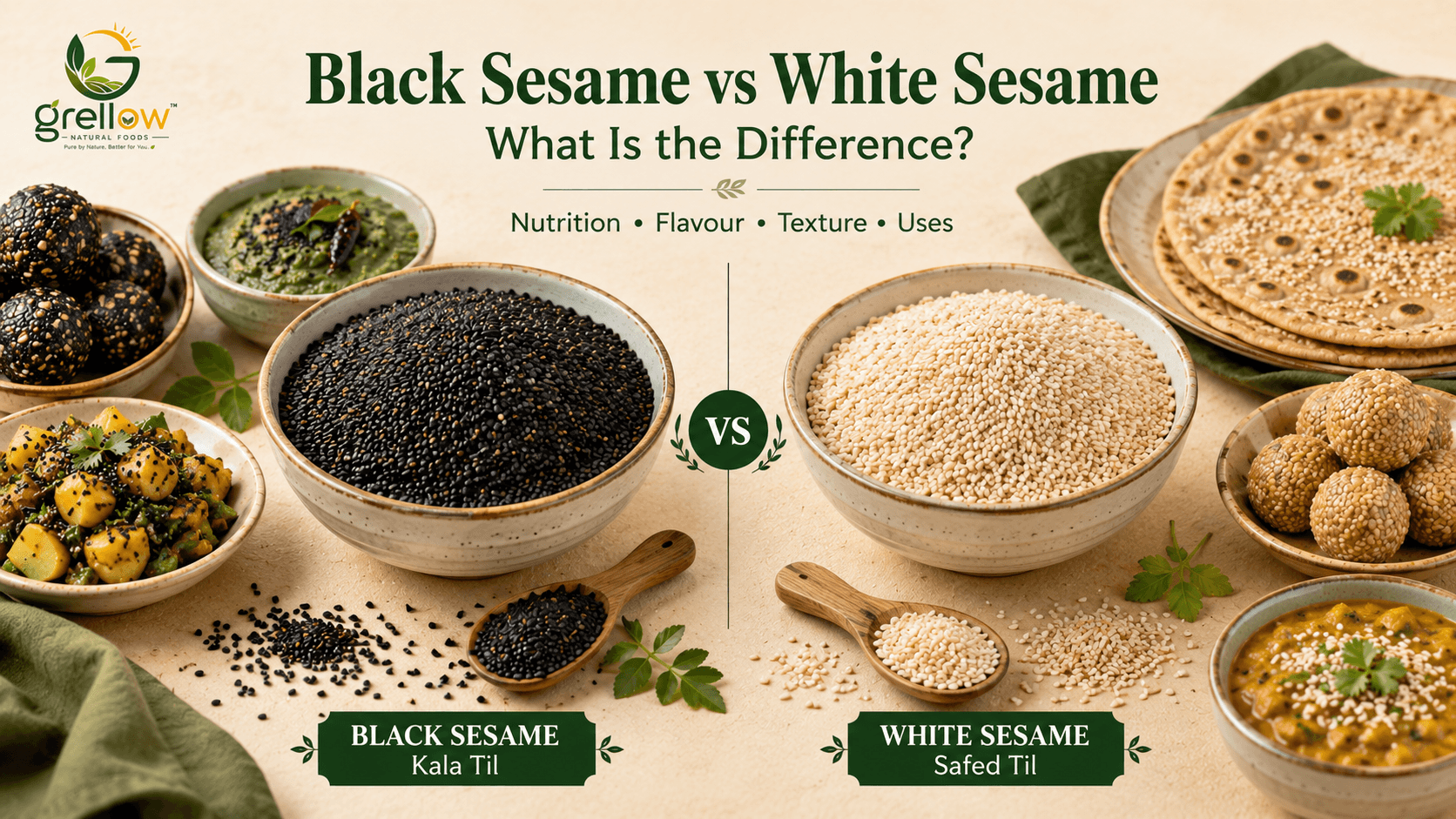
Black Sesame vs White Sesame Farming: What Is the Difference?
Compare kala til and safed til by variety, field management, harvest, segregation, buyer requirements and realistic profitability without broad claims.
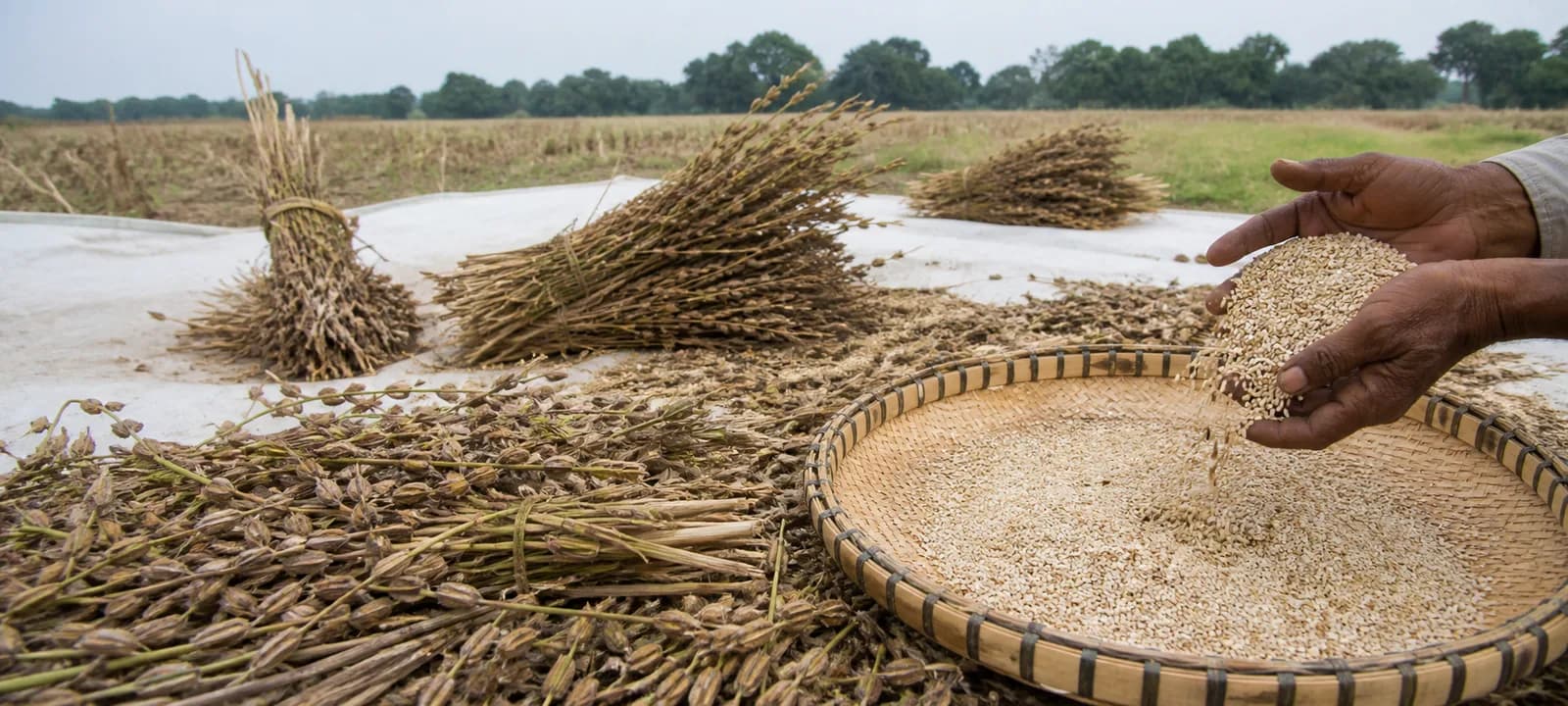
Quick answer
Quick answer
Black and white sesame are colour classes of Sesamum indicum, so their basic cultivation sequence is similar. Variety, duration, branching, disease reaction, season and local adaptation determine field practice more than colour. Seed colour matters for variety selection, lot segregation, visible contamination and buyer specifications. Neither colour is universally easier or more profitable.
Key takeaways
- Black and white sesame share the same crop species and core field sequence.
- Compare actual varieties, not colour stereotypes.
- Segregation and clean equipment protect seed-colour purity.
- Profit depends on real yield, cost, quality and market access.
What is the difference between black and white sesame farming?
Direct answer: black sesame and white sesame are colour classes within cultivated sesame, Sesamum indicum. Their core field operations are broadly similar. Variety, branching habit, duration, disease reaction, season and local adaptation usually change agronomy more than seed-coat colour alone. Colour matters strongly for varietal identity, cleaning, segregation and buyer requirements.
Crop practice changes with state, district, variety, season, soil test, rainfall and irrigation. Use the figures in this article as examples from named institutions, not as a universal prescription. Confirm seed, nutrient and crop-protection decisions with the current package of practices from your State Agricultural University, Krishi Vigyan Kendra (KVK) or agriculture department.
Black sesame vs white sesame farming at a glance
Seed colour is one trait, not the whole production system
| Point | Black sesame (kala til) | White sesame (safed til) |
|---|---|---|
| Crop species | Sesamum indicum | Sesamum indicum |
| Visible market trait | Dark seed coat; admixture with pale seed is conspicuous. | Pale seed coat; staining and dark admixture can be conspicuous. |
| Variety choice | Use a locally recommended dark-seeded variety with the required maturity and disease reaction. | Use a locally recommended white-seeded variety with the required maturity and disease reaction. |
| Field management | Driven by variety, season, soil, rainfall and production system. | Driven by variety, season, soil, rainfall and production system. |
| Harvest | Use varietal seed colour and capsule maturity, not dark colour alone. | Use varietal seed colour and capsule maturity; protect pale seed from staining. |
| Post-harvest | Clean equipment and keep lots segregated from white or brown sesame. | Clean equipment, avoid soil contamination and keep lots segregated from dark sesame. |
| Market decision | Confirm colour, purity, moisture and other buyer specifications before sowing. | Confirm colour, purity, moisture and other buyer specifications before sowing. |
Are sowing season and climate different?
Not simply because one seed is black and the other white. ICAR-IIOR recommendations are organised by state, season and variety. A black variety and a white variety may differ in duration or adaptation, but another pair may not. Compare the official varietal description and district recommendation rather than using colour as a shortcut.
Do they need different soil or fertiliser?
Both need good drainage, uniform establishment and a soil-test-based nutrient plan. A field prescription changes because of soil condition, preceding crop, irrigation and varietal response, not because dark seed automatically needs one fertiliser and pale seed another. Avoid universal colour-based doses.
Is one easier to harvest?
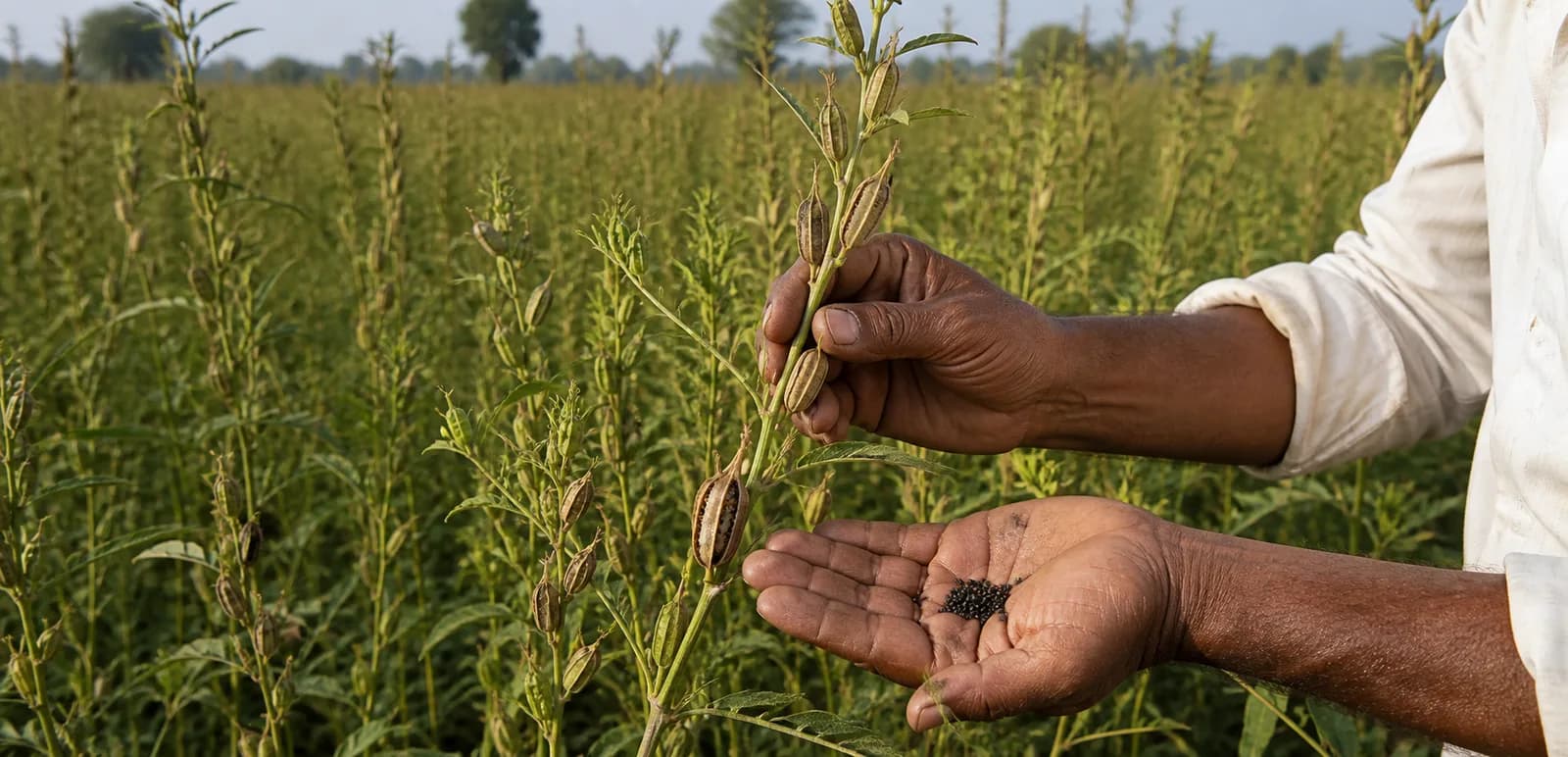
No colour is universally easier. Shattering tendency, plant architecture, maturity uniformity, weather and harvest method are the important variables. Harvest a representative sample at varietal maturity and keep losses visible with clean sheets or a prepared threshing floor.
Why does segregation matter?
Colour admixture can reduce visual uniformity and fail a buyer specification. Clean the drill, threshing floor, tarpaulins, transport and cleaning equipment between lots. Label bags immediately. Volunteer sesame from a previous crop and mixed seed lots can also affect identity.
Is one universally more profitable?
No. Profit depends on yield, price actually offered, quality deductions, seed and labour costs, irrigation, risk, market access and the farmer's alternative crop. A premium quotation is not a guarantee if the buyer, grade and quantity are uncertain. Confirm a realistic market channel before choosing the colour class.
How should a farmer choose?
- Identify locally recommended sesame varieties for the intended season.
- Confirm seed colour, maturity, disease reaction and production system.
- Ask buyers for written quality and quantity expectations.
- Compare realistic cost, yield risk and price, not promotional claims.
- Plan separate handling if more than one colour or variety is grown.
What should be agreed with a buyer?
Ask for the required seed-colour class, tolerated admixture, moisture method and limit, foreign-matter rules, damaged or immature seed tolerance, bag type, lot size, sampling method and delivery point. Clarify whether the quotation is for farm-gate seed, cleaned seed or another grade. A verbal premium without a written specification can hide cleaning cost or rejection risk.
Keep a representative retained sample from the delivered lot when practical and legal. Record weights, deductions and the basis of grading. These records help compare black and white sesame as real farm enterprises rather than relying on a headline market price.
What should not be inferred from seed colour?
- Black seed is not automatically drought-proof or disease-resistant.
- White seed is not automatically higher yielding or easier to thresh.
- Neither colour guarantees a premium without a matching quality lot and buyer.
- Food uses and nutritional differences do not prescribe the field nutrient dose.
Read the complete cultivation guides
Start with sesame farming in India, then compare the detailed black sesame farming guide and white sesame farming guide. For food uses rather than agronomy, read black sesame vs white sesame seeds.
See Grellow Black Sesame Seeds (Kala Til) and Grellow White Sesame Seeds (Safed Til). These are food products, not planting seed.
Frequently asked questions
Are black and white sesame different crops?+
They are seed-colour classes within the same cultivated species, Sesamum indicum. Their varieties can still differ in duration, architecture and local adaptation.
Does black sesame need different soil from white sesame?+
Not because of colour alone. Both need a suitable, well-drained field and a soil-test-based plan for the selected variety and region.
Is white sesame easier to harvest?+
Not universally. Shattering, maturity uniformity, plant architecture, weather and harvest method matter more than seed colour.
Is black sesame always more profitable?+
No. Profit depends on realised yield, price, quality, costs, risk and buyer access. Premium claims should be checked against a real market channel.
Can black and white sesame be handled together?+
They should be segregated when varietal or buyer purity matters. Clean sowing, harvest, threshing, transport and storage equipment between lots.
Sources & references
- All India Coordinated Research Project on Sesame and Niger: Sesame Production Package — ICAR-Indian Institute of Oilseeds Research
- Foundation and Certified Seed Production in Sesame — ICAR-Indian Institute of Oilseeds Research
- Crop Production Guide: Sesame (Gingelly) — Tamil Nadu Agricultural University Agritech Portal