Black Sesame Seeds for Hair: Nutrition, Uses & What You Should Know
A responsible look at kala til, hair nutrition and practical food uses—without claims that black sesame cures hair loss or regrows hair.

Quick answer
Quick answer
Black sesame seeds provide plant protein, unsaturated fats, iron, zinc and other minerals that may support overall nutritional intake. Adequate nutrition matters for normal hair production, but eating kala til has not been shown to cure hair loss, regrow hair, stop baldness or treat alopecia. Use black sesame as food and seek clinical advice for persistent or sudden hair changes.
Key takeaways
- Black sesame can contribute protein, fats, iron and zinc to the total diet.
- A nutrient-containing food is not the same as a proven treatment for hair loss.
- Deficiency, illness, stress, medicines, hormones and scalp conditions can all affect hair, so cause matters.
- Kala til is easiest to use in normal meals such as chutney, curd, roti dough and vegetables.
Do Black Sesame Seeds Help Hair?
Black sesame seeds can be part of a nutritionally adequate diet, and nutrition is one factor in normal hair production. That limited statement is different from saying kala til makes hair grow. No food can diagnose the reason for thinning, and black sesame should not be considered a treatment for hair loss.
Claims that one ingredient “reverses greying,” “stops hair fall” or “cures alopecia” are too strong. Hair changes have many causes, and a food that contains relevant nutrients may still have no effect when the underlying cause is genetic, hormonal, autoimmune, medication-related or connected to another health condition.
Which Nutrients in Kala Til Are Relevant?
Plant protein
Hair shafts are largely made from keratin, a protein. Sesame contributes plant protein, but the culinary quantity used in a topping is modest. Adequate protein is best built across meals using pulses, beans, dairy or suitable alternatives, eggs, fish, meat, soy, nuts and seeds according to preference and medical needs.
Iron
Iron is required for oxygen transport and many cellular processes. Plant foods provide non-haem iron, whose absorption is influenced by the meal. Pairing plant iron sources with vitamin-C-rich foods such as amla, guava, citrus, tomato or capsicum can improve absorption. Do not self-treat suspected iron deficiency with sesame; a clinician can assess symptoms and order appropriate tests.
Zinc
Zinc supports many functions involving cell growth and protein synthesis. Sesame contains zinc, yet it is only one source. The amount absorbed from plant foods varies, and excessive zinc supplements can be harmful. Food-first variety is a safer general approach unless a professional recommends otherwise.
Dietary fats and energy
Black sesame supplies unsaturated fats and energy. Very restrictive diets may leave people short of energy or essential nutrients, but simply adding sesame cannot correct every imbalance. The whole pattern—meals, total intake and dietary variety—matters.
Other minerals and plant compounds
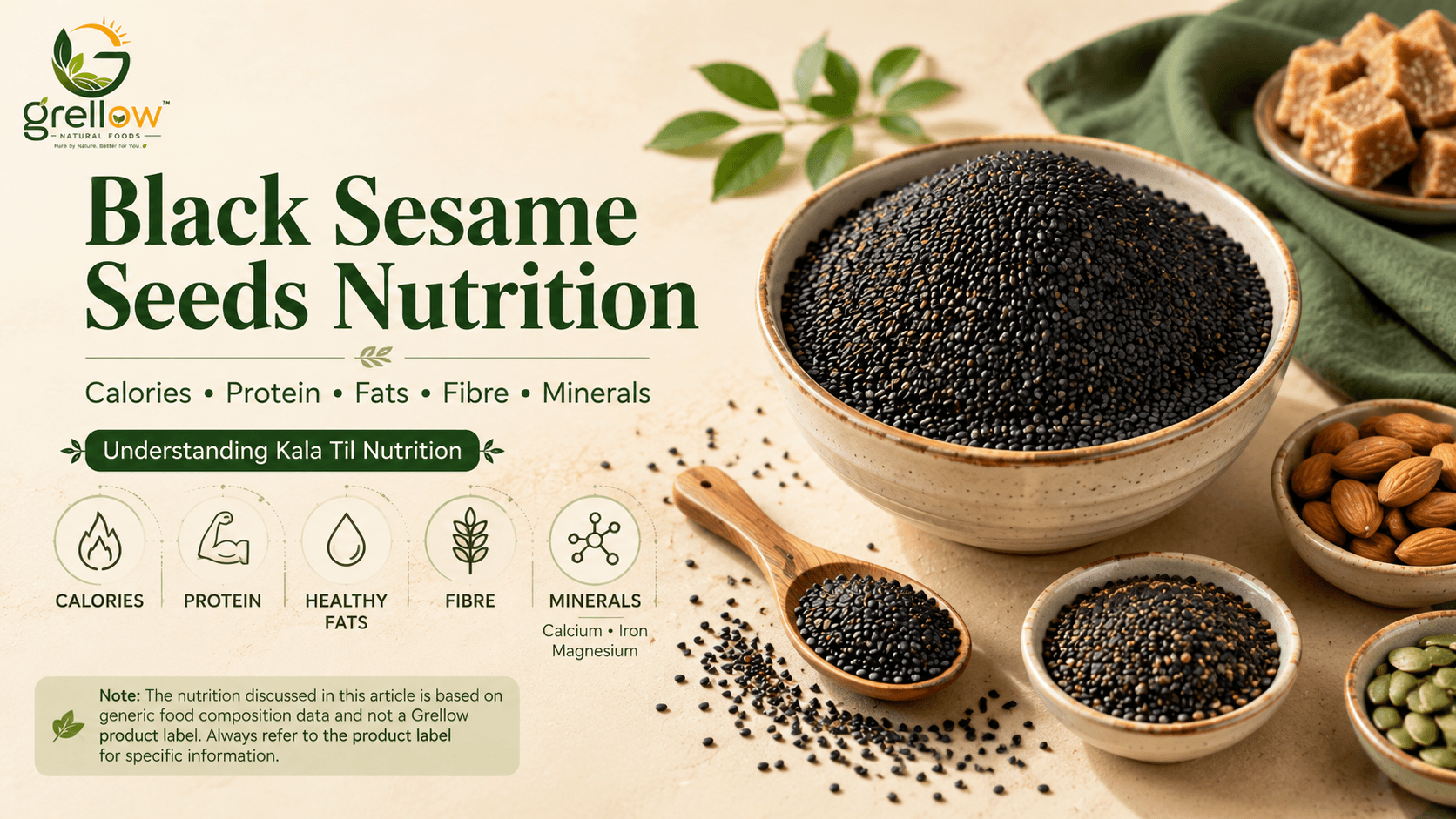
Kala til also contains magnesium, calcium, copper and naturally occurring lignans. These help describe sesame as a nutrient-dense food; they do not establish a specific hair-growth result.
What Black Sesame Cannot Be Expected to Do
- It cannot be promised to regrow a receding hairline or reverse genetic baldness.
- It is not a treatment for alopecia areata, scalp infection, psoriasis or dandruff.
- It cannot replace assessment for thyroid disease, anaemia, hormonal changes or medicine side effects.
- It does not reliably reverse grey hair.
- Eating more than a normal food amount does not make results more likely.
Responsible nutrition advice avoids turning a plausible nutrient link into a guaranteed cosmetic result.
How to Use Black Sesame in a Hair-Supportive Diet
Think about meal quality first. Add sesame to foods that also bring vegetables, protein and whole grains rather than taking it alone.
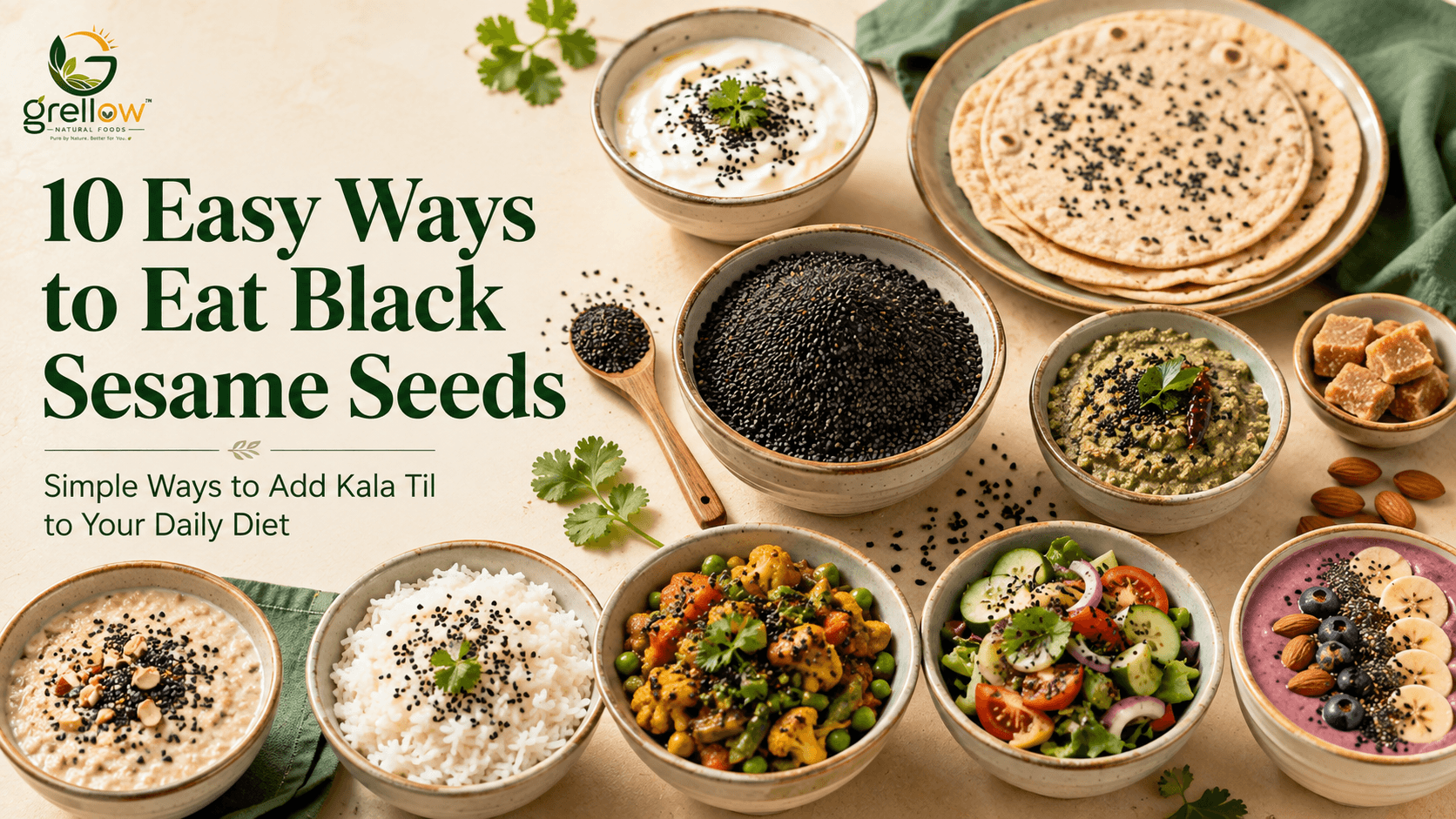
- Til chutney with dal and roti: the chutney adds sesame while the meal provides a broader mix of protein, fibre and micronutrients.
- Sesame curd bowl: combine roasted kala til with plain curd, cucumber and cumin if dairy suits you.
- Seeded roti dough: mix a small spoonful through atta so the seed becomes part of an ordinary meal.
- Vegetable topping: finish beans, cabbage or leafy vegetables with roasted sesame and include a pulse or other protein food.
- Oats with fruit: add crushed sesame and a vitamin-C-rich fruit rather than relying on a sweet sesame snack.
For more kitchen ideas, see how to eat black sesame seeds in 10 easy ways.
Eating Sesame vs Applying Sesame Oil
Eating sesame and applying sesame oil are different exposures. Food contributes nutrients after digestion. Oil on the hair can reduce friction or add temporary shine for some people, but that cosmetic effect is not proof of new hair growth. Patch-test topical products, keep them away from irritated skin and stop if a reaction occurs. A person with sesame allergy should discuss both food and topical exposure with a clinician.
When Should Hair Loss Be Assessed?
Seek medical advice if hair loss is sudden, occurs in patches, follows a major illness, comes with scalp pain or rash, or continues to worsen. Also ask for help if you have fatigue, unexplained weight change, menstrual changes, signs of nutritional deficiency or a new medicine. Early assessment can identify causes that food advice alone would miss.
A clinician may review diet, family history, hair-care practices, medical conditions and laboratory results. Supplements should follow a demonstrated need; unnecessary iron or zinc can cause harm and interact with treatment.
A Balanced Conclusion
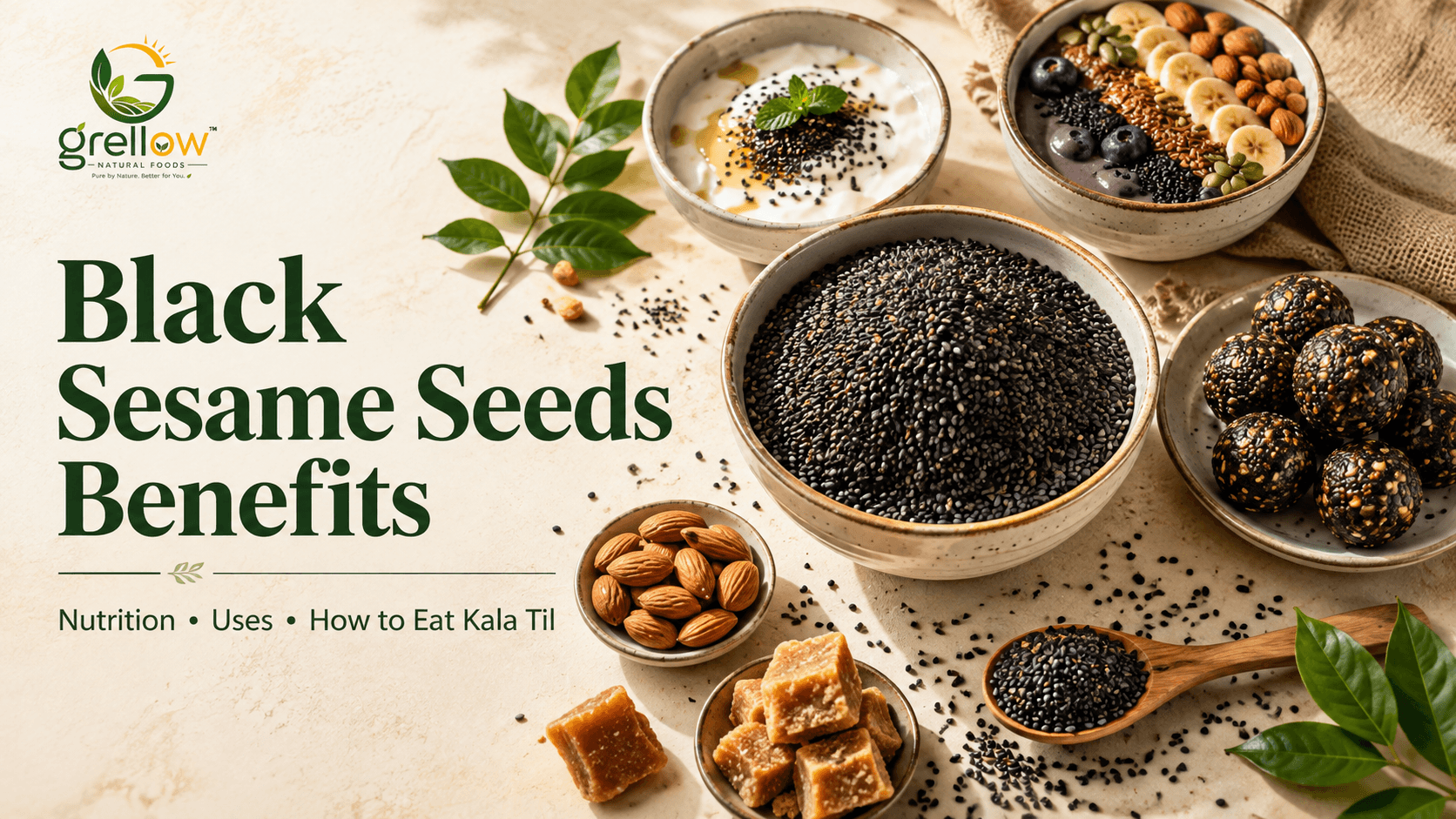
Black sesame is a useful seed, not a hair medicine. It may support overall nutritional intake when it replaces less nutritious toppings or helps make balanced food enjoyable. Use kala til for its taste and nutrient contribution, keep expectations realistic and address persistent hair concerns at their source. For the wider food context, read black sesame seeds benefits and black sesame nutrition.
Useful definitions
- Hair loss
- A broad description for increased shedding, thinning or bald patches; it is not a single diagnosis.
- Alopecia
- A medical term for hair loss with multiple possible types and causes.
Frequently asked questions
Can black sesame seeds regrow hair?+
There is no good basis for promising that black sesame regrows hair. It provides nutrients that can contribute to an adequate diet, but hair loss requires assessment of the actual cause.
Do kala til seeds stop hair fall?+
Kala til should not be described as a treatment that stops hair fall. Sudden, patchy or persistent shedding can have medical, hormonal, genetic, nutritional or medication-related causes.
Which nutrients in black sesame relate to normal hair nutrition?+
Black sesame contributes plant protein, unsaturated fats, iron, zinc and other minerals. The value comes from the total diet, not a guaranteed effect from one food.
How can I eat black sesame seeds?+
Use roasted or raw food-grade seeds in chutney, curd, roti dough, oats, rice, salads or vegetables. Follow the pack directions and avoid sesame if you have an allergy.
Is sesame oil the same as eating sesame seeds?+
No. Eating seeds contributes nutrients through the diet. Applying oil may change hair feel or reduce friction, but that does not show that it stimulates new growth.
When should I see a doctor about hair loss?+
Seek advice for sudden, patchy, painful or worsening hair loss, scalp rash, associated illness symptoms or concerns about deficiency. A clinician can investigate the cause.
Sources & references
- Indian Food Composition Tables 2017 — ICMR–National Institute of Nutrition (2017)
- Iron: Fact Sheet for Consumers — NIH Office of Dietary Supplements
- Zinc: Fact Sheet for Consumers — NIH Office of Dietary Supplements
- Sesame Added as a Major Food Allergen — U.S. Food and Drug Administration