Black Sesame Seeds Benefits: Nutrition, Uses & How to Eat Kala Til
A practical, source-aware guide to kala til nutrition, everyday dietary benefits, Indian uses, storage, safety and simple ways to eat black sesame seeds.
Quick answer
Quick answer
Black sesame seeds, or kala til, provide unsaturated fats, plant protein, fibre and minerals including calcium, iron, magnesium and zinc. They can add flavour, texture and useful nutrients to a varied diet when eaten in chutneys, rotis, salads, curd or traditional sweets. They are food, not a treatment, and anyone with a sesame allergy should avoid them.
Key takeaways
- Black sesame seeds are nutrient-dense, so a small culinary amount adds fats, protein, fibre and minerals without needing a special routine.
- Roasting changes flavour and crunch; raw and roasted seeds can both fit into food when handled and stored well.
- Black and white sesame overlap nutritionally, while colour, hull, taste and recipe suitability may differ.
- Sesame can support overall nutrient intake, but it does not cure hair loss, skin conditions or other illnesses.
- People with sesame allergy must avoid sesame and check ingredient labels carefully.
What Are Black Sesame Seeds?
Black sesame seeds are the dark-coloured seeds of Sesamum indicum. In many Indian kitchens they are called kala til or black til. The seeds have a compact, slightly oily bite and a deeper, toastier flavour than the pale sesame often used on buns or in til laddoo. Some black sesame is sold with more of its outer hull intact, although colour alone does not prove whether a batch is hulled.
Kala til is used across regional cuisines: in dry chutneys, til-based gravies, vegetable seasoning, festive sweets and roasted seed mixtures. Its value is not limited to one “health” use. It is a versatile pantry ingredient that contributes flavour, texture and nutrients to an otherwise balanced meal.
Black Sesame Seeds Nutrition
Indian food-composition tables describe sesame as an energy-dense seed containing fat, plant protein, carbohydrate, fibre and minerals. Exact values vary by variety, growing conditions, whether the hull remains, and the laboratory method used. A Grellow product-specific nutrition panel is not currently available for black sesame, so this guide deliberately avoids presenting a generic figure as a Grellow pack value.
Major nutrients in kala til
- Unsaturated fats: most of the seed's energy comes from fat, including unsaturated fatty acids. This makes sesame rich rather than “free food”; it is best used as an ingredient, not eaten absent-mindedly by the bowl.
- Plant protein: sesame contributes protein, though a spoonful is not a replacement for a full protein-rich meal containing pulses, dairy, eggs, fish, meat, soy or other suitable foods.
- Dietary fibre: whole seeds contribute fibre. Fibre supports normal digestion, but increasing any high-fibre food suddenly can cause gas or discomfort in some people.
- Minerals: sesame contains calcium, iron, magnesium, phosphorus, copper and zinc. The amount absorbed by the body is not identical to the amount measured in the seed and depends on the total meal.
- Plant compounds: sesame contains lignans and other naturally occurring compounds studied for antioxidant activity. That does not make sesame a medicine or guarantee a clinical effect.
What Are the Potential Benefits of Black Sesame Seeds?
The most defensible black sesame benefit is simple: kala til helps diversify the diet and supplies nutrients in a compact form. Benefits should be understood in the context of the whole eating pattern rather than as a promise attached to one ingredient.
Useful nutrition for everyday meals
A spoonful mixed into chutney, dough, curd or vegetables can add richness, a nutty taste and seed-based nutrients. Because sesame is energy-dense, a culinary sprinkle can be more practical than a large serving. Pair it with vegetables, whole grains, pulses and other protein foods for a more complete meal.
Digestion and fibre
Fibre adds bulk to the diet and supports normal bowel function. Black sesame is one contributor; fruit, vegetables, legumes and whole grains usually supply more fibre across the day. Drink fluids and increase fibre-rich foods gradually if your current intake is low.
Bone-supporting nutrients
Calcium, magnesium, phosphorus, protein and other nutrients contribute to normal bone maintenance. Sesame contains several of these, but the amount can differ substantially between hulled and unhulled seeds. Bone health also depends on vitamin D, physical activity, overall nutrition and individual medical factors.
Heart-friendly dietary context
Replacing some foods rich in saturated fat with foods that provide unsaturated fat can be part of a heart-conscious eating pattern. Kala til may play a small role through chutneys, toppings or seed mixtures. Adding sesame on top of an otherwise unbalanced diet does not cancel excess salt, sugar or saturated fat.
Hair-related nutritional relevance
Hair is produced by living follicles that require adequate energy, protein and micronutrients. Black sesame contributes protein, fats, iron and zinc to overall food intake. This is nutritional context only: black sesame should not be considered a treatment for hair loss, alopecia, scalp disease or baldness. Persistent or sudden hair loss deserves clinical assessment because causes can include illness, medicines, hormonal changes and nutrient deficiencies.
Skin-related nutritional relevance
Skin health is influenced by the overall diet, hydration, sun exposure, sleep and medical factors. The fats, protein and minerals in sesame can be part of adequate nutrition, but eating kala til has not been shown to clear acne, change complexion or treat a skin condition. Use it as food, not as a promised cosmetic remedy.
How Can You Eat Black Sesame Seeds?
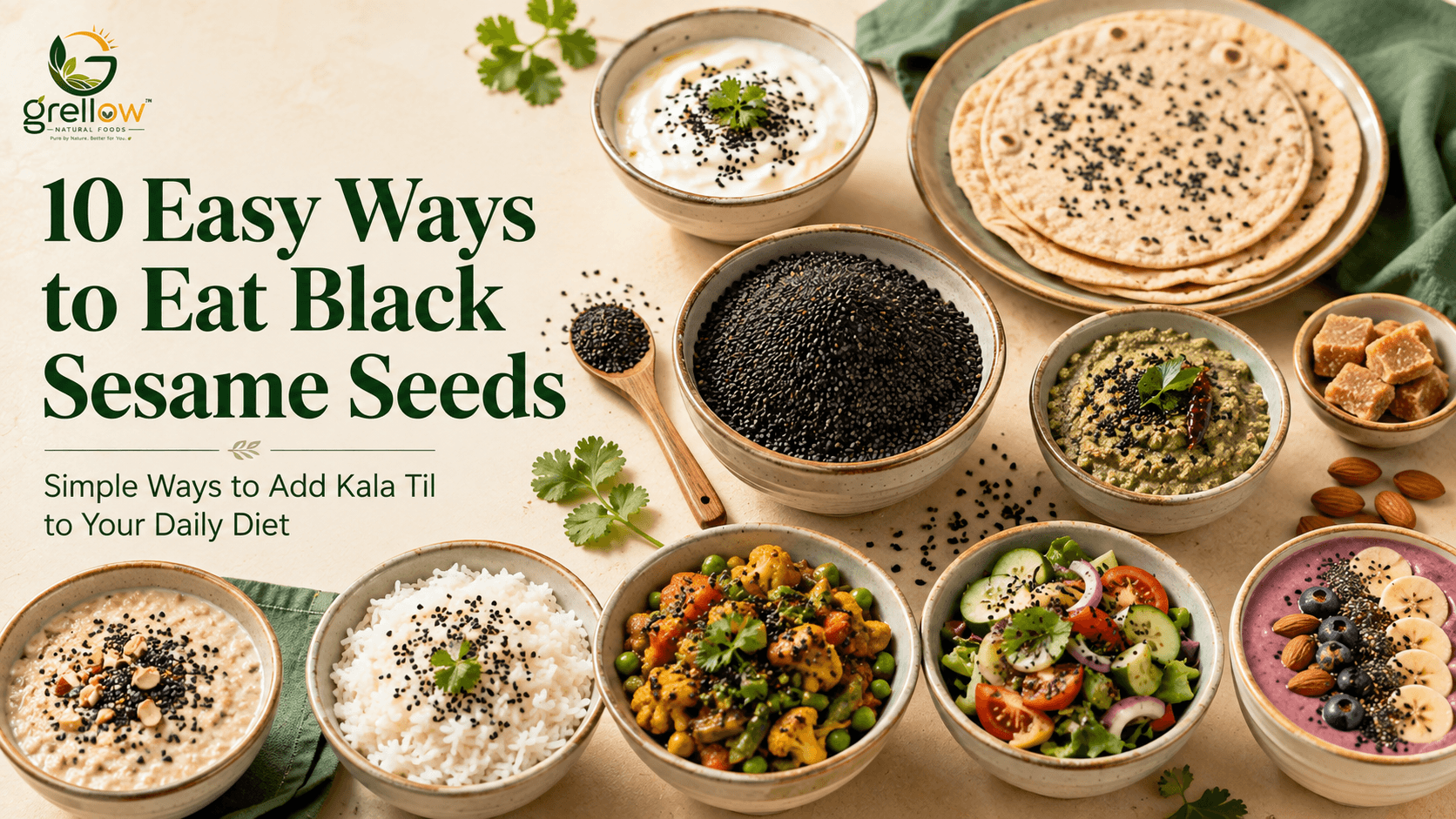
Use black sesame where its roasted aroma and dark colour improve the dish. For detailed ideas, see 10 easy ways to eat black sesame seeds. Useful starting points include:
- Dry-roast briefly over low heat, cool and sprinkle on sabzi or rice.
- Grind with chilli, garlic, coconut or roasted gram for a regional-style chutney.
- Knead a spoonful into roti, thepla or paratha dough.
- Stir into plain curd with salt, cumin and chopped vegetables.
- Add to oats, salads or a homemade seed mix.
- Use with jaggery in laddoo or chikki, remembering that the finished sweet also contains added sugar.
How much do people generally use in food?
There is no universal sesame “dose” for healthy people. Recipes often use a sprinkle, a spoonful, or a larger measured quantity when sesame is the base of a chutney or sweet. Let the dish, your total diet, tolerance and the pack directions guide the amount. More is not automatically better.
Raw vs Roasted Black Sesame Seeds
| Point | Raw | Dry-roasted |
|---|---|---|
| Flavour | Milder and slightly earthy | More aromatic and nutty |
| Texture | Firm, sometimes subtle in wet dishes | Crisper when freshly cooled |
| Best uses | Dough, wet chutney, cooked gravies | Toppings, dry chutney, seed mixtures |
| Handling | Use a clean product intended for eating | Roast gently; scorching makes seeds bitter |
Roasting is mainly a flavour and texture decision. Warm a dry pan, keep the heat low, stir continuously and stop when the aroma becomes noticeable. Cool completely before storing; trapped steam encourages loss of crunch.
Black Sesame vs White Sesame
Black sesame often tastes stronger and looks striking in chutneys, rice and toppings. White sesame is generally milder and blends easily into sweets, tahini-style pastes and bakery foods. Nutrient profiles overlap, but hull status and variety can affect measured minerals more than colour alone. Read the full black sesame vs white sesame comparison before choosing for a recipe.
How to Store Kala Til
- Keep seeds in a clean, airtight container away from heat, direct sun and moisture.
- Do not mix a fresh pack into an old container without cleaning and drying it.
- Use a dry spoon. Moisture and repeated exposure to warm kitchen air shorten quality.
- Ground sesame exposes more surface area and can lose freshness faster; grind smaller batches when practical.
- Follow the storage statement and best-before information on the actual pack.
Discard seeds that smell paint-like, stale or unusually bitter, or that show moisture, insects or mould. A best-before date is not a substitute for checking the food.
Who Should Be Careful?
Sesame can cause serious allergic reactions. Anyone with a diagnosed or suspected sesame allergy should avoid it and seek individual medical advice. Read labels on chutneys, spice blends, bakery foods and restaurant dishes where sesame may not be obvious. Young children and people with swallowing difficulty should not be given loose spoonfuls of seeds without age-appropriate preparation and professional guidance.
People who are changing fibre intake, managing a digestive condition, or following a medically prescribed diet should introduce sesame in a way that fits their care plan. If symptoms appear after eating it, stop and seek appropriate help.
Make Kala Til Part of a Varied Diet
Black sesame works best as a flavourful component of real food: a chutney beside dal and rice, a seed topping on vegetables, or an ingredient in roti dough. Explore black sesame nutrition in more detail and the responsible guide to black sesame seeds and hair nutrition. Grellow does not currently list a black sesame product, so this article intentionally does not point to an unavailable pack.
Useful definitions
- Kala til
- The common Hindi name for black sesame seeds.
- Sesamum indicum
- The cultivated plant species that produces sesame seeds in several colours, including black and white.
Frequently asked questions
What are black sesame seeds?+
Black sesame seeds are dark-coloured seeds of the sesame plant, commonly called kala til in Hindi. They have a nutty, slightly earthy flavour and are used in chutneys, sweets, breads, rice and vegetable dishes.
Can black sesame seeds be eaten every day?+
They can fit into regular meals for many people, but there is no required daily dose. Use a culinary amount that suits the dish and your total diet. Anyone with sesame allergy must avoid them.
Should black sesame seeds be roasted before eating?+
Roasting is optional. Gentle dry-roasting develops aroma and crunch, while raw seeds can be used in doughs, wet chutneys and cooked dishes. Avoid scorching them.
Are black sesame seeds good for hair growth?+
Black sesame supplies protein, fats and minerals that can support overall nutritional intake, but it is not proven to regrow hair or treat hair loss. Sudden or persistent hair loss should be assessed by a clinician.
What is the difference between black and white sesame?+
Black sesame usually has a stronger flavour and darker appearance; white sesame is often milder. Nutrition overlaps, while variety and whether the hull is present can affect texture and mineral values.
How should kala til be stored?+
Store it airtight in a cool, dry, dark place, use a dry spoon and follow the pack instructions. Ground sesame generally loses freshness faster than whole seeds.
Sources & references
- Indian Food Composition Tables 2017 — ICMR–National Institute of Nutrition (2017)
- Dietary Fiber — MedlinePlus, U.S. National Library of Medicine
- Iron: Fact Sheet for Consumers — NIH Office of Dietary Supplements
- Zinc: Fact Sheet for Consumers — NIH Office of Dietary Supplements
- Sesame Added as a Major Food Allergen — U.S. Food and Drug Administration