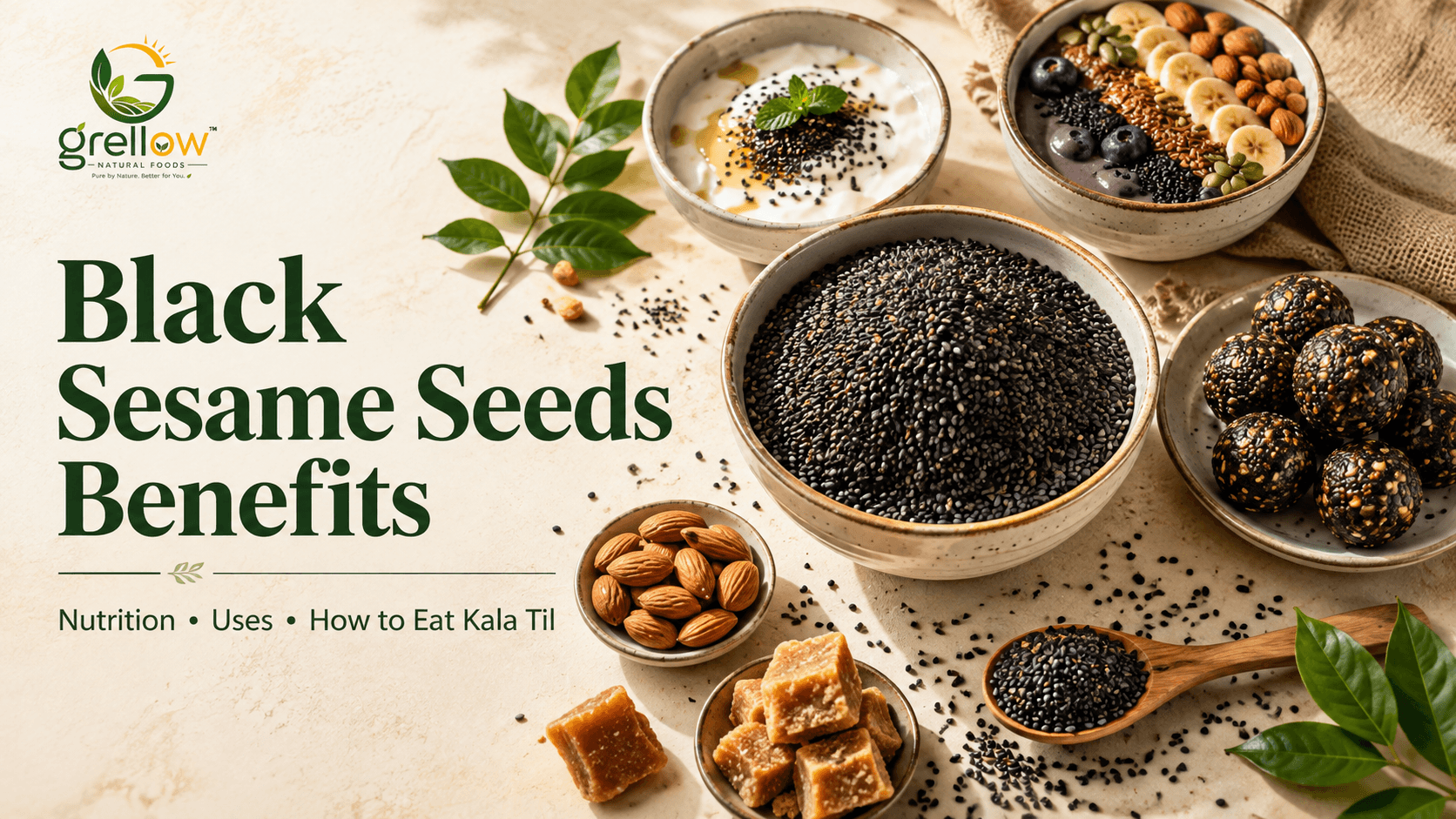
How to Eat Black Sesame Seeds: 10 Easy Ways to Add Kala Til to Your Diet
Ten practical ways to use kala til in Indian meals, from dry roasting and curd to roti dough, chutney, oats, rice and vegetables.

Quick answer
Quick answer
You can eat black sesame seeds raw in cooked dishes or dry-roast them gently for a nuttier taste. Sprinkle kala til over vegetables, rice, salads or oats; mix it into curd, smoothie bowls and roti dough; or grind it into chutney. Use amounts that suit the recipe rather than treating sesame as a supplement or fixed daily dose.
Key takeaways
- Gentle dry-roasting improves aroma, but black sesame does not have to be roasted for every recipe.
- Kala til works in both savoury and sweet food, making small, regular uses easier than eating it plain.
- Airtight storage and grinding small batches help protect flavour.
- There is no evidence-based universal daily dose for healthy people.
Do You Need to Prepare Black Sesame Seeds?
Packaged black sesame sold for food can be used directly in cooked dishes, but a short dry-roast makes its aroma easier to notice. Check the label first: a product may already be roasted, or the pack may provide preparation instructions. Remove visible debris, keep the seeds dry and avoid washing them unless the product specifically requires it, because damp seeds are difficult to roast evenly and should not be stored until fully dry.
How to dry-roast kala til
- Place a small batch in a clean, dry, heavy pan.
- Use low heat and stir or shake the pan continuously.
- Stop when the seeds smell nutty; black colour makes visual browning hard to judge.
- Transfer them to a cool plate immediately so residual heat does not burn them.
- Store only after they have cooled completely.
Sesame can pop as it heats. A lid held loosely above the pan can contain jumping seeds while still allowing steam to escape.
10 Easy Ways to Eat Black Sesame Seeds
1. Sprinkle dry-roasted seeds over vegetables
Add a teaspoon or a light sprinkle after cooking bhindi, beans, cabbage, pumpkin or stir-fried greens. Sesame brings crunch without changing the base masala. Add it at the end so the aroma remains clear.
2. Stir kala til into plain curd
Combine roasted, lightly crushed sesame with plain dahi, roasted cumin, salt and cucumber. This makes a quick side for rice, paratha or khichdi. Keep curd refrigerated and prepare only what you will serve.
3. Finish a smoothie bowl
Use sesame as a topping rather than blending a large amount into a drink. A small sprinkle on a bowl with fruit, curd and oats gives visible texture and makes it easier to notice how much you used.
4. Add it to salads
Black sesame pairs well with cucumber, carrot, cabbage, sprouts, citrus and lightly dressed grain salads. Mix it in immediately before serving to retain crunch. If a salad already contains nuts or seeds, keep the total topping sensible.
5. Knead it into roti or paratha dough
Add whole or coarsely crushed seeds to atta with ajwain, chopped methi or other familiar seasonings. Distribute them evenly before adding water. This is one of the least fussy ways to use kala til because the seeds become part of a normal meal.
6. Make a til chutney
Roast sesame and grind it with ingredients appropriate to your regional style: chilli, garlic, cumin, coconut, roasted chana, tamarind or lemon. Add water only when making a chutney for immediate refrigerated use. Dry chutney powder keeps differently from a wet chutney, so follow a tested recipe rather than guessing a shelf life.
7. Use it in laddoo or chikki
Til and jaggery are a familiar combination, especially in winter and around festivals. These foods can be enjoyable and nutrient-containing, but they are still sweets. Make smaller pieces, enjoy them deliberately and store according to the recipe.
8. Add it to oats or porridge
Stir roasted sesame into savoury oats with vegetables, or sprinkle it over warm porridge with fruit. Ground sesame thickens the bowl more than whole seeds, so start with less and adjust the texture.
9. Mix it through rice
Use roasted sesame in lemon rice, vegetable rice or a quick til rice powder. For an easy version, grind sesame with chilli and cumin, then toss a measured spoonful through hot rice with vegetables and a suitable amount of oil. Taste before adding more salt.
10. Combine it with homemade seasoning
Mix roasted black sesame with white sesame, crushed peanuts or roasted gram only if those foods suit everyone eating the dish. Use the blend on soup, poha, upma or sandwiches. Label homemade mixes clearly because sesame and peanuts are important allergens.
Can You Eat Black Sesame Seeds Daily?
Many people can include sesame regularly as part of varied meals, but “daily” is not a requirement and there is no universal dose. A recipe-sized amount is different from taking concentrated spoonfuls as a remedy. Consider the rest of the meal: sesame is energy-dense and often appears in sweets or salty seasoning mixes, where sugar, salt and total calories also matter.
Start with familiar culinary amounts if you are not used to seeds or fibre-rich foods. Stop eating sesame and get medical help if you develop symptoms of an allergic reaction. Anyone with a known sesame allergy must avoid it completely.
Whole, Crushed or Ground: Which Is Best?
| Form | Useful for | Practical note |
|---|---|---|
| Whole | Toppings, rice, dough and vegetable finishing | Best crunch and easiest portion visibility |
| Coarsely crushed | Curd, raita, salads and dry chutney | Releases more aroma while keeping texture |
| Finely ground | Wet chutney, paste, laddoo and sauce | Use promptly and store airtight because more surface is exposed |
Common Mistakes to Avoid
- High heat: black seeds can burn before the colour looks different. Roast by aroma and time, not colour.
- Grinding a large jar at once: ground seed can lose fresh flavour faster. Grind enough for a few uses.
- Adding wet spoons to the container: moisture damages quality and can encourage spoilage.
- Treating laddoo as a supplement: sesame sweets also contain jaggery or sugar and should be understood as sweets.
- Serving an unlabelled seed mix: tell guests when sesame is present, especially in chutney powders where it may be hard to see.
Build a Useful Kala Til Routine
Choose two or three formats that fit food you already cook—for example, a jar of roasted seeds for sabzi, a small dry chutney batch and sesame in weekly roti dough. That is more sustainable than forcing the same “health spoon” every morning. Read the complete guide to black sesame seeds benefits and the black sesame nutrition guide for more context.
Frequently asked questions
Can black sesame seeds be eaten raw?+
Food-grade black sesame can be used raw in cooked recipes or doughs. Gentle roasting is optional and mainly improves aroma and crunch. Follow the instructions on the pack.
How do you roast black sesame without burning it?+
Use a dry pan over low heat, stir constantly and stop when the seeds smell nutty. Transfer them to a cool plate immediately because they continue heating in the pan.
Can you eat kala til every day?+
Kala til can fit into regular meals for many people, but no fixed daily dose is necessary. Use a culinary amount that suits the recipe, diet and individual tolerance.
Is ground black sesame better than whole sesame?+
Neither form is universally better. Ground sesame blends into chutney and curd, while whole sesame provides crunch and is easier to sprinkle. Ground seed should be stored carefully and used promptly.
What is the easiest way to add black sesame to Indian food?+
Keep a small jar of gently roasted seeds and sprinkle them over cooked vegetables, rice, curd, poha or salads just before serving.
Sources & references
- Indian Food Composition Tables 2017 — ICMR–National Institute of Nutrition (2017)
- Dietary Fiber — MedlinePlus, U.S. National Library of Medicine
- Sesame Added as a Major Food Allergen — U.S. Food and Drug Administration