How to Choose Good Quality Red Chilli Powder: Colour, Aroma, Heat and Freshness Explained
Choosing Lal Mirch is easier when you look beyond colour. Use this practical checklist to assess aroma, heat, texture, freshness, packaging and label information.
Quick answer
Quick answer
The best red chilli powder for your kitchen is one that matches your preferred heat and colour, has a clean chilli aroma, comes in intact packaging and carries clear ingredient, batch and date information. Do not judge quality by bright colour alone. Compare labels, buy a practical quantity and follow the pack’s storage directions.
Key takeaways
- Bright colour alone does not prove quality or indicate heat.
- Choose a chilli powder suited to the dishes and spice level your household prefers.
- Inspect the ingredient declaration, pack seal, batch, dates and manufacturer information.
- Buy a quantity you can use while its aroma and flavour remain lively.
A packet of red chilli powder can look simple, but choosing one well involves more than finding the brightest shade of red. Lal Mirch powders differ in chilli variety, intensity, aroma, texture and age. The “best red chilli powder” is therefore not automatically the hottest or most colourful—it is the product that is clearly labelled, well packed and suited to the way your household cooks.
This practical buying guide explains the signals you can assess without relying on exaggerated purity claims or unreliable home tests.
Start With the Result You Want
Before comparing packs, think about your food. Do you want a noticeable chilli kick in dal and sabzi, or mainly a warm colour in gravies and marinades? Do young children eat the same meal? Do you cook occasionally or use Lal Mirch every day?
A hotter powder can deliver intensity in a smaller quantity, while a milder, colour-forward style may offer more control in dishes where appearance matters. Neither is universally better. The intended use should guide the choice.
Check the Ingredient Declaration
Read the ingredient list rather than assuming every product with a chilli image is a single spice. A pack sold as red chilli powder may be a single-ingredient product, while a chilli seasoning or masala can contain salt or other spices. Those are different products with different uses.
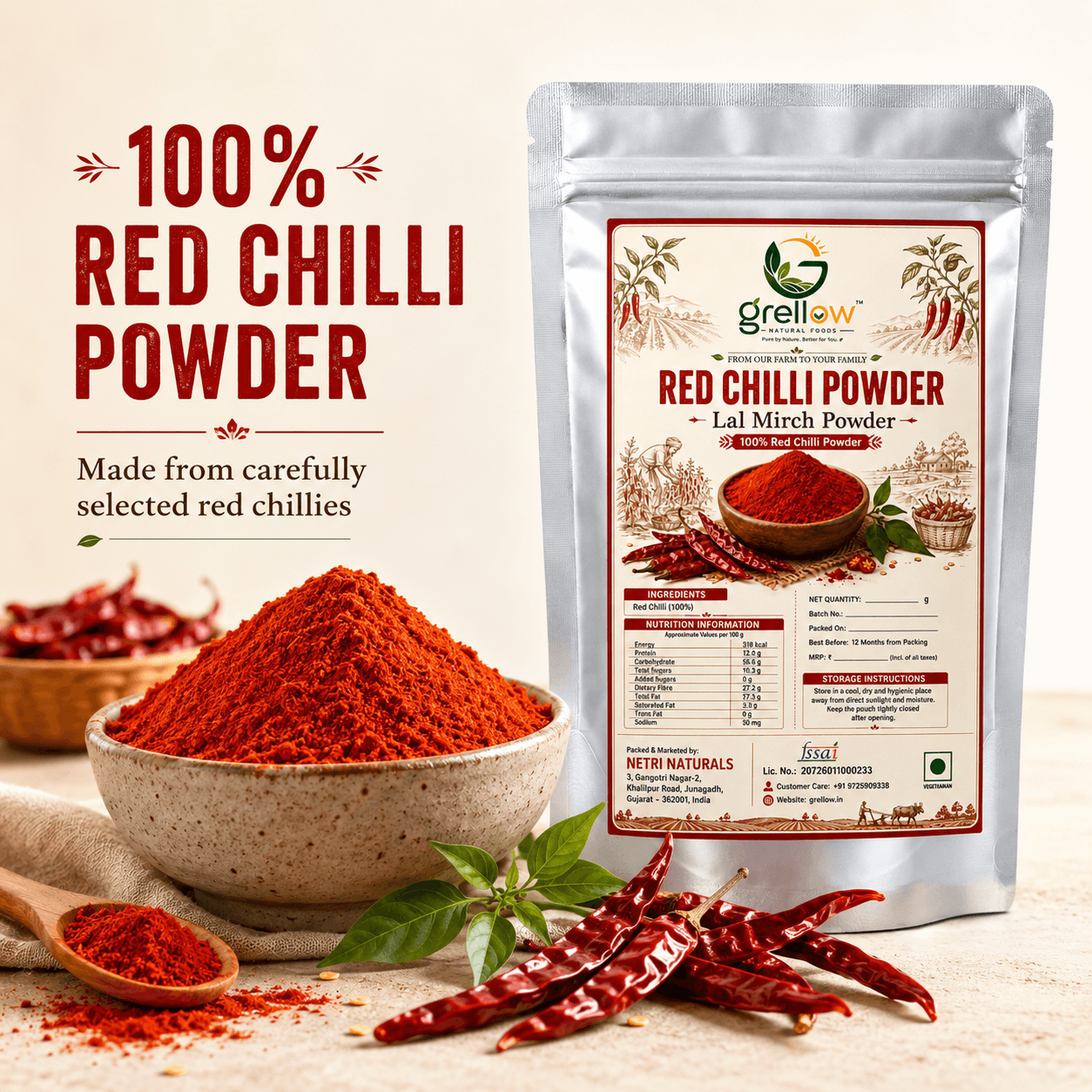
The current record for Grellow Red Chilli Powder | Pure Lal Mirch Powder lists red chilli as the ingredient. Use the physical pack label or live product page for the latest confirmed information whenever the product becomes available.
Judge Colour in Context
Colour is useful, but it is not a standalone quality test. Different chilli types naturally produce powders ranging from orange-red to deep crimson or brick red. Drying, grinding, light exposure and age can also change the appearance.
A strikingly bright powder is not automatically fresher, hotter or better. Similarly, a deeper powder is not automatically more authentic. Compare the colour with the product description and your past experience, then consider aroma, labelling and storage condition before forming a conclusion.
If you specifically need strong colour with gentler heat, a product labelled Kashmiri chilli powder may be more relevant. Read our comparison of red chilli powder vs Kashmiri chilli powder before substituting one for the other.
Notice the Aroma After Opening
Fresh chilli powder should have a clean, recognisable chilli aroma. The exact character can be earthy, warm, fruity or sharp depending on the chilli. What matters is that it smells lively and expected—not damp, musty, rancid or dominated by a stale cupboard odour.
Do not inhale deeply from the open pack, because fine chilli particles can irritate the nose and throat. Waft gently from a sensible distance. If a newly opened product has an obviously unusual smell or visible moisture, stop using it and contact the seller or manufacturer.
Understand Heat Before Buying in Bulk
Heat varies widely, even when two products share the same general name. Product descriptions may use terms such as mild, medium or hot, but individual tolerance is personal. If the chilli type or heat level is unfamiliar, start with a smaller pack where available.
When cooking with a new powder, begin below the usual recipe quantity. Let it cook into the dish, taste carefully and then adjust. This approach gives more reliable information than tasting dry chilli powder directly, which is unpleasant and may cause irritation.
Look at Texture and Flow
A reasonably even grind helps Lal Mirch spread through masala, batter or marinade. Some products are finely ground; others may feel slightly coarser. Texture alone does not prove quality, but unexpected hard lumps can suggest that moisture has entered the pack.
Small, soft clumps can sometimes form under humid conditions and may break apart easily. Persistent dampness, caking, visible growth, insects or an unusual odour are reasons not to use the powder. Keep the pack closed while assessing it to minimise exposure to humid air.
Inspect the Packaging
Before purchase, look for a properly sealed pack without tears, punctures, leakage, stains or signs of moisture. Avoid a pouch that is open, unusually swollen, poorly sealed or stored in direct sunlight. Clear printing and traceable details make it easier to identify the exact product if you have a question.
After opening, a resealable pack can be convenient, but only if the closure is kept clean and fully shut. If you move the powder into a jar, choose a clean, dry, food-safe container and retain the original label details.
Read Dates, Batch Details and Storage Instructions
Look for the batch or lot number, packed or manufactured date, best-before period, net quantity, manufacturer or marketer information and applicable licence details. Packaged foods in India are governed by labelling requirements; the Food Safety and Standards Authority of India regulations page is the appropriate official starting point for current rules.
A best-before date is not a promise that poor storage cannot affect the spice. Heat, moisture and frequent exposure to air can reduce aroma and colour sooner. Follow the manufacturer’s directions and use good kitchen practices.
Avoid Unreliable “Purity Tests”
Social media often promotes quick tests using water, rubbing or colour transfer. These demonstrations can be misleading because genuine chilli particles, natural pigments and different grind sizes behave differently. A kitchen test cannot replace regulated labelling, quality controls or laboratory analysis.
If you have a serious safety concern, keep the pack and invoice, stop using the product, and contact the manufacturer, seller or relevant food-safety authority. Do not make a safety conclusion from a viral video alone.
Buy the Right Quantity
Large packs can be economical for frequent cooks, restaurants or joint families, but they may be wasteful in a home that uses chilli slowly. Ground spices gradually lose aroma after opening. Choose a size you can finish comfortably and decant only if you can protect the powder from humidity and light.
Our guide on how to store red chilli powder covers containers, spoon hygiene and placement in more detail.
A Simple Buying Checklist
- Match the heat and colour profile to your cooking.
- Read the ingredient declaration carefully.
- Choose intact, clean and well-sealed packaging.
- Check dates, batch information and manufacturer details.
- Expect a clean chilli aroma after opening.
- Avoid dampness, infestation or an unusual smell.
- Buy a quantity your household can use sensibly.
Choosing good quality Lal Mirch is ultimately a process of checking several reliable signals together. For a broader introduction to the spice, begin with our complete red chilli powder guide. When the product is released, you can also review the label and available sizes on the Grellow product page before deciding whether it fits your kitchen.
Frequently asked questions
How can I identify good quality red chilli powder?+
Assess the complete pack: ingredient declaration, clean aroma, expected colour and texture, intact seal, readable batch and date information, and a heat level suitable for your cooking. No single visual clue is enough.
Does brighter red chilli powder mean better quality?+
No. Natural colour varies by chilli type and processing, and colour does not reliably predict heat or overall quality. Consider aroma, label information, freshness and pack integrity as well.
Should red chilli powder be very fine?+
Grind size can differ by product and intended use. A reasonably even texture helps distribution, but fineness alone does not establish quality. Follow the product description and choose the texture you prefer.
What should I check on a packaged chilli powder label?+
Check the ingredient list, net quantity, batch or lot details, packed or manufactured date, best-before information, manufacturer or marketer details, applicable licence details and storage instructions.
Is the hottest red chilli powder the best?+
Not necessarily. The best choice is the one that gives the desired heat, colour and flavour for your recipes. A very hot powder may be unsuitable for households that prefer gentler food.
Sources & references
- Grellow Red Chilli Powder | Pure Lal Mirch Powder — Grellow
- Food Safety and Standards Regulations — Food Safety and Standards Authority of India