Red Chilli Powder: A Complete Guide to Lal Mirch Powder for Everyday Indian Cooking
Red chilli powder brings heat, warmth and colour to everyday Indian meals. Learn how Lal Mirch works in cooking, how much to use, and how to balance its flavour.
Quick answer
Quick answer
Red chilli powder, commonly called Lal Mirch powder, is a ground spice used to add heat, warmth and colour to Indian food. Its intensity varies by chilli variety and grind, so start with a small amount, cook it briefly with the masala without burning it, and adjust according to the dish and your preference.
Key takeaways
- Red chilli powder varies in heat, colour and flavour.
- Add it carefully because more can be added later, but excess heat is difficult to remove.
- Brief cooking in a moist masala helps distribute flavour; direct high heat can scorch the spice.
- Check the ingredient label and store the powder airtight, away from heat, moisture and sunlight.
Open almost any Indian spice box and you are likely to find a shade of red among the turmeric, coriander and cumin. Red chilli powder—widely known as Lal Mirch powder—is one of the most familiar ways to build heat, warmth and colour in everyday cooking. A small amount can sharpen a simple dal; a carefully judged spoonful can bring a curry, sabzi or marinade into balance.
Yet not every red chilli powder behaves in the same way. The chilli variety, growing conditions, drying and grinding can all influence colour and intensity. That is why good cooking starts with understanding the powder in your kitchen instead of following every quantity mechanically.
What Is Red Chilli Powder?
Red chilli powder is made by grinding dried red chillies. In Indian kitchens, the general term Lal Mirch powder may cover powders with very different levels of heat, colour and flavour. Some are assertively hot, while others are selected mainly for their bright colour and gentler warmth.
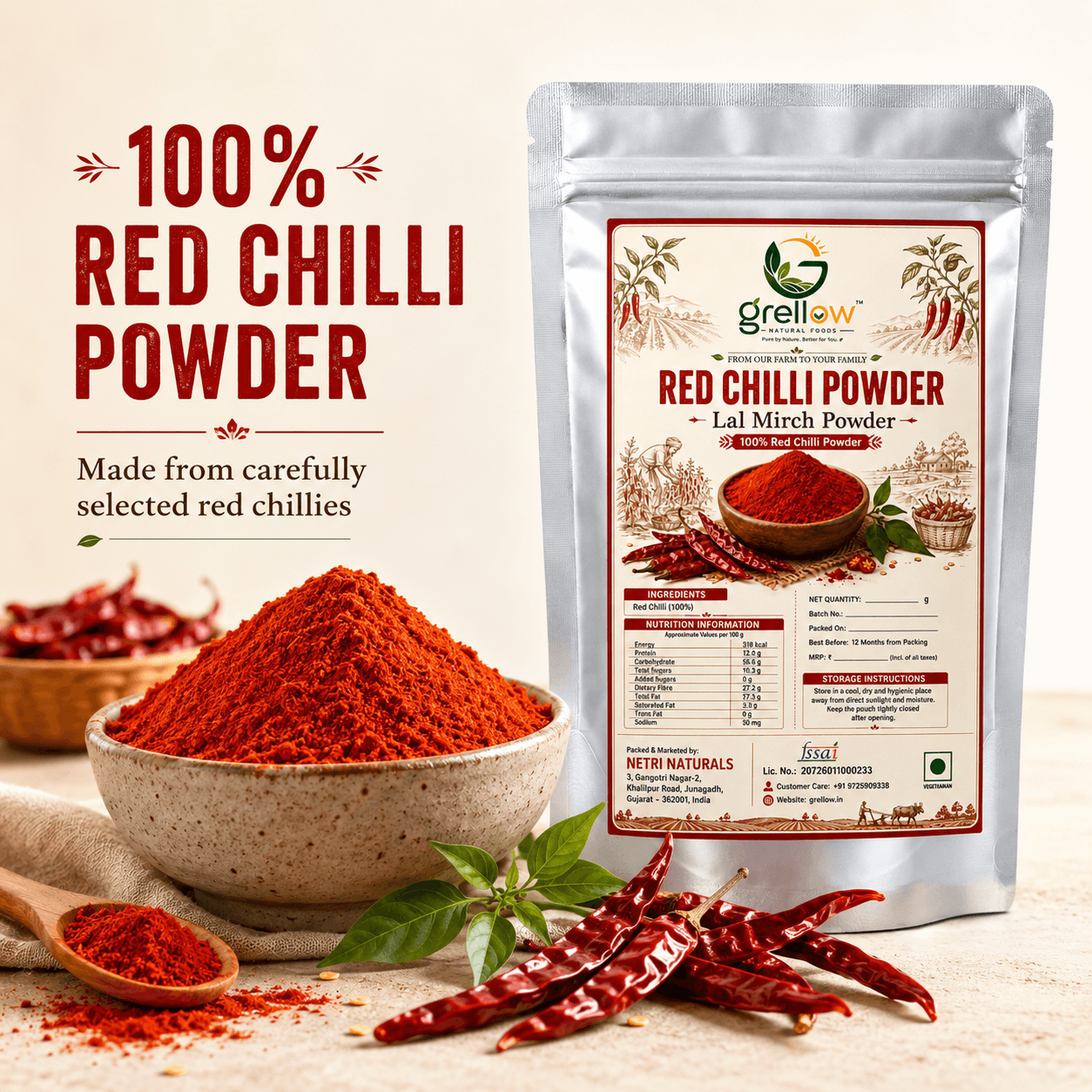
The powder is different from a mixed “chilli seasoning” that may contain salt, herbs or several spices. When buying a single-spice product, read the ingredient list so you know what you are adding to the pan. The current Grellow Red Chilli Powder | Pure Lal Mirch Powder product record lists red chilli as its ingredient; always refer to the pack label for the latest product information.
What Does Lal Mirch Powder Add to Food?
Heat
The most obvious role is chilli heat. It can lift mild ingredients such as potato, paneer, lentils and yoghurt-based gravies. Heat should support the dish rather than hide every other flavour, so quantity matters.
Colour
Red chilli powder can deepen the colour of masala, curry and marinades. Colour alone, however, does not tell you exactly how hot a powder will be. A vivid powder may be mild, and a darker or less brilliant powder may still be powerful.
Warm, savoury character
Used with coriander, cumin, turmeric, ginger, garlic or whole spices, Lal Mirch helps create a rounded masala. Even a modest pinch can prevent a dish from tasting flat, especially when the recipe contains rich, sweet or tangy elements.
How Red Chilli Powder Is Used in Indian Cooking
There is no single correct technique for every recipe. In many home-style dishes, ground spices are added after onions, tomatoes or another moist base has started cooking. The moisture and oil help spread the powder through the masala.
Red chilli powder may also be mixed into besan batter, dough, dry spice blends, chutneys, pickles or marinades. It is useful in tadka, but direct contact with very hot oil must be brief. Burnt chilli becomes bitter and can release harsh fumes, so lower the heat or add the powder immediately before pouring the tempering over the dish.
- Dal and legumes: add to the masala or use a small amount in the finishing tadka.
- Sabzi: combine with turmeric and coriander powder after the base ingredients soften.
- Curries: cook it into a moist onion-tomato, nut or yoghurt-based gravy.
- Marinades: mix evenly with yoghurt, oil, lemon or other recipe ingredients.
- Snacks: season chaat, roasted foods, pakora batter or savoury mixtures according to taste.
For more dish-by-dish ideas, see 10 everyday uses of red chilli powder in Indian cooking.
How Much Red Chilli Powder Should You Add?
Recipe quantities are a starting point, not a guarantee. A new pack may be hotter than the powder you used previously. Begin conservatively, especially when cooking for children, guests or anyone with a lower spice tolerance.
For a family-sized dish, some cooks begin with a small pinch or a fraction of a teaspoon, then adjust after the spice has cooked into the food. The exact quantity depends on the powder and recipe. Taste the finished masala rather than tasting dry powder directly, and remember that chilli heat may feel stronger after the dish rests.
How to Balance Too Much Chilli Heat
If a dish becomes hotter than intended, adding more chilli is obviously not the answer—but simply adding water can also make the flavour thin. Where the recipe allows, increase the unseasoned base: more cooked lentils in dal, more vegetables in sabzi, or more gravy ingredients in curry.
Fat, dairy and gentle sweetness can soften the perception of heat in suitable recipes. Yoghurt, cream, coconut, ground nuts or a small amount of jaggery may help, but each changes the character of the dish. Add gradually and maintain the original balance of salt, acidity and spice.
Choosing Red Chilli Powder for Your Kitchen
Look beyond a single claim such as “bright red” or “extra hot.” A useful choice depends on what you cook. If colour is the priority, a lower-heat chilli style may suit gravies and marinades. If you prefer a sharper kick, a hotter powder may be appropriate in smaller quantities.
Check the ingredient declaration, manufacturer details, batch information, dates, pack condition and any storage instructions printed on the label. Aroma should be recognisably chilli-like rather than stale or musty. A detailed checklist is available in our guide on how to choose good quality red chilli powder.
Red Chilli Powder and Kashmiri Chilli Powder
These names are sometimes used loosely, but they should not automatically be treated as identical. General red chilli powder can range from mild to very hot. Kashmiri chilli powder is commonly selected for a rich red colour and comparatively restrained heat, although brands and batches vary.
If a recipe specifies one type, substitution may change both appearance and spice level. Start with less, then assess. Our red chilli powder vs Kashmiri chilli powder comparison explains the practical differences.
How to Keep Lal Mirch Powder Fresh
Air, humidity, heat and direct light gradually reduce the character of ground spices. Keep the container tightly closed in a cool, dry cupboard, away from the stove and sink. Always use a clean, dry spoon and avoid shaking powder directly over a steaming pan.
Buying a sensible quantity for your household is often better than keeping a large open pack for a long period. If you transfer the spice to a jar, retain the original label or note the batch and date. Read our complete guide on how to store red chilli powder properly.
A Practical Everyday Spice
Red chilli powder earns its place in the Indian kitchen because it is adaptable. It can supply a bold kick or a quiet background warmth, depending on the chilli and the hand using it. Start small, cook it carefully, taste thoughtfully and let the other ingredients remain visible.
If you are planning a spice order, you can explore Grellow Red Chilli Powder | Pure Lal Mirch Powder as a future product option. The product is currently maintained as a draft, so availability and final pack information should be confirmed from the live product page when it is published.
Frequently asked questions
What is red chilli powder called in India?+
Red chilli powder is commonly called Lal Mirch powder in Hindi. Names vary by language and region, but it generally refers to dried red chillies ground into a powder.
How much red chilli powder should I use?+
The right amount depends on the chilli powder, the quantity of food and your preferred heat level. Start with a small pinch or fraction of a teaspoon, taste after cooking, and add more only if needed.
When should red chilli powder be added while cooking?+
It is often added with other ground spices after onions, tomatoes or another moist base has begun cooking. Keep the heat controlled and stir promptly so the powder blooms without burning.
Can red chilli powder be used only for spicy dishes?+
No. Small amounts can add warmth, savoury depth and colour without making a dish intensely hot. The result depends on the chilli variety and quantity used.
Is Lal Mirch powder the same as Kashmiri chilli powder?+
Not necessarily. Lal Mirch is a broad term for red chilli powder, while Kashmiri chilli powder usually describes a specific style valued for colour and relatively moderate heat. Product labels should be checked for the exact type.