Red Chilli Powder vs Kashmiri Chilli Powder: What Is the Difference?
Red chilli powder and Kashmiri chilli powder can differ in heat, colour and flavour. Compare their uses and learn how to substitute them more carefully.
Quick answer
Quick answer
General red chilli powder and Kashmiri chilli powder are not always interchangeable. Red chilli powder is a broad category that can range from mild to very hot, while Kashmiri chilli powder is commonly chosen for deeper red colour and comparatively moderate heat. Brands vary, so check the label and adjust substitutions gradually.
Key takeaways
- Red chilli powder is a broad name, while Kashmiri chilli powder describes a more specific style.
- Kashmiri chilli powder is commonly colour-forward and comparatively milder, but products vary.
- Substitution changes both heat and appearance, so replace gradually rather than spoon for spoon.
- Use the product label and your own taste as the final guide.
A recipe calls for Kashmiri chilli powder, but your spice box contains only regular Lal Mirch. Can you use it? Often yes—but the dish may not look or taste the same. The comparison between red chilli powder and Kashmiri chilli powder is mainly about heat, colour, flavour and how confidently you can control each one.
The important point is that “red chilli powder” is a broad description. It does not identify one fixed chilli or one universal heat level. Kashmiri chilli powder is a more specific market description, although products sold under that name can still vary.
Red Chilli Powder vs Kashmiri Chilli Powder at a Glance
| Feature | General red chilli powder | Kashmiri chilli powder |
|---|---|---|
| Meaning | A broad category of dried red chilli powders | A colour-forward chilli powder associated with Kashmiri chilli styles |
| Heat | Can range from mild to very hot | Commonly moderate or comparatively mild |
| Colour | Varies from orange-red to deep red | Usually selected for a rich red colour |
| Flavour | Varies by chilli; may be sharp, earthy or intense | Often gentler, with colour taking a larger role |
| Typical use | Everyday dal, sabzi, curry, tadka and seasoning | Gravies, marinades and dishes where red colour is desired |
This table describes common tendencies, not a guarantee. Always check the specific product label and learn how that powder behaves in your cooking.
What Does “Red Chilli Powder” Mean?
Red chilli powder, or Lal Mirch powder, is made by grinding dried red chillies. The chilli type may be stated on the label, or the product may simply be sold under the general name. Because chilli varieties differ, one pack may be far hotter than another even when both are labelled red chilli powder.
For many households, a general Lal Mirch is the everyday option used in dal, vegetables, legumes, curry, snacks and marinades. It may contribute colour, but its main role is often heat and warm chilli flavour. Our complete red chilli powder guide explains these everyday functions.
What Is Kashmiri Chilli Powder?
Kashmiri chilli powder is commonly used when a cook wants attractive red colour without the force of a very hot chilli. It is familiar in gravies, marinades and restaurant-style dishes where visual appeal matters alongside flavour.
That does not mean every Kashmiri chilli powder is mild, identical in colour or made in exactly the same way. Naming practices and blends vary. Treat “comparatively moderate heat” as a useful expectation, then confirm by reading the pack and using a small test quantity.
Difference in Heat
Regular red chilli powder can sit anywhere on a wide heat spectrum. If a pack is made from a pungent chilli, even half a teaspoon may feel intense. Kashmiri chilli powder is generally chosen to provide more colour for a given level of heat, which makes it useful when you want a red appearance without making the dish overwhelmingly spicy.
Individual tolerance also matters. What one family calls mild may feel hot to another. Heat can be affected by the amount used, the fat and liquid in the recipe, and the other ingredients served with the dish.
Difference in Colour
Kashmiri chilli powder is known for a rich red hue. General Lal Mirch may be bright red, orange-red, deep red or brownish-red depending on the chilli and age. A dish made with hot red chilli powder may become spicy before it develops the same visual colour achieved with a colour-forward powder.
Colour should not be confused with quality. Natural variation exists, and the brightest powder is not automatically the freshest or purest. Use the buying checks in our guide on choosing good quality red chilli powder.
Difference in Flavour
Chillies offer more than heat. Some have an earthy, sharp or slightly fruity character. A hot general chilli can give a direct, lingering kick, while Kashmiri chilli powder is often experienced as gentler and better integrated into a gravy or marinade.
The surrounding recipe changes perception. Tomato adds acidity and sweetness; yoghurt and cream soften heat; roasted spices add depth. For that reason, tasting a finished spoonful of masala tells you more than judging the powder alone.
When to Use Regular Lal Mirch
- Everyday dal and tadka where a noticeable kick is welcome
- Dry and semi-dry sabzi
- Chole, rajma and other legume dishes
- Spicy chutneys, pickles and snack seasonings
- Recipes where the quantity can be adjusted for heat
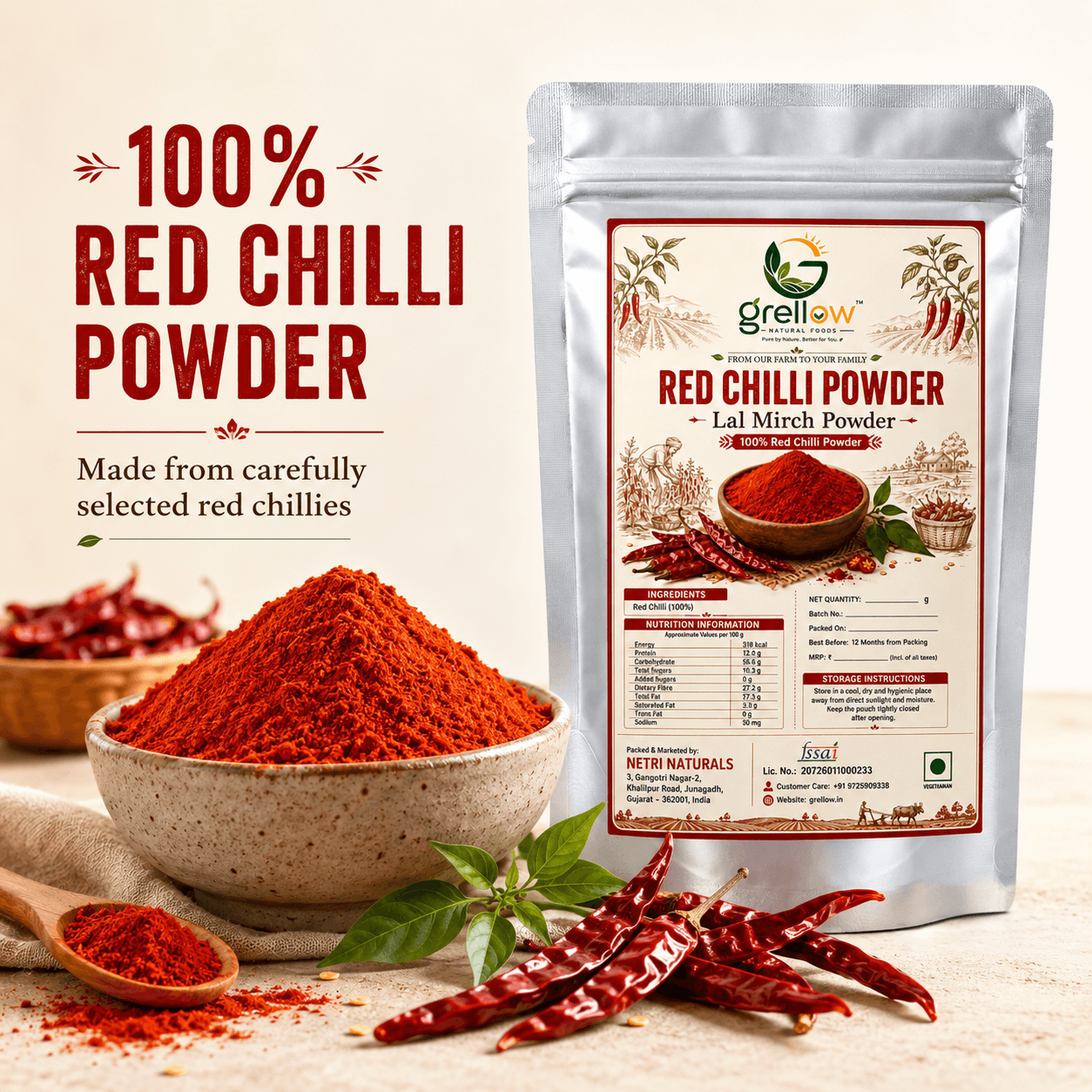
If you want an everyday option, review the pack information for Grellow Red Chilli Powder | Pure Lal Mirch Powder when the draft product is published.
When to Use Kashmiri Chilli Powder
- Tandoori-style and yoghurt-based marinades
- Paneer, tomato or onion gravies where red colour is desired
- Dishes for people who prefer comparatively moderate heat
- Recipes that specify a colour-forward chilli powder
- Blends where a hotter powder supplies heat and Kashmiri chilli supplies colour
How to Substitute One for the Other
Using Kashmiri chilli instead of regular red chilli powder
The dish may become milder. Begin with the recipe quantity, cook and taste, then add a small amount of hotter chilli only if needed. Avoid adding large amounts solely to chase heat, because the colour and chilli flavour may become too dominant.
Using regular red chilli powder instead of Kashmiri chilli
Start with much less if your Lal Mirch is hot. You may not achieve the same red colour without making the food too spicy. It is better to accept a slightly different appearance than to make the dish uncomfortable to eat.
Blending for control
Many cooks combine a small amount of hot chilli powder with a larger amount of colour-forward chilli powder. This is practical, but note your proportions and adjust cautiously each time you open a new pack.
Which One Should You Keep at Home?
If cupboard space is limited and you enjoy a clear chilli kick, one well-understood Lal Mirch powder may be enough. If you regularly cook tandoori dishes, paneer gravies or recipes where red colour matters, keeping a separate Kashmiri chilli powder offers more control.
Neither powder wins every recipe. The useful choice is the one that produces the heat, colour and flavour you want. Label the containers clearly, use a dry spoon, and store both away from heat, moisture and light so their differences remain easier to appreciate.
Frequently asked questions
Is Kashmiri chilli powder the same as red chilli powder?+
Kashmiri chilli powder is a type or style within the wider world of red chilli powders, but the names should not automatically be treated as identical. Heat, colour and flavour can differ.
Which is hotter: red chilli powder or Kashmiri chilli powder?+
Many general Lal Mirch powders are hotter than Kashmiri chilli powder, which is often valued for colour and gentler heat. However, the exact result varies by chilli, blend, brand and batch.
Can I replace red chilli powder with Kashmiri chilli powder?+
Yes, in many recipes, but the dish may become less hot and more colour-forward. Add gradually, taste after cooking and adjust rather than making an automatic one-to-one substitution.
Can I replace Kashmiri chilli powder with regular red chilli powder?+
You can, but a hot red chilli powder may make the dish much spicier before it reaches the expected colour. Begin with a smaller quantity and accept that the final colour may differ.
Which chilli powder is better for tandoori marinades?+
A colour-forward, moderate-heat powder is often convenient in marinades, but the best choice depends on the recipe and desired spice level. Some cooks blend two chilli powders for control.