How to Choose and Store Good Cinnamon Sticks for Better Aroma and Flavour
A practical checklist for buying and storing whole Dalchini: inspect the pack, aroma, dryness and cleanliness, then protect cinnamon sticks from moisture, heat, light and strong odours.
Quick answer
Quick answer
Choose cinnamon sticks by checking that the package is intact and labelled, and that the pieces appear clean, dry and characteristically aromatic without obvious moisture or contamination. At home, store whole Dalchini in a clean, dry, airtight container away from sunlight, heat, steam and strong odours.
Key takeaways
- Use package integrity, label information, cleanliness and dryness as practical checks.
- Natural differences in colour, curl and thickness do not alone prove quality.
- Protect whole Dalchini from moisture, steam, heat, light and strong odours.
- Buy a quantity that matches how often your household cooks with cinnamon.
Good cinnamon storage begins before the pack reaches your spice shelf. A practical buying decision considers the package, label, dryness, cleanliness and aroma—not just the shape of one attractive stick. Once opened, whole Dalchini needs protection from the moisture, steam, heat and strong odours found in a busy kitchen.
This guide explains how to choose cinnamon sticks and store them for everyday cooking. It avoids unsupported claims about origin, species, grade or shelf life. Use the information printed on the actual pack as the authority for that product.
What Should Good Cinnamon Sticks Look and Smell Like?
Cinnamon sticks are dried bark pieces, so natural variation is normal. Pieces may differ in length, thickness, curl, layering and shade. A uniform photograph is not a reliable standard for every piece in a food pack.
As practical checks, the sticks should appear clean and dry, with the expected warm cinnamon aroma and no obvious signs of dampness or contamination. An unusually weak aroma may reflect age or storage, but smell alone cannot establish every aspect of quality.
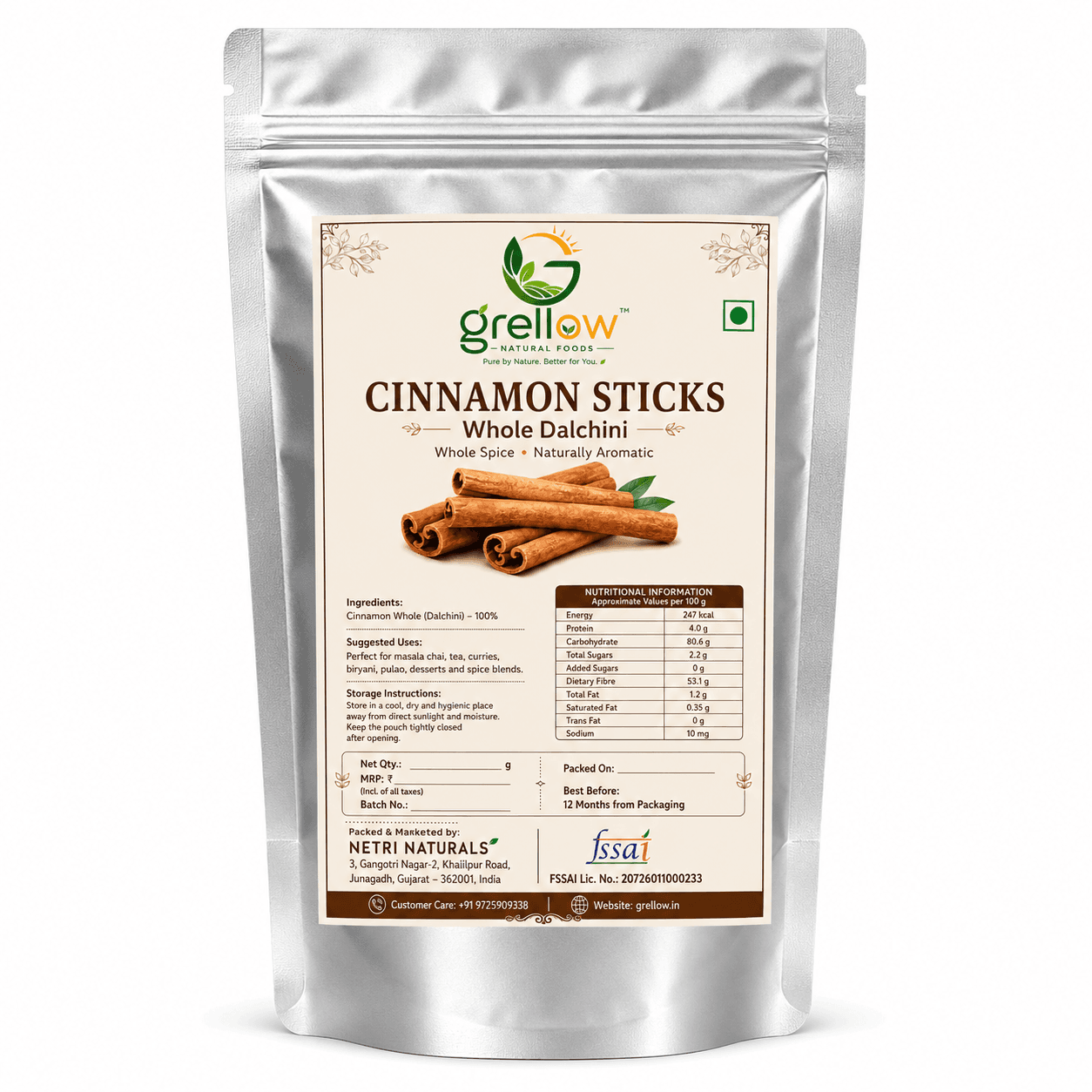
The Grellow listing describes Grellow Cinnamon Sticks (Whole Dalchini) as a single-ingredient whole spice with warm, woody and naturally aromatic character. The listing presents uses across Indian cooking, beverages, baking and international recipes.
Check the Packaging Before Buying
Look for an intact pack
Avoid a package that is open, torn, leaking or visibly compromised. An intact pack helps protect the contents during storage and transport. If buying online, inspect the delivered package before opening it and use the seller's support process if it arrives damaged.
Read the actual label
Review the product name, declared quantity, date information, storage directions and other details shown on the package. Packaged-food labelling in India is governed by official requirements, but this article does not reproduce or interpret every legal provision. The FSSAI regulations page is the appropriate place to consult current official regulations.
Match the quantity to your use
A larger pack is not automatically better value if it stays open far longer than your household can use it. Think about how often you make chai, biryani, pulao, gravies, kheer or baked recipes that call for whole Dalchini.
Do Colour and Curl Prove Cinnamon Quality?
No single colour or curl can confirm quality by itself. Cinnamon bark is an agricultural ingredient and pieces naturally vary. Lighting, camera processing and screen settings also change how a product photo appears.
Use a combination of checks: intact packaging, readable label information, dry and clean-looking pieces, characteristic aroma and the absence of obvious spoilage or contamination. Do not rely on internet claims that a particular curl alone proves origin, species or superiority.
Should You Choose Sticks or Powder?
Choose sticks when you want slow infusion and easy removal from tea, rice, curry, kheer, syrup or stewed fruit. Choose powder when cinnamon must spread evenly through batter, dough, filling or dry seasoning.
If your main recipes use whole spices, sticks may be more practical. If you bake frequently, powder may suit more of your work. Many kitchens keep both because they perform different jobs. Our cinnamon sticks vs cinnamon powder guide explains the distinction in detail.
How to Store Cinnamon Sticks at Home
Use a clean, dry, airtight container
After opening the pack, transfer the sticks only if the original pack cannot be resealed effectively. The storage container should be clean, fully dry and suitable for food. A tight lid limits exposure to humid air and kitchen odours.
Keep them away from heat and sunlight
Do not place the container beside the stove, oven, kettle or a sunny window. Heat and repeated temperature changes are poor conditions for aromatic spices. A cool, dry cupboard is usually more suitable.
Protect them from steam and moisture
Steam can enter a container when it is opened over a boiling pot. Take out the required piece away from active cooking vapour, then close the lid promptly. Never handle the sticks with wet hands or a damp utensil.
Separate them from strong odours
Aromatic products can affect one another when storage is poor. Keep whole Dalchini sealed and away from household chemicals and strongly scented non-food products.
Label the container
If you transfer the product, label the jar clearly and retain the original pack information needed for identification. Do not discard relevant date, batch or contact details while the food remains in use.
Where Should Cinnamon Sticks Be Kept?
A closed pantry or kitchen cupboard away from cooking heat is generally a practical location. The area should stay dry, clean and free from pests. Avoid the shelf directly above the hob, where warm air and steam rise frequently.
Refrigeration is not automatically necessary for a dry whole spice and can introduce condensation if the container is opened while cold. Follow the product's own storage directions where supplied rather than inventing a special method.
How Long Do Cinnamon Sticks Last?
Use the date and storage information printed on the actual package. This article cannot provide a universal shelf life because packaging, processing, batch information and manufacturer instructions differ. Do not extend use beyond the labelled guidance based on a general blog.
Even within the labelled period, inspect the product before use. Discard it if you see moisture damage, mould, insects, contamination or another clear sign that it is unsuitable. When uncertain, choosing a fresh pack is the safer practical decision.
How to Keep Aroma From Fading Quickly
- Open the container only when needed and close it promptly.
- Break a stick just before use rather than preparing many fragments in advance.
- Use dry hands or utensils.
- Keep the jar away from steam, sunlight and cooking heat.
- Buy a pack size that fits your normal rate of use.
- Do not mix new stock into an unclean container holding old fragments.
Signs That Need Attention
Do not use cinnamon sticks that show visible mould, damp clumping, pest activity, foreign material or an unusual off-odour. A broken stick is not automatically a problem—whole bark can break during handling—but the overall contents should remain clean and dry.
If a sealed retail pack has a labelling, damage or quality concern, retain the package and purchase information and contact the seller or brand through its stated support channel.
Using Stored Whole Dalchini Well
Take out only the piece your recipe needs. Add it to tea, biryani, pulao, selected curries, kheer or fruit preparations where gradual infusion makes sense. Remove it before serving when appropriate.
For technique ideas, see how to use cinnamon sticks in cooking and 10 everyday cinnamon stick uses. Our complete whole Dalchini guide covers flavour and culinary advantages.
Choose With Evidence, Store With Care
Good buying and storage habits are straightforward: inspect the pack, read the label, look for clean and dry pieces, choose a sensible quantity and keep the spice airtight away from heat and moisture. These steps protect the ingredient without relying on vague claims about colour or curl.
To review verified product details and the currently available pack options, explore Grellow Cinnamon Sticks (Whole Dalchini).
Frequently asked questions
How can I tell if cinnamon sticks are good?+
Check that the pack is intact and labelled, and that the pieces appear clean, dry and characteristically aromatic without obvious moisture, mould, pests or contamination. Colour and curl alone do not prove quality.
What is the best container for cinnamon sticks?+
Use a clean, fully dry, food-suitable container with a tight lid, or keep the sticks in their original properly resealed pack. Protect them from humid air and strong odours.
Should cinnamon sticks be refrigerated?+
Refrigeration is not automatically required for a dry whole spice and may introduce condensation. Follow the storage directions on the actual product pack and keep it in a cool, dry place.
How long can I store whole Dalchini?+
Follow the date and storage information printed on the package. There is no universal shelf life for every product. Discard sticks showing moisture damage, mould, pests or contamination.
Can broken cinnamon sticks still be used?+
A clean, dry piece that broke during normal handling can generally be used in a suitable recipe. Avoid tiny sharp fragments in food that will not be strained, and do not use damaged or contaminated contents.
Sources & references
- Grellow Cinnamon Sticks (Whole Dalchini) — Grellow
- Food Safety and Standards Regulations — Food Safety and Standards Authority of India
- Labelling and Display Regulations reference — Food Safety and Standards Authority of India