Cinnamon Sticks (Whole Dalchini): Uses, Benefits, Taste & Everyday Kitchen Ideas
A practical guide to cinnamon sticks, or whole Dalchini: understand their warm flavour, culinary benefits, everyday uses, storage and simple ways to cook with them.
Quick answer
Quick answer
Cinnamon sticks, also called whole Dalchini, are pieces of dried cinnamon bark used to infuse food and drinks with warm, woody aroma. Add them early to tea, rice dishes, curries or desserts, let them release flavour gradually, and remove the pieces before serving when appropriate.
Key takeaways
- Cinnamon sticks add warm, woody aroma without turning a dish powdery.
- Add whole Dalchini early to liquids, rice dishes and slow-cooked gravies.
- Use a small amount first; the right quantity depends on the recipe and batch size.
- Store the sticks in a clean, dry, airtight container away from heat and moisture.
Walk into an Indian kitchen while chai is simmering or a festive pulao is cooking, and you may notice a sweet, woody fragrance before you see the spice responsible. That aroma often comes from cinnamon sticks, widely known as whole Dalchini. This familiar whole spice can quietly shape a dish: it rounds out the fragrance of tea, adds depth to rice and gravies, and brings warmth to desserts without demanding attention.
Cinnamon sticks are useful because they release flavour gradually. Unlike a spoonful of powder that disperses immediately, a whole piece can simmer in liquid and be removed before serving. This guide explains their taste, culinary benefits, everyday uses and storage. Here, “benefits” means practical advantages in cooking—not medical or nutritional claims.
What Are Cinnamon Sticks or Whole Dalchini?
Cinnamon sticks are pieces of dried cinnamon bark rolled or layered into firm quills. In India, they are commonly called Dalchini and form part of many household spice boxes. Their appearance, thickness and curl can vary, so every piece will not look identical.
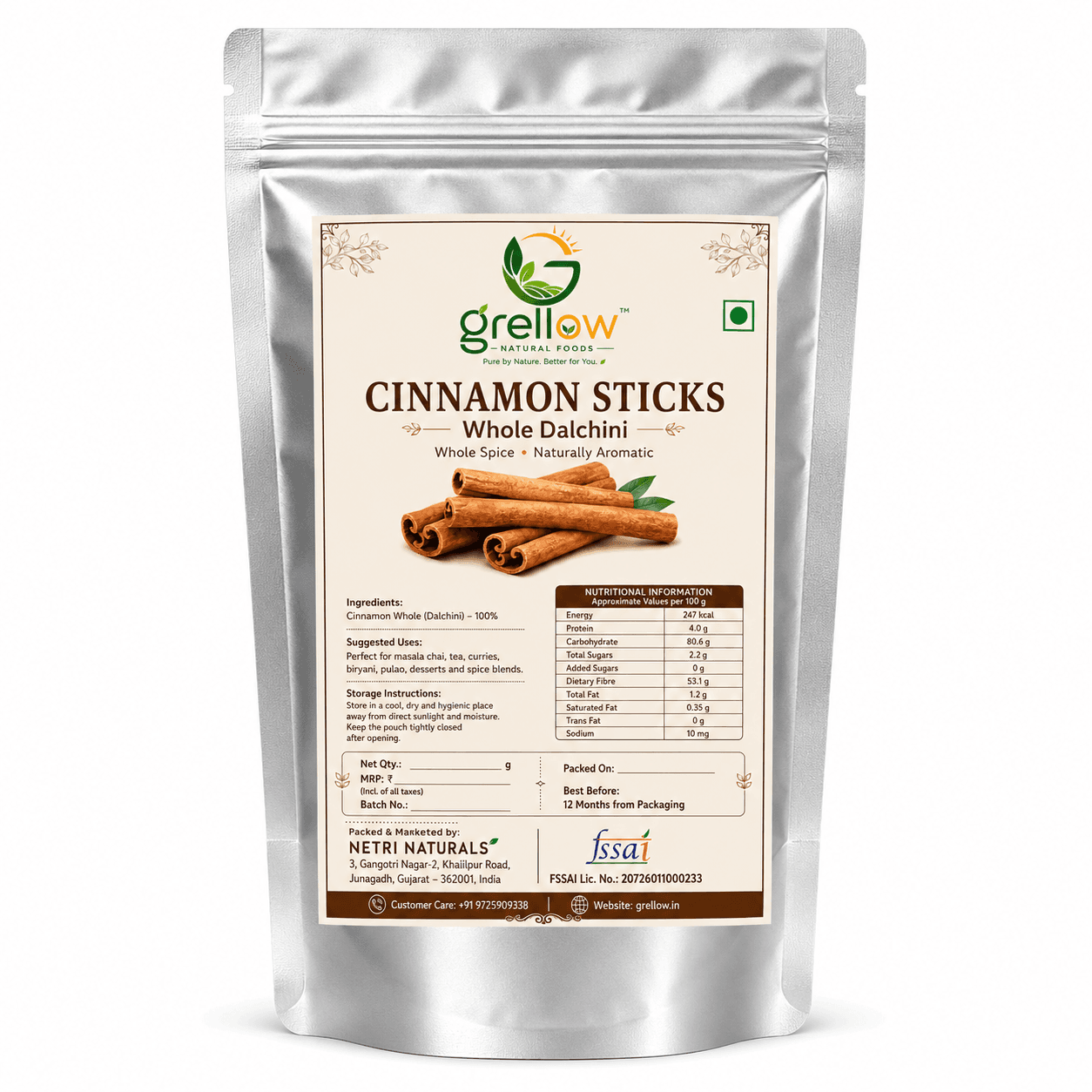
The Grellow product listing describes Grellow Cinnamon Sticks (Whole Dalchini) as a single-ingredient whole spice with a warm, woody and naturally aromatic character. It is intended for Indian cooking, baking, beverages and international recipes. The listing does not identify an origin or cinnamon species, so this article does not make assumptions about either.
What Do Cinnamon Sticks Taste Like?
Whole Dalchini has a warm, gently sweet aroma with woody and spicy notes. “Sweet” describes its fragrance rather than added sugar. In savoury food, it often works in the background with cloves, cardamom, bay leaf, pepper or cumin. In tea and desserts, its aroma can be more noticeable.
Flavour intensity depends on the size of the piece, freshness, cooking time, liquid quantity and other ingredients. A short infusion may be subtle; a long simmer can become more pronounced. Begin with a modest amount and adjust in future batches instead of overpowering the recipe.
Culinary Benefits of Using Whole Dalchini
It infuses flavour gradually
A cinnamon stick releases aroma as it warms in water, milk, oil or a moist dish. This gradual infusion gives the cook time to build flavour alongside other whole spices.
It can be removed before serving
Whole spices are easy to spot in many preparations. Remove the Dalchini before serving when appropriate, especially in drinks, kheer and smooth gravies. In biryani or pulao, diners may also set whole spices aside on the plate.
It suits sweet and savoury cooking
The same spice can support masala chai in the morning, a rice dish at lunch and stewed fruit or kheer after dinner. That versatility makes cinnamon sticks practical for cooks who enjoy varied cuisines.
It keeps the texture clean
Because the spice remains whole, it can contribute aroma without leaving fine cinnamon powder throughout a clear drink or delicate rice dish.
Everyday Cinnamon Sticks Uses in Indian Cooking
Masala chai and other hot drinks
Add a small broken piece while water and tea spices simmer, then add milk and sweetener according to your normal method. Strain before serving. Dalchini can also be infused in plain hot water with other preferred aromatics, but it should be used for flavour rather than treated as a health remedy.
Biryani and pulao
Whole Dalchini is often warmed with other whole spices before rice and liquid are added. This helps distribute its aroma through the dish. Keep the piece proportionate to the pot; more is not automatically better.
Curries and gravies
A short piece can be added during the tempering stage or while a gravy simmers. It pairs especially well with preparations that have enough cooking time for the flavour to spread. Remove it before serving when the texture of the finished gravy should be smooth.
Dal and legume dishes
In selected recipes, Dalchini can add a warm background note to slow-simmered dal, chickpeas or beans. It is not essential in every preparation, so follow the flavour direction of the recipe rather than adding it automatically.
Kheer and milk-based desserts
Simmer a modest piece in milk while making kheer, payasam or a custard-style dessert. Take it out once the fragrance is balanced. Cinnamon should complement cardamom, saffron or nuts rather than cover them.
Stewed fruit and baking
Apples, pears and other firm fruits can be gently cooked with a cinnamon stick for a warm aroma. Whole Dalchini can also flavour syrups or milk used in baking. If a recipe needs cinnamon evenly mixed through dough or batter, powder may be more suitable.
How to Use Cinnamon Sticks Correctly
- Choose the cooking stage. Add the stick early when you want a long infusion, or later for a lighter aroma.
- Use a suitable piece. Break a large stick into a smaller section if needed. Avoid crushing it into sharp fragments unless the recipe will be strained.
- Give it warmth and time. Simmer it in liquid or warm it briefly with other whole spices, taking care not to burn the bark.
- Taste the dish. Recipes, pot sizes and personal preferences vary. Taste before adding more.
- Remove when appropriate. Lift out or strain the stick before serving drinks, desserts and smooth sauces.
For a more detailed method-by-method explanation, read how to use cinnamon sticks in tea, biryani, curries and desserts.
Whole Cinnamon Sticks vs Cinnamon Powder
Sticks are well suited to infusion, slow cooking and recipes where the spice can be removed. Powder disperses quickly and works well when cinnamon needs to be mixed evenly into dough, batters, fillings or dry seasoning. They are related forms, but swapping them can change texture and strength.
Do not assume one stick equals a fixed teaspoon of powder. Piece size and powder potency vary. See our practical cinnamon sticks vs cinnamon powder comparison before substituting.
How to Choose and Store Whole Dalchini
Look for pieces that appear clean and dry, with the characteristic cinnamon aroma and no obvious signs of moisture or contamination. Packaging should be intact and the label should provide the information required for your purchase decision. Avoid judging quality by curl or colour alone because natural variation occurs.
At home, keep cinnamon sticks in a clean, dry, airtight container away from direct sunlight, heat, steam and strong-smelling foods. Use a dry spoon or clean hands, and close the container promptly. For a fuller checklist, visit our guide to choosing and storing cinnamon sticks.
More Easy Kitchen Ideas
- Infuse a stick in milk for porridge or a dessert base.
- Add a small piece to festive rice, pulao or biryani.
- Simmer it in a curry or gravy that suits warm whole spices.
- Use it in stewed fruit, compote or a simple syrup.
- Add it to homemade spice blends when a recipe calls for whole Dalchini.
For more inspiration, explore 10 easy cinnamon sticks uses for everyday cooking.
A Practical Whole Spice for Everyday Cooking
Cinnamon sticks earn their place in the spice box through versatility rather than loudness. Used thoughtfully, whole Dalchini can add a warm aromatic layer to chai, biryani, pulao, gravies, kheer and fruit-based desserts. The key is to match the piece and infusion time to the dish.
If you want a ready whole-spice option for these kitchen ideas, you can explore Grellow Cinnamon Sticks (Whole Dalchini). Review the current product page and pack options to choose what suits your household.
Frequently asked questions
What are cinnamon sticks used for?+
Cinnamon sticks are commonly used to infuse tea, rice dishes, curries, gravies, kheer, stewed fruit and other recipes with a warm, woody aroma. Their best use depends on the recipe and desired flavour intensity.
Is whole Dalchini the same as cinnamon sticks?+
In everyday Indian cooking, whole Dalchini generally refers to cinnamon in stick or bark form. Appearance and thickness can vary, and a product label may provide more specific information where available.
Can I use a cinnamon stick directly in tea?+
Yes. Simmer a small piece with the tea liquid and other chosen spices, then strain it out before serving. Adjust the piece size and infusion time according to taste.
Should cinnamon sticks be removed after cooking?+
Remove them before serving when appropriate, especially from drinks, kheer and smooth gravies. In rice dishes, diners often set whole spices aside, but removing them in advance can make serving easier.
How should whole Dalchini be stored?+
Keep it in a clean, dry, airtight container away from direct sunlight, heat, steam and moisture. Close the container promptly after use and avoid handling the sticks with wet hands.
Sources & references
- Grellow Cinnamon Sticks (Whole Dalchini) — Grellow