How to Use Cinnamon Sticks in Tea, Biryani, Curries and Desserts
Learn when to add whole Dalchini, how long to infuse it and when to remove it for balanced aroma in tea, biryani, pulao, curries, kheer and desserts.
Quick answer
Quick answer
Use cinnamon sticks by adding a modest whole piece early enough to infuse warm aroma into tea, rice, curry or dessert. Simmer it in liquid or warm it briefly with other whole spices without burning. Taste for balance and remove the bark before serving when appropriate.
Key takeaways
- A longer simmer creates a fuller infusion; a shorter one stays subtler.
- Warm whole Dalchini gently and never let it scorch in hot fat.
- Match the piece size to the liquid volume, pot size and cooking time.
- Remove the stick from tea, desserts and smooth sauces before serving.
Whole Dalchini is simple to use once you understand three variables: piece size, heat and time. A cinnamon stick does not disappear into food like powder. It releases aroma gradually, which gives you control—but only if the recipe contains enough moisture or cooking time.
This guide explains how to use cinnamon sticks in tea, biryani, curries, pulao and desserts. The methods are flexible rather than fixed recipes because household spice blends, pot sizes and flavour preferences vary.
Understand the Flavour Before You Start
Cinnamon sticks bring a warm, woody and gently sweet-smelling character. The sweetness is aromatic; it does not mean sugar has been added. In savoury food, Dalchini usually supports cardamom, cloves, bay leaf, cumin, pepper or other spices instead of standing alone.
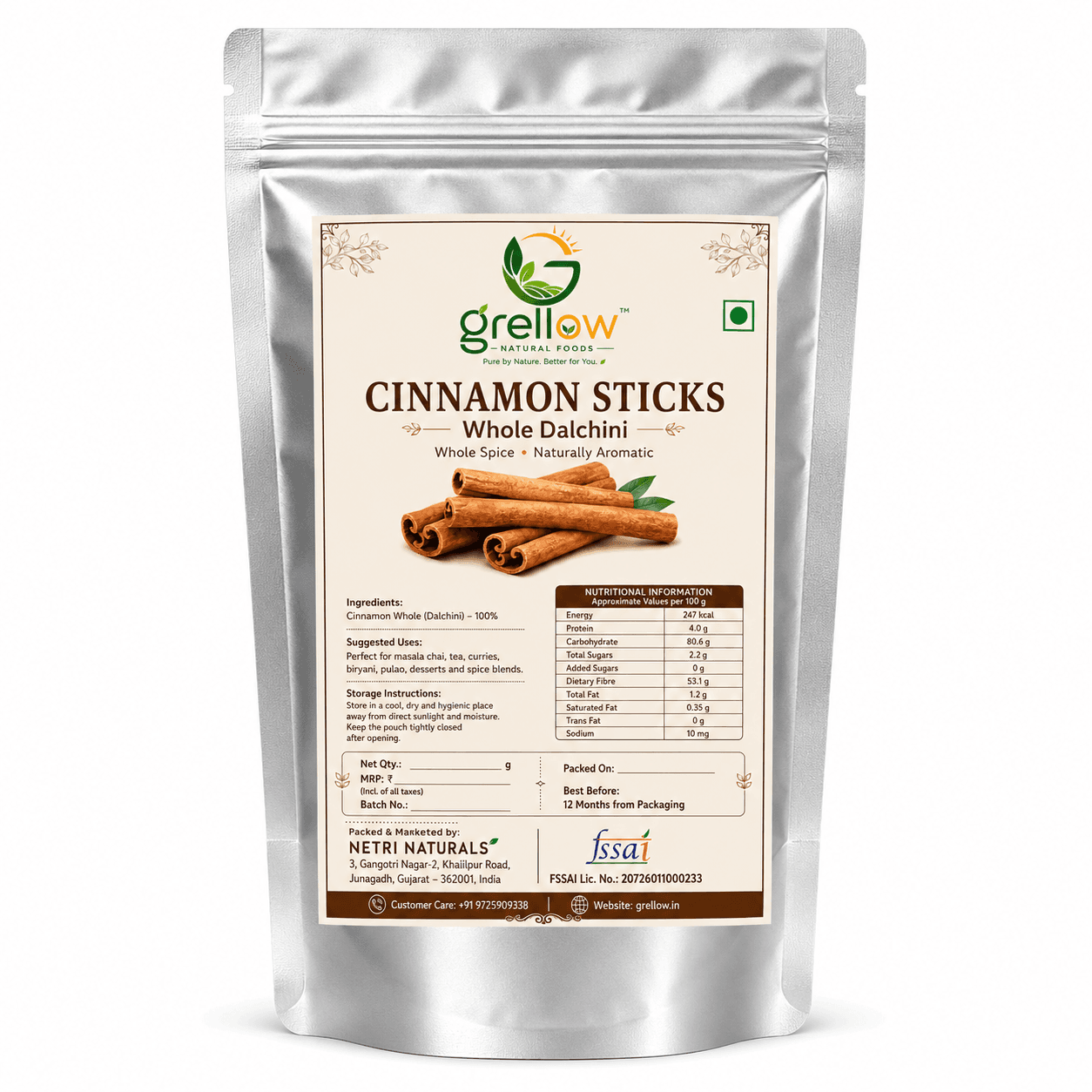
The Grellow Cinnamon Sticks (Whole Dalchini) listing describes a single-ingredient whole spice that can be used whole or broken into smaller pieces. The product is presented for Indian kitchens, beverages, baking and international recipes. No unlisted origin, species or health benefit is assumed here.
Four Basic Rules for Using Whole Dalchini
- Start modestly. Stick length and thickness vary, so use a small section before increasing the amount.
- Use gentle heat. Warm the bark with other spices or simmer it in liquid. Scorched cinnamon can make a dish unpleasant.
- Allow infusion time. A stick needs time to release its aroma. Very quick recipes may suit powder better.
- Remove when appropriate. Lift out or strain whole pieces before serving drinks, desserts and smooth gravies.
How to Use Cinnamon Sticks in Tea
Step 1: Choose a small piece
For a household pot of tea, begin with a modest section rather than a large stick. The right size depends on the number of cups and the other spices.
Step 2: Simmer it with the liquid
Add the cinnamon while water and any robust spices are heating. Let it simmer gently so the aroma enters the liquid. Add tea leaves, milk and sweetener according to your normal chai method.
Step 3: Strain and taste
Strain the tea before serving. If the cinnamon was too subtle, use a slightly longer infusion next time. If it dominated ginger, cardamom or tea, reduce the piece or simmering time.
Whole Dalchini is usually cleaner than powder in chai because it does not leave fine particles after straining. Powder can still be used in recipes designed for it, but the texture will differ.
How to Use Cinnamon Sticks in Biryani
Step 1: Organise the whole spices
Prepare the Dalchini alongside the cardamom, cloves, bay leaf, cumin or other whole spices specified by your biryani recipe. A balanced blend matters more than a large amount of any single spice.
Step 2: Warm without burning
Add the cinnamon during the whole-spice tempering stage. Warm it only until aromatic. Keep ingredients moving and proceed with onions or the next recipe step before the spices scorch.
Step 3: Let the rice cooking complete the infusion
The cinnamon continues releasing aroma as the masala and rice cook. Do not keep adding more just because the fragrance seems gentle at the beginning. Biryani aromas develop through the full process.
Step 4: Remove large pieces if convenient
Whole spices may remain visible in biryani, and diners commonly set them aside. Removing obvious bark pieces before serving can make the meal easier to eat.
How to Use Whole Dalchini in Pulao
Warm a small cinnamon piece with the other chosen whole spices, then add rice and liquid according to the pulao recipe. Because pulao can be lighter in flavour than biryani, use a restrained amount.
For vegetable pulao, peas pulao or a simple festive rice, the goal is an aromatic background. If the Dalchini becomes the first and only spice you notice, use less in the next batch.
How to Use Cinnamon Sticks in Curries
Method 1: Whole-spice tempering
Warm the stick gently in oil or ghee with other whole spices before adding onions, tomatoes or the recipe base. This method builds aroma early. Avoid high unattended heat.
Method 2: Simmering in gravy
Add the piece while the gravy simmers, especially when the dish needs slow cooking. The moisture draws out flavour over time. Taste as the curry approaches completion.
When to remove it
Take out the stick before blending a gravy and before serving a smooth sauce. In a rustic curry it may remain visible, but diners should not be expected to chew it.
Dalchini does not suit every curry. Use it where the recipe's other spices and cooking method support warm whole-spice notes.
How to Use Cinnamon Sticks in Kheer
Add a small piece while milk and the main ingredient simmer. Gentle heat allows the fragrance to develop without burning the milk. Remove the cinnamon when the aroma feels balanced or before serving.
Cardamom, saffron, nuts and other additions may already contribute strong aromas. Keep cinnamon in proportion so the dessert retains its intended identity.
How to Use Whole Dalchini With Fruit
Place a stick in the cooking liquid for stewed apples, pears, compote or poached fruit. Simmer until the fruit reaches the desired texture and the liquid is aromatic, then remove the bark.
The same approach works for a fruit syrup. If the syrup will be stored, follow a tested recipe and appropriate food-safety guidance; cinnamon itself does not preserve a preparation.
How to Flavour Milk, Syrup and Dessert Bases
Warm a cinnamon stick in milk, cream or simple syrup, then remove it before combining the liquid with the rest of the dessert. This technique provides cinnamon aroma without ground particles.
Do not assume a long infusion is always better. Dairy and syrup can carry flavour efficiently. Taste at intervals where safe and stop when the cinnamon complements the planned dessert.
Common Mistakes to Avoid
- Using too much: a large piece can hide delicate flavours.
- Burning the bark: harsh high heat can spoil the whole base.
- Adding it to a dry, quick recipe: a stick needs moisture and time.
- Leaving fragments in drinks: strain tea and infused liquids carefully.
- Using a fixed conversion: one stick does not equal a universal spoonful of powder.
- Reusing a cooked stick: use a fresh piece for predictable flavour and sound kitchen hygiene.
Sticks or Powder for Your Recipe?
Use sticks for infusion and easy removal. Use powder when cinnamon must spread through dough, batter, filling or a dry mix. The forms are not always directly interchangeable. Read cinnamon sticks vs cinnamon powder for a full comparison.
Keep the Method Simple
Choose a modest piece, use gentle heat, allow enough time and remove the bark where appropriate. Those four habits cover most successful uses of whole Dalchini.
For more inspiration, explore 10 easy cinnamon sticks uses and our complete whole Dalchini guide. To review the current product information, visit Grellow Cinnamon Sticks (Whole Dalchini).
Frequently asked questions
How long should a cinnamon stick simmer in tea?+
There is no single time for every recipe. Simmer it gently with the tea liquid, then taste and adjust future batches. Piece size, cup count and other spices all affect the result.
When should I add cinnamon sticks to biryani?+
Add the piece with other whole spices during the early tempering stage, warming it carefully without burning. It will continue infusing as the masala and rice cook.
Can I put cinnamon sticks directly into curry?+
Yes, when the curry contains enough moisture and cooking time. Add the stick during tempering or simmering, then remove it before blending or serving a smooth gravy.
How do I use cinnamon sticks in dessert?+
Infuse a small piece in milk, cream, syrup, kheer or fruit cooking liquid. Remove the bark when the aroma is balanced and before serving.
Can cinnamon sticks replace powder in baking?+
Usually not directly. A whole stick cannot distribute evenly through dough or batter. It can instead flavour a liquid component when the recipe allows, while powder suits direct mixing.
Sources & references
- Grellow Cinnamon Sticks (Whole Dalchini) — Grellow