10 Easy Ways to Use Cinnamon Sticks (Whole Dalchini) in Everyday Cooking
Ten approachable ideas for using whole Dalchini in everyday food and drinks, from chai and rice dishes to curries, kheer, stewed fruit and simple syrups.
Quick answer
Quick answer
Cinnamon sticks can flavour masala chai, biryani, pulao, curries, dal, kheer, stewed fruit, flavoured milk, simple syrups and homemade spice blends. Add a modest piece while the food simmers, allow its warm aroma to infuse, and remove the bark before serving when appropriate.
Key takeaways
- Use whole Dalchini where gradual infusion suits the cooking method.
- Start with a modest piece and adjust future batches to taste.
- Strain or remove the stick from drinks, desserts and smooth gravies.
- Cinnamon should complement the recipe, not overwhelm other spices.
A jar of cinnamon sticks can do far more than wait for a special biryani. Whole Dalchini fits into everyday cooking because it works with drinks, rice, gravies, desserts and fruit. The key is not to add it everywhere, but to use a modest piece where slow infusion supports the recipe.
These cinnamon sticks uses are practical starting points for Indian kitchens. Quantities are intentionally flexible because pieces vary in size and every household has a different spice preference. Add less first, taste where safe and adjust the next batch.
Before You Begin: How Whole Dalchini Works
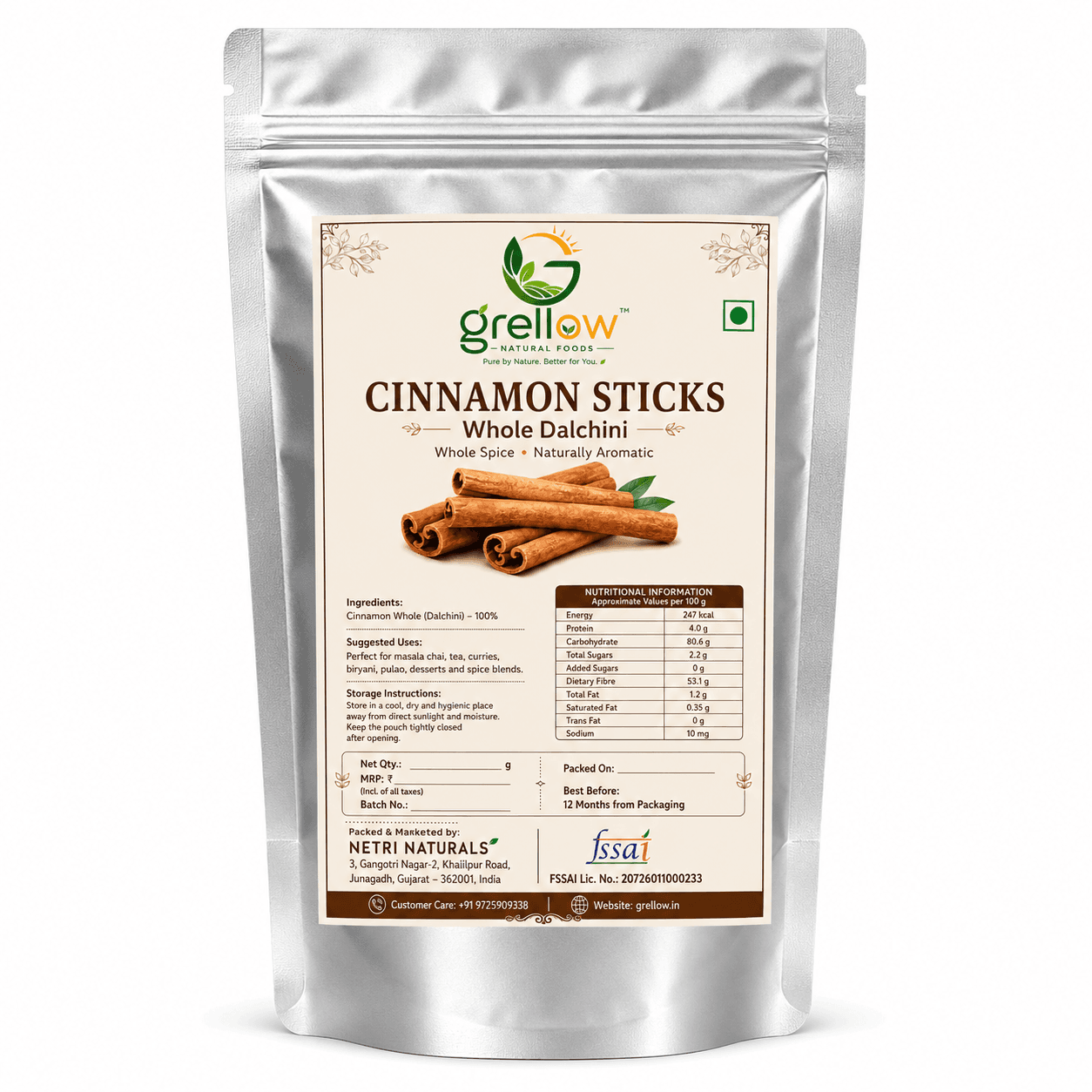
Cinnamon sticks are dried bark pieces that release warm, woody aroma when heated. The Grellow Cinnamon Sticks (Whole Dalchini) listing describes the product as a single-ingredient whole spice suited to Indian kitchens, beverages, baking and international recipes.
Whole pieces can be used intact or broken into smaller sections. They usually work best in food containing liquid or moisture and enough cooking time for infusion. Remove the pieces before serving when appropriate, especially from drinks and smooth dishes.
1. Simmer a Small Piece in Masala Chai
Add a small cinnamon piece while water, tea and your chosen spices simmer. Its aroma develops alongside ginger, cardamom, cloves or pepper, depending on your household recipe. Add milk and sweetener as usual, then strain everything before serving.
Do not treat a large piece as a shortcut to better chai. Too much can dominate the tea. A shorter simmer or smaller section often gives a more balanced cup.
2. Add Whole Dalchini to Biryani
Biryani commonly begins with whole spices warmed carefully in fat. Add a suitable cinnamon piece with the other aromatics, taking care not to scorch it. The bark releases fragrance as the rice and masala cook together.
Keep the amount proportionate to the pot and the rest of the spice blend. Dalchini should support the layered aroma rather than become the only flavour you notice. Remove large whole pieces before serving if convenient.
3. Build Aroma in Everyday Pulao
Whole Dalchini is equally useful in vegetable pulao, peas pulao and other fragrant rice dishes. Warm it briefly with cumin, bay leaf, cardamom or the spices called for in your recipe, then add rice and cooking liquid.
Pulao is often lighter than biryani, so use restraint. The goal is a gentle background warmth that travels through the rice. If the previous batch tasted too strong, use a smaller piece or remove it earlier next time.
4. Infuse Curries and Gravies
Add a short stick during the tempering stage or while a gravy simmers. Whole cinnamon is useful when the dish has enough moisture and time to draw out its aroma. It can work in selected tomato, onion, nut-based or slow-cooked gravies.
Not every curry needs Dalchini. Follow the character of the recipe. When making a smooth gravy, lift out the stick before blending or serving so nobody bites into a firm piece of bark.
5. Add Warmth to Dal or Legume Dishes
Some dal, rajma, chana and other legume preparations welcome warm whole spices. A modest cinnamon piece can simmer with the dish or enter through the tadka, depending on the method.
Use this idea selectively. If the recipe is built around fresh herbs, sourness or a delicate tempering, cinnamon may distract. It works best when the other spices point in the same warm, savoury direction.
6. Flavour Kheer and Milk Desserts
Simmer a small piece in milk while preparing rice kheer, vermicelli kheer or another milk-based dessert. Whole Dalchini adds aroma without leaving ground particles through the finished dish. Remove it when the fragrance is balanced.
Cinnamon can share the pot with cardamom, saffron or nuts, but each ingredient should remain recognisable. Start small and remember that flavour may continue developing while the dessert cools.
7. Make Stewed Fruit or Compote
Firm fruits such as apple or pear can be gently cooked with water, a cinnamon stick and sweetener according to taste. The spice suits the fruit's natural sweetness and is easy to remove at the end.
Serve the fruit with porridge, yoghurt, pancakes or dessert, depending on preference. This is a culinary use only; it should not be presented as a health treatment. Refrigerate leftovers promptly according to safe home-food practice.
8. Prepare Cinnamon-Infused Milk
Warm milk gently with a small piece of cinnamon, then remove the bark before serving or using the milk in another recipe. The infusion can become a base for porridge, custard, a warm drink or a dessert.
Avoid a hard boil that scorches the milk or traps an excessively strong cinnamon taste. If other flavourings are included, choose combinations that suit the final preparation.
9. Infuse a Simple Syrup
Simmer a cinnamon stick in a simple sugar-and-water syrup, following an established syrup ratio for the intended recipe. Once cool, remove the stick. The syrup can flavour desserts, fruit, alcohol-free drinks or baking components.
This is a flavour technique, not a claim that cinnamon changes the nutritional character of a sugary syrup. Store and use the finished syrup according to the food-safety guidance for your recipe.
10. Include It in Homemade Whole-Spice Blends
Many household masalas combine Dalchini with other whole spices. Break a stick into manageable pieces only when the recipe requires it, then roast or grind according to that recipe. Avoid guessing proportions because a blend's balance depends on every component.
If a recipe needs a fine powder, use suitable grinding equipment and allow toasted spices to cool before grinding. Prepare a quantity you can store well, label it and keep it dry.
How Much Cinnamon Stick Should You Use?
There is no universal answer because stick size, thickness, freshness, pot volume and personal taste differ. A tea cup, family-size curry and large biryani cannot use the same rule. Begin with a modest section and record the result.
For a focused method guide, read how to use cinnamon sticks in tea, biryani, curries and desserts. If you are deciding between whole and ground forms, our cinnamon sticks vs cinnamon powder comparison explains the trade-offs.
Storage Tips for Everyday Convenience
Keep whole Dalchini in a clean, dry, airtight container away from sunlight, heat, steam and moisture. Use dry hands or utensils and close the container promptly. Store it away from strongly scented products that might affect its aroma.
For buying and storage details, see how to choose and store cinnamon sticks. A well-organised spice shelf makes these everyday ideas easier to use without waste.
One Spice, Many Thoughtful Uses
Cinnamon sticks are most useful when their gradual infusion matches the recipe. Try one idea at a time, keep the flavour balanced and remove the bark when appropriate. That simple approach can bring warm aroma to familiar food without making every dish taste the same.
For broader background on flavour and culinary benefits, visit our whole Dalchini guide. You can also explore Grellow Cinnamon Sticks (Whole Dalchini) for the current product and pack information.
Frequently asked questions
How can I use cinnamon sticks in everyday cooking?+
Use a modest piece to infuse chai, rice dishes, selected curries, dal, kheer, fruit, milk or syrup. Give it time to release aroma and remove the bark before serving when appropriate.
Can cinnamon sticks be reused after cooking?+
For reliable flavour and good kitchen hygiene, use a fresh piece for each recipe. A cooked stick has already released aroma and has been exposed to moisture and other food ingredients.
Do I need to break a cinnamon stick before using it?+
Not always. Break a large stick only when a smaller piece better suits the recipe or pot size. Avoid creating tiny sharp fragments, particularly in dishes that will not be strained.
When should I add cinnamon sticks to a dish?+
Add them early for longer infusion, such as during whole-spice tempering or while liquid simmers. Add later for a lighter note. The best timing depends on the recipe.
Should whole Dalchini be removed before serving?+
Remove it from tea, flavoured milk, syrup, kheer and smooth gravies. In rice dishes, diners may set whole spices aside, but removing large pieces before serving is often more convenient.
Sources & references
- Grellow Cinnamon Sticks (Whole Dalchini) — Grellow